
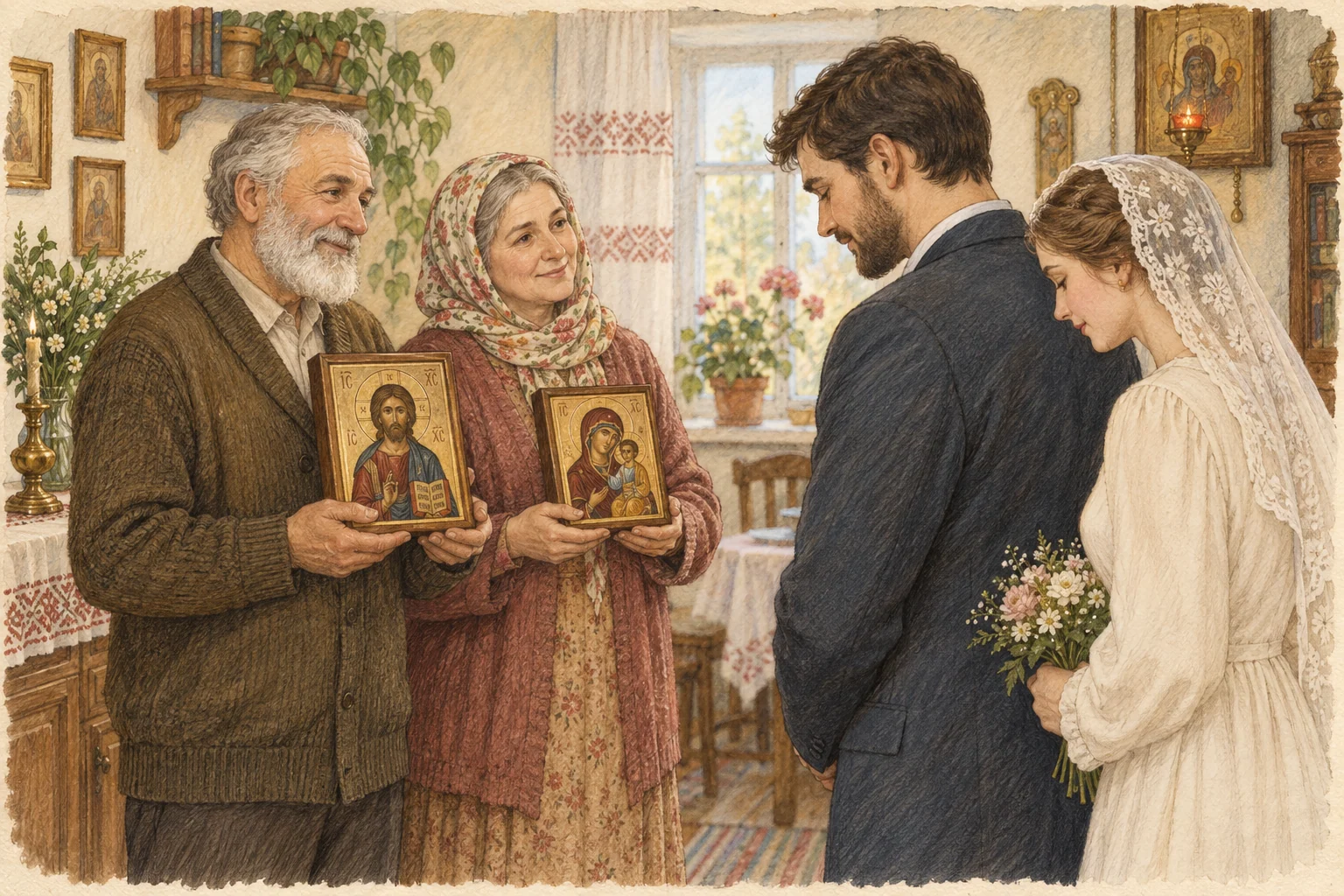
A parental blessing for marriage expresses prayer for the new family, goodwill, and a readiness to offer support. It is not a separate sacrament and does not replace the church wedding. The relationship behind it matters more than flawlessly following a domestic ceremony found on a wedding checklist.
What Parents Can Give Their Children
Parents ask for God's help, faithfulness, peace, and mutual care. This does not promise a life without difficulty or give parents authority to manage the couple's future. A loving blessing says that the new family remains supported while its independence is recognised. Support differs from continual supervision of the spouses' decisions.
The couple can also explain why they are asking. Rather than requesting the right words for a photograph, they can say that prayer and goodwill matter to them. This conversation may happen beforehand without guests. The blessing then need not become an unexpected test in which parents must instantly conceal every concern.
A Simple Form Is Enough
In many Orthodox families, parents bless their children with an icon and words of prayer. This does not establish one universally compulsory order of participants, number of bows, position of hands, or expensive set of icons. Family and local customs differ. If you want to follow the practice used in your church, ask the priest preparing you for marriage.
A quiet gathering with understandable words can be sufficient at home: for example, asking God to strengthen the couple's love and teach them to care for each other. This is a suggestion for personal prayer, not an authorised service text. Do not force an unbelieving parent to perform a religious gesture. They can sincerely express goodwill in their own words, while church preparation is addressed separately.
When Parents Disagree
First establish why. Are they concerned about cruelty, deception, addiction, or an excessively hurried decision? Such observations deserve serious attention even when they are unwelcome. Or does the objection concern only status, income, or complete control of an adult child's choice? Different reasons must not be collapsed into either unquestioning parental authority or complete dismissal of their views.
In his pastoral answers, Archpriest Maxim Kozlov describes parental blessing as desirable without treating its absence as a universal canonical prohibition on marriage. Discuss individual circumstances with a priest rather than using an article to pass judgement on your parents. The purpose is to distinguish a genuine obstacle from conflicting expectations, not to obtain a convenient permission at any cost.
When Parents Are Absent or a Meeting Is Impossible
Bereavement, separation, illness, or a difficult family history does not mean a marriage begins without hope. You can pray for departed parents, receive the goodwill of others close to you, and explain the circumstances to the priest. There is no need to appoint an urgent substitute for every participant in a wedding custom, as though someone's absence made the whole day spiritually defective.
When contact is dangerous or degrading, you may decline an in-person meeting and choose a safer means of communication or maintain distance. Honour does not require enduring threats. After the wedding, the blessing can continue through practical support: respecting the family's boundaries, helping when asked, and refusing to set spouses against one another. Those actions give the words lasting substance beyond the ceremony.
Agree on the Words and Setting Beforehand
If parents feel anxious, suggest a few quiet minutes with the couple instead of a speech before a large gathering. You can discuss themes that matter to you: faithfulness, learning to apologise, and care during illness. Do not write promises for parents that they do not share or require them to speak without tears. A few sincere words are preferable to a memorised script everyone is afraid of forgetting. Obtain each participant's agreement separately before filming this personal moment.
A parent may want both to offer a blessing and to express a concern. Separate those conversations beforehand. Discuss a serious worry privately instead of raising it for the first time in front of guests. If it concerns specific dangerous behaviour, do not postpone the discussion simply to preserve an attractive ceremony. Comments about taste, clothing, or the other family's habits, however, should not become public conditions for treating a new spouse kindly.
When Families Have Different Customs
The couple's families may have different expectations about where and when the blessing takes place. Establish what each person actually values: a family icon, a grandmother's presence, or prayer at home without an audience. Then choose a manageable arrangement without competing over which family is more correct. If divorced parents find a joint meeting difficult, they need not pretend to be close. Separate meetings may be discussed while maintaining respect for the couple.
After the wedding, remember the difference between a gift and a condition. Giving an icon or paying towards the celebration does not entitle a parent to reports on every marital decision. Gratitude can take the form of calls, visits, and care without surrendering control of the marriage. If the couple asks for help during a disagreement, a parent can first establish whether they need someone to listen or assistance with a particular task. There is no need to become an immediate ally against their child's husband or wife.
Sources
- Archpriest Maxim Kozlov: Questions About Marriage (Russian)
- Pravmir: The Meaning of Blessing (Russian)