
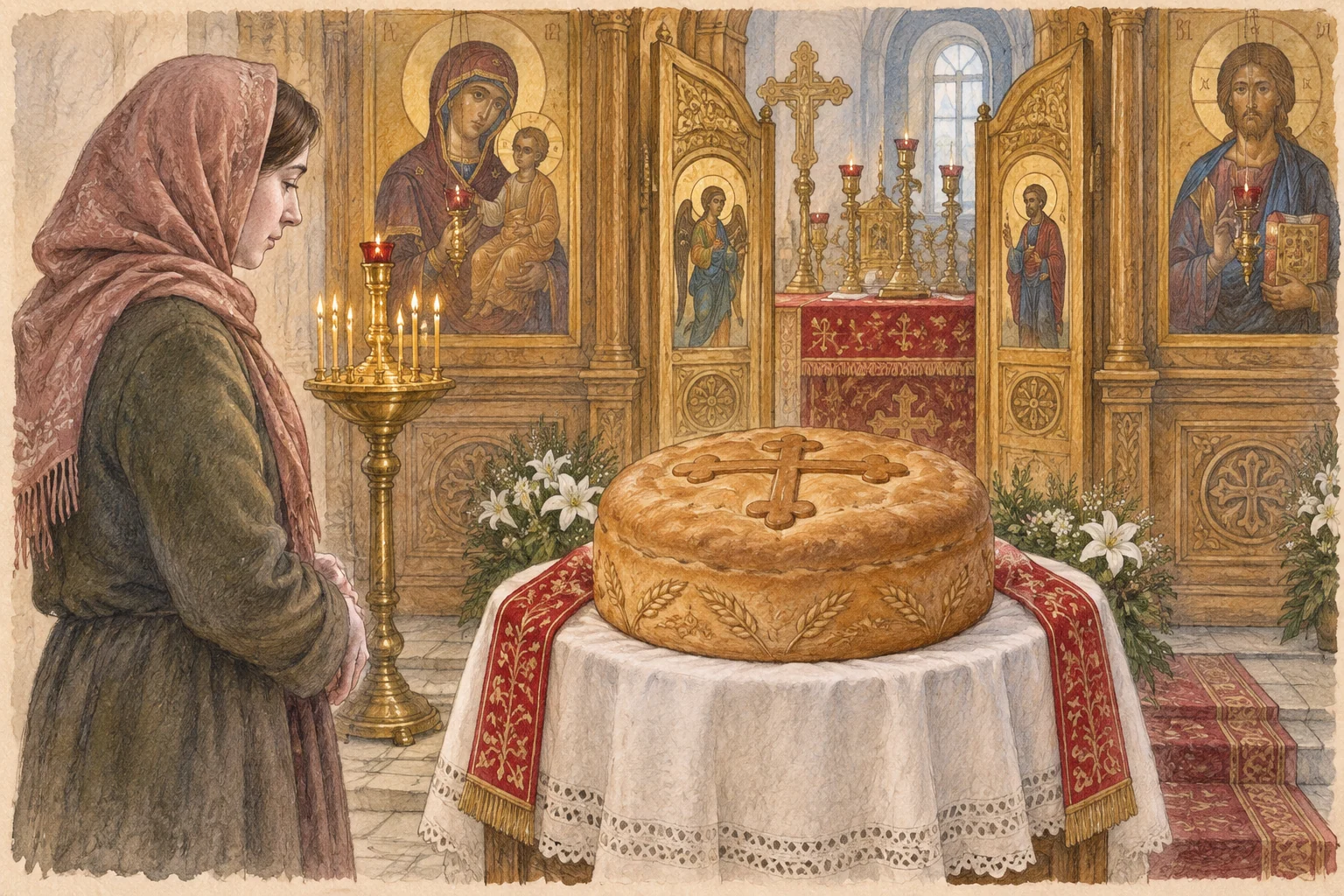
Artos is a special loaf blessed at Pascha and associated with Bright Week. It may be seen near the icon screen, bearing an image of the Resurrection or the Cross. It is blessed Paschal bread, but not the Holy Gifts of Communion. Its name comes from the Greek word for bread, not from a special variety of flour.
Its Connection with Pascha
The blessing and later distribution direct attention toward the risen Christ as the source of life. The prayer for breaking the artos gives thanks for the Resurrection and asks a blessing on those who receive the bread. Its meaning is therefore more than preserving a religious souvenir until another spring.
Artos accompanies the parish's celebration through Bright Week and is normally broken and distributed after the Liturgy on Bright Saturday. Check the local distribution time. Receiving a portion later does not make it less meaningful, and a household without artos has not somehow failed to celebrate Pascha properly.
Other Kinds of Church Bread
Prosphora is used in preparing the Eucharistic Gifts and commemorating people at the service of preparation. Antidoron comes from the loaf from which the Lamb was taken and is distributed as blessed bread, not as Communion. Artos has its own Paschal blessing and replaces neither prosphora for the preparation service nor the Eucharist.
Kulich belongs to the festive meal and differs from artos even when blessed at church. Similar appearance and a church blessing do not make every kind of bread interchangeable. Explain the difference to a child through their purposes: bread is prepared for particular services, Paschal bread is shared in celebration, and Communion is a sacrament.
Receiving and Keeping It
Place a received portion in clean packaging rather than mixing it with rubbish or loose objects in a pocket. At home, choose a clean, dry place and label it so other household members understand what it is. Do not leave damp bread sealed for a long time. Care includes preventing spoilage, not simply choosing an attractive bag.
Receive artos prayerfully and reverently. If your family follows a particular custom, ask the priest about its meaning rather than establishing a compulsory dose, frequency, or storage period for everyone. Take a quantity you can use carefully instead of collecting a large supply and forgetting it.
What Blessed Bread Does Not Promise
Artos is not an amulet, a guarantee of healing, or a replacement for medical care. Do not secretly add it to another person's food. An allergy or inability to eat bread should be discussed with a priest and the relevant healthcare professional. Reverence does not require disregarding a health risk.
If the bread spoils, do not eat it out of fear of disrespecting something blessed. Set the spoiled portion aside and ask the parish how to handle it reverently. There is no need to despair over an accident. Improving storage is more useful than anxiously accumulating rules. The Paschal gift should bear fruit in gratitude, hope, and attention to other people.
When sharing a portion with a relative, explain what it is and how it has been stored. Do not promise that a wish will certainly be fulfilled. Respect a person's decision not to receive it. Blessed bread should not become a family argument or a test of someone else's faith or obedience; a Paschal gift is not an instrument of pressure.
Paschal remembrance, not an emergency reserve
A portion of artos can be kept so long that its Paschal meaning is forgotten and it is remembered only during anxiety. Ask what you are trying to preserve: remembrance of the Resurrection, or a feeling of security from possessing an object. Reverence is not measured by years of storage. Receive the gift gratefully without postponing it indefinitely for an unknown special emergency, or collecting portions from many churches in pursuit of greater protection.
Distinguishing blessed bread from Communion
A newcomer may see the queue for the chalice, bread distributed after worship, and a table of festive food as similar activities. Before approaching, ask a parish helper what is being distributed. Do not rely only on recognizing someone in the queue. If you bring several kinds of bread home, keep them separate and label them. This simple arrangement replaces guesswork with clarity and helps prevent you from passing an inaccurate explanation to someone else.
If a relative asks you to bring “Communion bread,” clarify what they mean. Artos or other blessed food must not be presented as the Holy Gifts, even from a sincere wish to comfort. A person who cannot leave home and wants to receive Communion needs an arrangement with a priest. Bringing artos remains a distinct expression of Paschal care; it should not conceal the difference between a gift of blessed bread and the sacrament.
If there is no portion left
Distribution takes place within a particular community and depends on the quantity prepared. Do not argue with the person distributing the bread or blame yourself for arriving late. Ask whether a small portion might be available another time. If not, you can still pray, join the parish's Paschal life, and care for other people. The Resurrection is not less real because one particular item is absent from your home, and participation in the feast is not a test of what you managed to bring back.
In a shared home, explain what is in the package beforehand so routine tidying does not cause confusion. If an accident occurs, establish calmly what happened before responding. Ignorance should not be treated as deliberate desecration. Care for something blessed includes clear explanation and responsibility by the person keeping it, rather than only demands upon everyone around them.