
John the Apostle and Theologian is a disciple of Christ, distinct from John the Baptist who baptised the Lord in the Jordan. Their shared name often causes confusion. Identify the church title and the context of the Gospel passage.
Church tradition associates John with the fourth Gospel and other New Testament writings. His ministry is especially remembered for witness to Christ and love. That is more substantial than a popular contrast between a supposedly kind John and the other apostles.
Do not assign every story about a saint named John to the apostle. John Chrysostom, John of Kronstadt and the Baptist lived in different circumstances. The full inscription on an icon helps identify the person represented.
For reading, begin with the Gospel and a concise church life, checking names carefully. Establish a name day through the particular patron saint rather than choosing the first calendar date attached to John.
John son of Zebedee and John the Baptist are different people
John the apostle is the son of Zebedee and brother of the apostle James. Together with his brother he is associated with fishing by the Sea of Galilee and belongs to the Twelve. John the Baptist, also called the Forerunner, is the prophet who preaches repentance and prepares people for Christ’s coming. He baptises Jesus in the Jordan but is not Zebedee’s son or, in church tradition, the author of the Fourth Gospel.
Confusion is encouraged by both men’s connection with the opening Gospel story and their frequent appearance in icons. Read the full designation: Forerunner or Baptist identifies the prophet; Theologian, apostle and evangelist identifies Christ’s disciple. A shared personal name does not permit transferring the account of the beheading to the apostle or the tradition concerning Patmos to the Forerunner. These are distinct lives with different roles in the Christian narrative.
Witness close to Christ
Together with Peter and James, John is present at events for which the Gospels identify a smaller circle of disciples: the raising of Jairus’s daughter, the Transfiguration and prayer in Gethsemane. These scenes concern the responsibility of witness rather than privilege for its own sake. Nearness to the Teacher does not spare the disciples misunderstanding or the difficulty of what follows.
Church tradition identifies John with the beloved disciple standing beside the Mother of God at the cross. John’s Gospel records the entrusting of care for Jesus’s mother. The scene brings theological witness together with a concrete human responsibility: at the cross, the question is not only what great words are spoken but who will remain beside a person in grief. The apostle’s association with love therefore cannot be reduced to an abstract pleasant feeling or an image of kindness detached from practical fidelity.
Why he is called the Theologian
The title concerns above all the content of his witness to Christ. The Fourth Gospel opens with the Word who was with God and became flesh, then unfolds Jesus’s earthly ministry. Theology is not set against life: encounters at the well, healings, the Last Supper, the cross and resurrection disclose who is present. Its solemn opening should therefore be read together with the narrative that follows.
Orthodox tradition associates John with the Gospel, three letters and Revelation. Modern scholarship discusses questions of authorship and textual history, while the books themselves employ different literary forms. A letter addresses the life of a community; Revelation uses visions and symbolic language. They cannot all be read as newspaper reports, nor should each image be mined for a ready-made date of a future event. Recognising genre helps a reader attend to the theological purpose of a text instead of imposing an unrelated expectation upon it.
Ephesus, Patmos and subsequent church remembrance
The life associates the apostle’s later ministry with Ephesus and his exile with the island of Patmos. Revelation itself names its author John and refers to Patmos. More detailed accounts of journeys, miracles and his final days belong to the broader church tradition. Identifying these different sources prevents every episode of a later life from being presented as a direct retelling of a Gospel chapter.
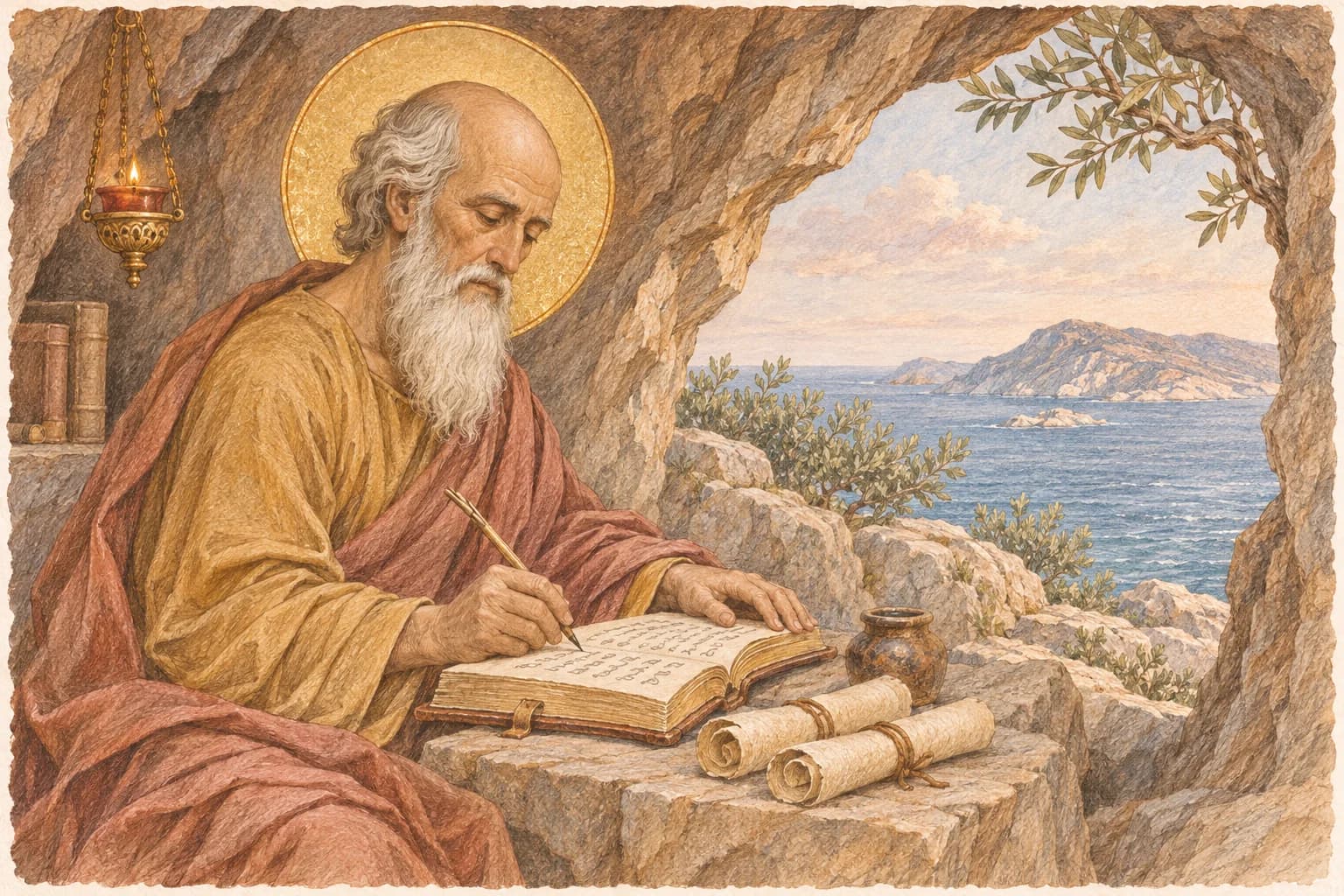
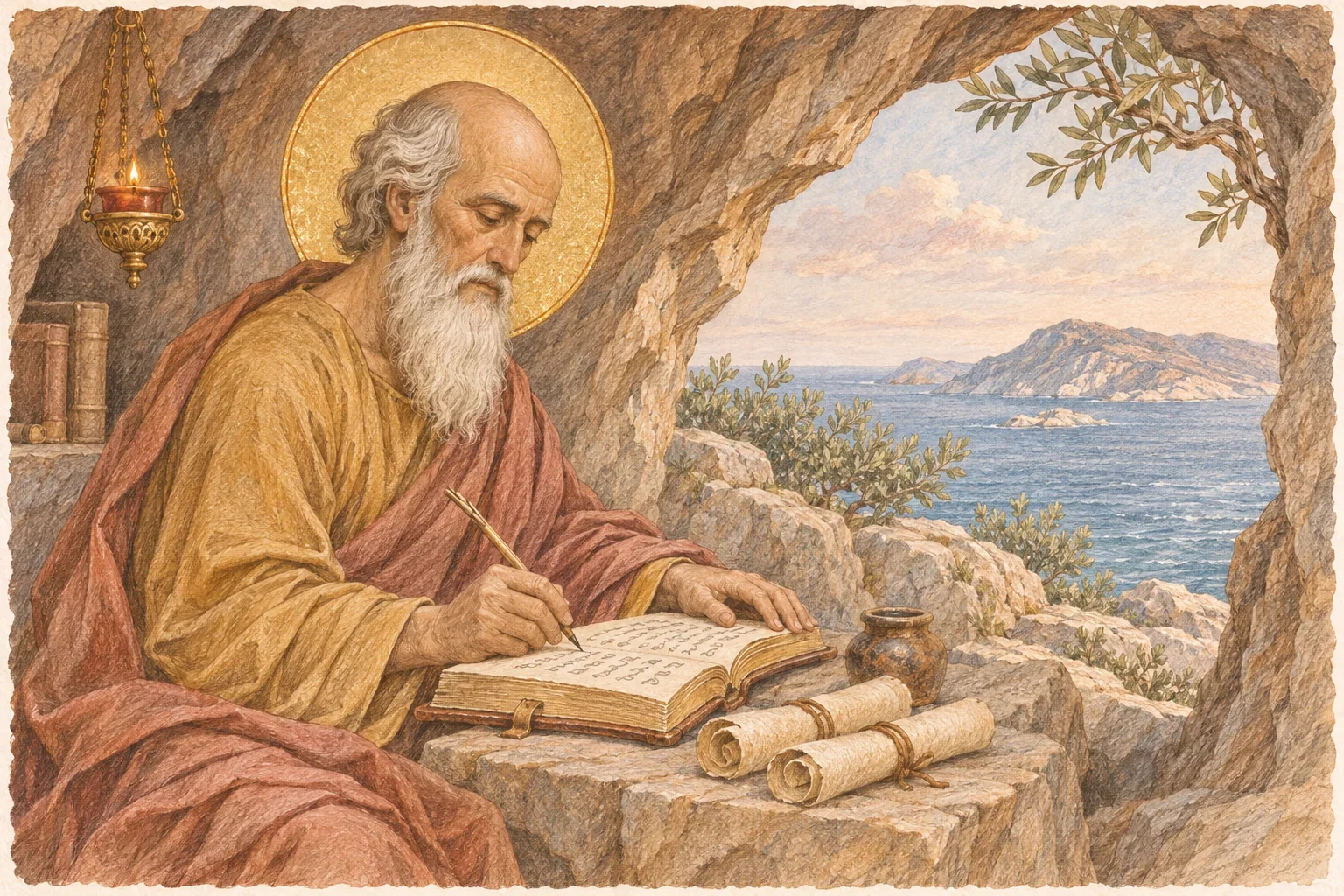
Icons may show John as a young man beside Christ or as an elderly figure writing a book. This is not necessarily a contradiction: the artist is depicting different periods and subjects within church remembrance. Compositions including Prochorus emphasise the transmission of testimony to a disciple. An inscription helps identify an icon more reliably than the apparent age of the figure or the presence of a writing instrument. The eagle also belongs to the evangelist’s symbolism, but on its own it cannot replace the image’s full context.
Love expressed in action
In the letters associated with John, love of God is inseparable from the treatment of a brother or sister. Readers are asked to test their words against their life: can someone claim love while remaining indifferent to another person’s need? The question concerns fidelity, truth and practical assistance rather than uninterrupted warm feelings. Discernment between truth and falsehood remains important; love does not require calling every action good.
A useful beginning is to compare the scene at the cross with a passage in the First Letter concerning help for a person in need. In one, care becomes a personal responsibility; in the other, it is explained as a principle of communal life. Reading them together connects the apostle’s theological witness with action. It is more fruitful than collecting attractive quotations about love while overlooking a nearby person who needs conversation, food or support.
A question for reflection
Do you know the full designation of the John you are reading about?