
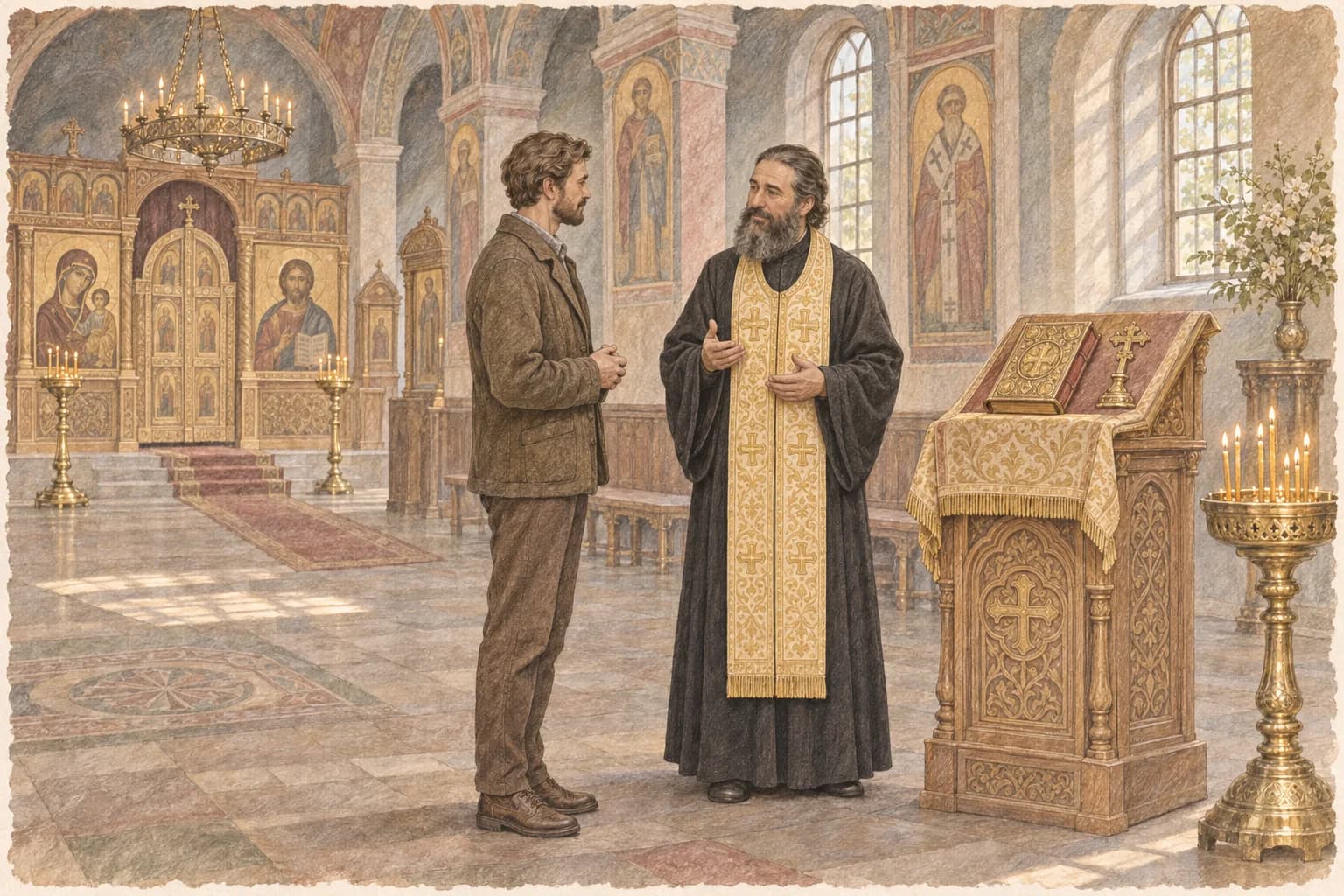
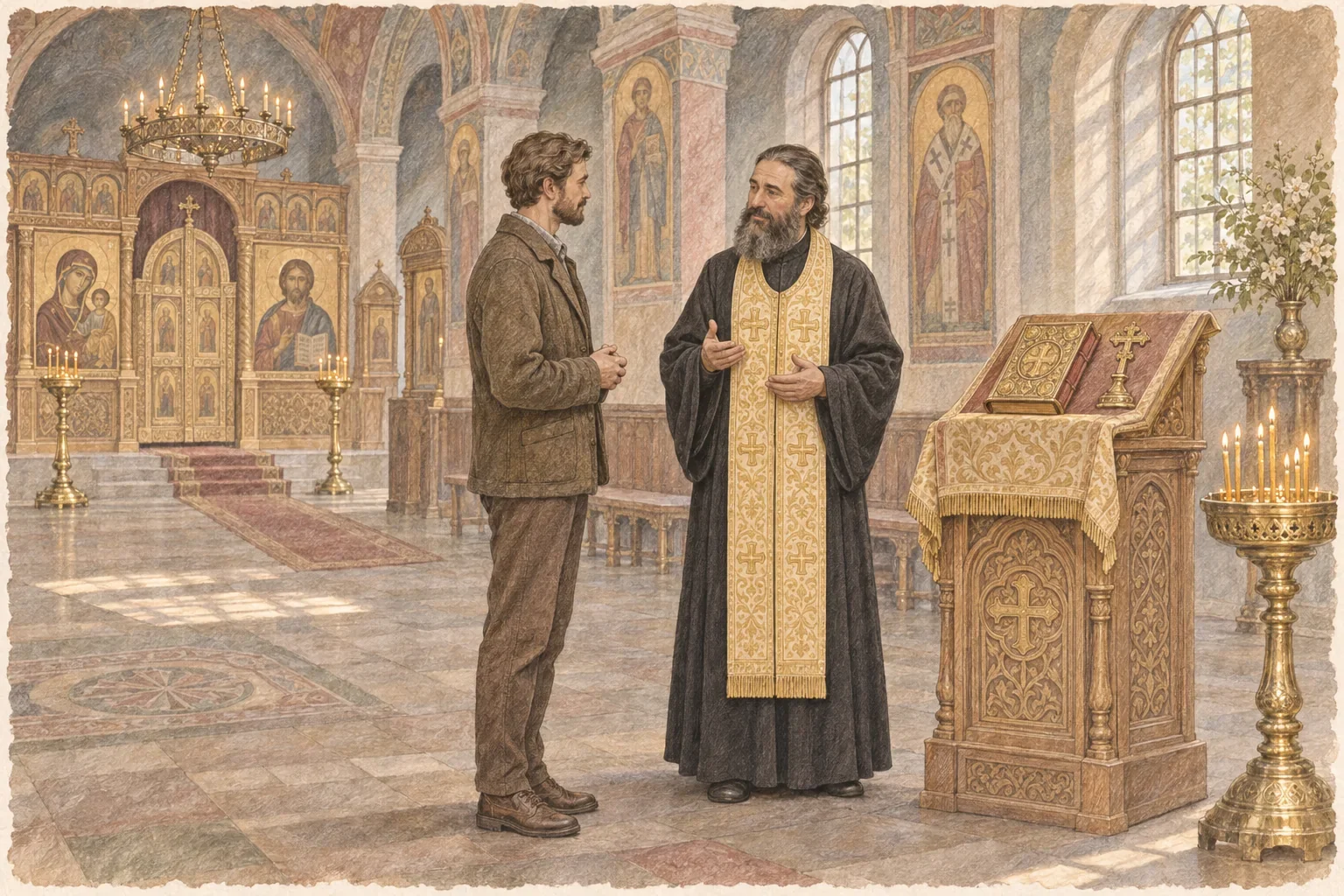
Yes, confession is possible without receiving Communion on the same day. Repentance and the Eucharist belong together in church life, but confession is not simply an admission ticket to the chalice. Ask your parish about its confession arrangements.
A separate confession may follow a long absence, allow for an unhurried conversation or reflect preparation circumstances. Tell the priest whether you intend to receive Communion and what is troubling you. This makes advice responsive to your situation.
The possibility of separate confession does not make the Eucharist unnecessary or justify postponing it indefinitely out of fear. Nor should you force yourself to approach while concealing a significant difficulty. Discuss it openly instead of copying someone else’s situation.
Contact the parish beforehand: confession during a busy service may not allow a long conversation. Request another meeting if you need one. This does not mean every confession requires an extensive account.
Why confession is more than a preparatory formality
In confession a person turns to God in repentance and acknowledges sins in the presence of a priest. Its meaning cannot be reduced to obtaining permission for the next service. If someone needs to repent, being unable to receive Communion that particular day does not make the confession pointless. The sacraments remain connected without becoming a mechanically inseparable package of actions.
For example, someone returning after a long absence may first need to examine their life. They can arrange confession and then discuss preparation for Communion. Another person may confess beforehand and receive at the next Liturgy according to the parish’s arrangements. Local practice matters, but an interval between confession and Communion does not entitle an observer to declare that the repentance was unreal.
When to explain the situation beforehand
It helps to say beforehand that you want confession but do not currently plan to receive Communion, briefly explaining why. You may be uncertain about preparation, need to discuss a serious issue or be unable to remain for the Liturgy. Explaining prevents the priest from working with a mistaken assumption. There is no need to invent an excuse or conceal a difficulty for fear of appearing insufficiently experienced in church life.
If the reason is fear of never being worthy of Communion, that fear also deserves discussion. Repentance does not promise a condition in which every weakness has disappeared. Repeated postponement while demanding absolute personal flawlessness can obstruct church life. Conversely, a wish to finish an uncomfortable conversation quickly should not lead someone to hide circumstances that genuinely require attention.
Preparing for confession itself
Begin with actual actions and relationships: where you deceived someone, caused harm, refused to correct an injustice or deliberately continued conduct you recognise as wrong. That is more useful than assembling the greatest possible number of technical names for sins. Brief private notes can help if you fear forgetting something important. They support memory rather than replace personal repentance, and do not require reading a lengthy report of every event in your life.
Mention other people’s circumstances only as far as necessary to explain your own conduct. Confession is not an opportunity for a prosecution speech against an absent relative. In a conflict, distinguish your responsibility from someone else’s. Repentance does not require taking responsibility for abuse committed by another person or assuming blame for circumstances beyond your control.
What follows a separate confession
After confession, clarify the steps that actually follow from the conversation. Perhaps you need to apologise, return someone’s property, end a deception or agree on further sacramental participation. Such actions are not payment for forgiveness; they express a desire not to continue the same wrong. If a recommendation is unclear, ask about its meaning and a practicable way of carrying it out.
There is little benefit in checking every word of the confession against dozens of online answers afterwards. Something important that was forgotten can be discussed calmly at the next opportunity without turning memory into a continuous examination. A separate confession may begin a return to regular church life. A temporary decision not to receive Communion should not simply become indefinite waiting: identify with the priest the next step towards which you are preparing.
May I come simply for a conversation?
Yes, pastoral conversation can be requested without an intention to confess immediately. This matters for someone who does not yet understand the sacrament, has doubts or wants to ask about church life. State the request plainly instead of trying to perform a confession when what you actually need is an explanation. The priest can suggest an appropriate time and distinguish instruction, support and repentance itself.
For example, after a long absence you may not know where to begin. A brief message to the parish can say that you want to discuss returning to church life and clarify preparation. It need not contain a public confession; the subject and a reply contact are enough. Being offered a preliminary conversation does not mean permanent exclusion from the sacraments. Explanation can help the next step be taken freely and thoughtfully. At the same time, endless information gathering should not become a way of postponing every personal decision. After the meeting, identify what you can actually do next and which questions genuinely remain unresolved.
A question for reflection
Do you need confession, a longer conversation or help preparing for Communion?