
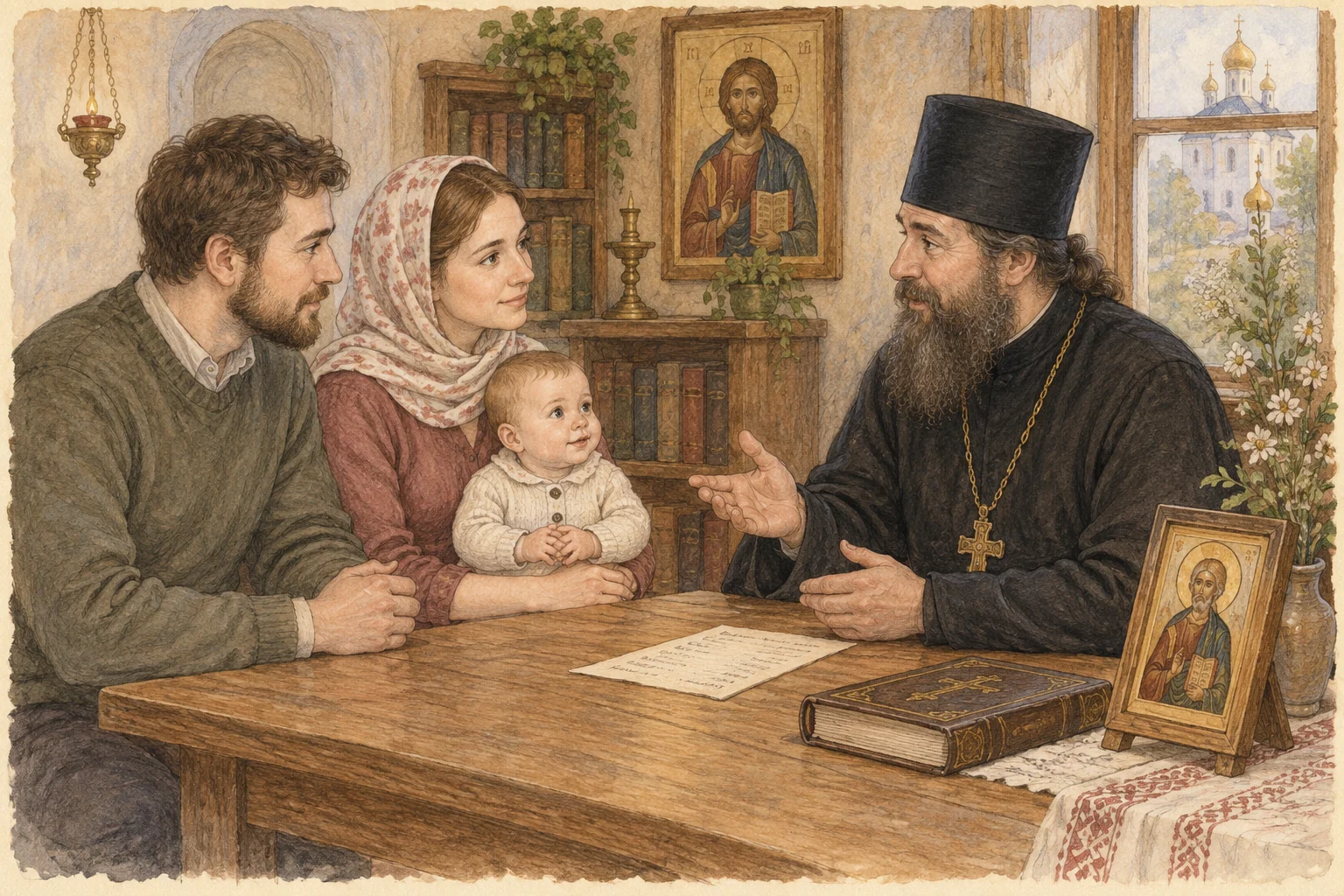
Preparing for baptism involves clarifying not only the name used in church but also the saint associated with it. Several saints can share a name, and a familiar modern name may have a different ecclesiastical form. Discuss this beforehand without searching for the supposedly most powerful patron.
A Name and a Saint Are Different Things
A name identifies a connection with a particular saint, but its sound alone does not tell that saint's story. Choosing Alexander or Mary still leaves the question of which saint is intended. Orthodox guidance on baptismal names highlights the saint's example and discussion with the parish priest. This concerns prayer and imitation, not the selection of a protective charm.
Begin with your existing name or your child's name. Ask whether there is a corresponding name in the church calendar and which form is used in worship. Do not decide solely from shared initials or change a name because of a random online table. Different languages may use different forms for the same saint; similar spelling does not always identify the same person.
Making a Meaningful Choice
Read a reliable life of the saint. Learn the period in which they lived, what they are known for, and how the Church commemorates them. An adult may be drawn to an example of faithfulness, mercy, patience, or honest service. Your biographies do not need to match. A patron need not share your occupation, marital status, or temperament.
Parents can choose a story they will later be able to explain to their child. Discuss the decision together and with the priest before buying a personalised icon. Family tradition can be a helpful starting point, but competition between two sides of the family should not determine preparation for a sacrament. The name itself does not guarantee a particular destiny.
Baptismal Anniversary, Birthday, and Name Day
A birthday marks your birth, a baptismal anniversary recalls entry into the Church, and a name day is connected with the commemoration of your patron saint. They may coincide, but do not have to. The Russian expression “Angel's Day” is often used for a name day, although a patron saint and a guardian angel are not the same being.
If a saint has several commemorations or many saints share the name, clarify the choice and record it. An online calendar can identify possibilities, but it cannot automatically recover the circumstances of a baptism long ago. There is no reason to select a new date each year merely because a different search result appears first. Know whose memory you are celebrating.
When the Name or Patron Is Unknown
Check a surviving baptismal certificate, ask parents and godparents, and contact the church where the baptism took place. A missing record does not mean you should be baptised again or invent a history. Bring the information and remaining questions to a priest so that the next step can be considered without guessing.
After clarification, keep the saint's full designation and commemorative date with your family records. Find an appropriately identified icon, read the life, and learn a simple prayer. A name day can include attending worship when possible and doing something good for another person. The choice becomes meaningful over time: not merely remembering a date for congratulations, but learning Christian life through the example of your patron.
Reading a Saint's Life With a Child
Begin with one understandable action rather than a long catalogue of spiritual achievements: helping someone in need, remaining honest, or refusing to answer cruelty with cruelty. Explain unfamiliar words without requiring a child to reproduce the circumstances of an ancient life. The story should not become a rebuke. Saying that the saint endured suffering while the child complains prevents you from hearing the child or explaining the story well. Ask instead what surprised them and what they would like to understand.
For your family record, note the saint's full name, the source of the biography, and the commemorative date in the calendar used by your parish. If two books give different dates, do not alter a certificate by guesswork; show both entries to the priest. When buying an icon, compare its inscription with the name you have chosen and establish whether it depicts the intended saint. An attractive image alone cannot distinguish two people who share a name.
The Name at Home and at Church
In a multilingual household, write the familiar and ecclesiastical forms of the name alongside each other. Relatives and godparents can then pass on the information accurately. There is no need to shame a child for using a family nickname or turn every introduction into a test. If a recording error has occurred, discuss it with the church that issued the document instead of creating several inconsistent versions of the record.
An adult may develop a particular devotion to another saint after baptism. Do not immediately conclude that the original choice was mistaken or independently change the name in church records. Explain to your priest what you want to clarify. Learning from other saints does not require forgetting your own patron. Keep a short list of questions arising from the biography and return to them over time. That offers more substance than repeatedly searching for a better name based on personality or supposed good fortune.