
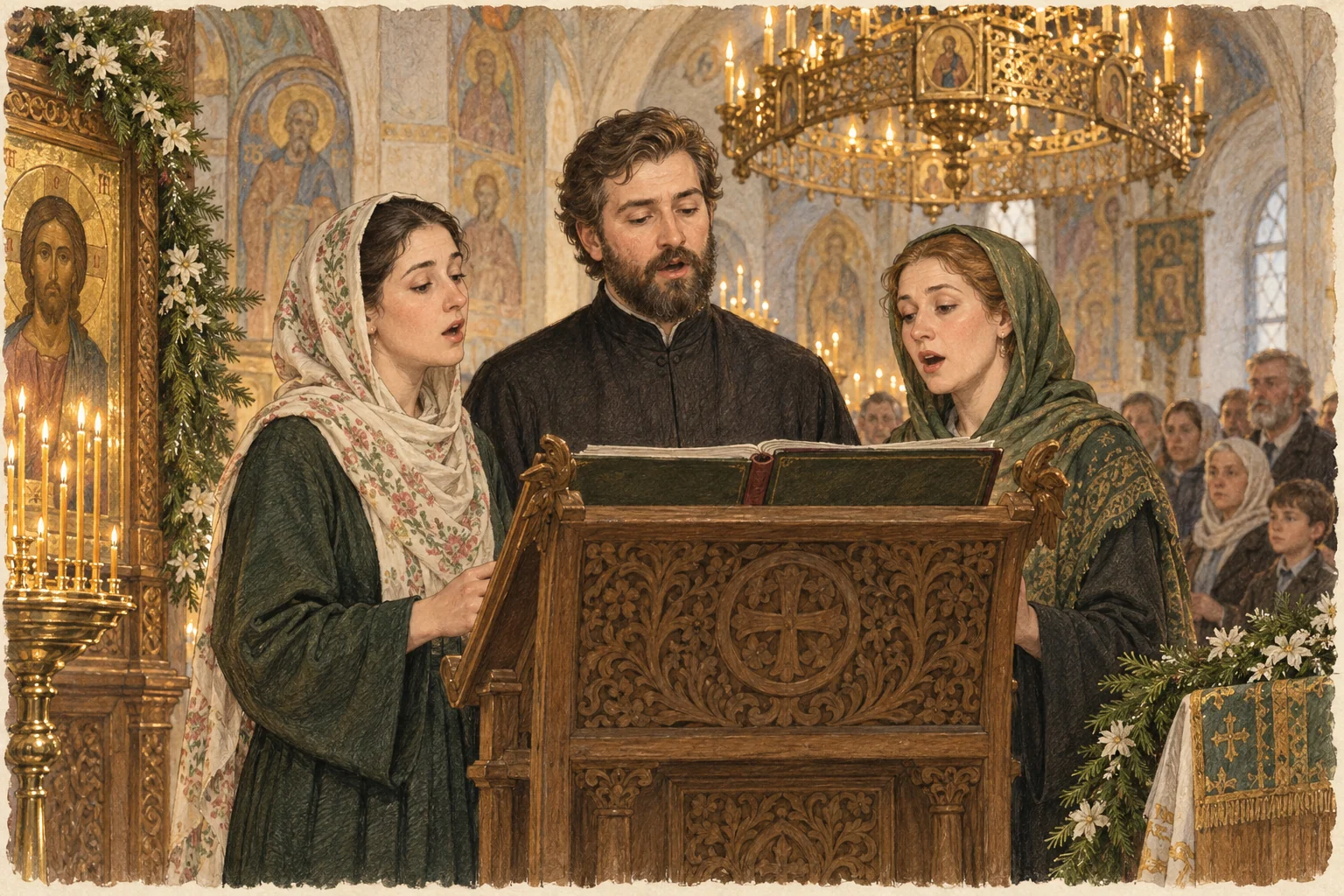
The Polyeleos is recognizable by solemn singing, light, and incense at Matins. Strictly speaking, it is the singing of Psalms 134 and 135 in the Church's traditional numbering. In everyday parish speech the same word sometimes refers to a larger festive section. That explains why people may use it both for the hymn and for the period when worshippers approach an icon.
What the Psalms Say
Psalm 134 calls the congregation to praise the Lord's name; Psalm 135 repeatedly affirms the endurance of his mercy. The name “Polyeleos” is associated with that mercy. In Bibles using Hebrew-based numbering these are Psalms 135 and 136. Compare opening words as well as numbers when finding them.
The psalms recall creation, the exodus from Egypt, and God's care for his people. The refrain brings different events into a common act of thanksgiving to the God who does not abandon humanity. Repetition does more than lengthen the singing. It gives distracted listeners another opportunity to return to the prayer and hear what they missed.
Why the Church Becomes Brighter
After the restrained opening of Matins, the festive section noticeably changes the atmosphere. Lights, incense, and solemn singing express shared joy. Switching on a particular lamp, however, is not a separate sacred act that every worshipper must manage to witness. Buildings and local arrangements differ.
The following hymns and Gospel reading unfold the meaning of the Sunday or feast. Knowing what the Church is celebrating helps more than simply waiting for a familiar melody. Before attending, read the name of the feast and its Gospel passage. That provides useful landmarks even when the language or musical setting is unfamiliar.
The Polyeleos and Anointing
In many parishes, worshippers approach the Gospel book or festal icon during this part of the Vigil and are anointed with oil by the priest. This anointing belongs to the festive service but is not the definition of the Polyeleos. Neither the quantity of oil nor the opportunity to be anointed explains the whole service.
Anointing at the Vigil is not Chrismation following Baptism, and it does not replace the sacrament of Holy Unction. Nor does it replace confession or Communion. On a first visit, ask a parish helper about the local arrangement before the service. There is no need to rush forward or fear that missing the anointing makes your prayer invalid.
Participating Without Distraction
When people begin moving toward the icon, keep the passage clear and allow time for those who have difficulty walking. You can remain where you are and listen; waiting in a queue need not become your only activity. Explain beforehand to a child what people are approaching and why they take turns.
The Polyeleos is not appointed at every Matins. The liturgical rule distinguishes days and seasons, while common parish practice varies in how fully the order is followed. The absence of familiar singing does not by itself prove an error. For a first encounter, remember the essential point: this is joyful biblical thanksgiving within Matins, not a separate ceremony for obtaining oil.
In the Slavonic psalm, the expression sometimes rendered literally as “confess” calls people here to give thanks and praise, not to begin listing sins to a priest. One small vocabulary clarification can unlock the text. Choose a repeated expression, learn its meaning, and notice how it joins different verses into a single prayer.
The whole psalm and the verses sung
At home you may read the complete psalm, while a parish service may include only a selection of its verses. Following the choir line by line in an ordinary Psalter can therefore be confusing. For a first encounter, a text of the hymn used in that parish may be easier. Do not read omitted verses aloud over the singers or assume a neighbouring parish must use the same musical arrangement. Questions about the extent of the singing belong to the ordering of worship, not to a competition between listeners over who knows the text best.
Thanksgiving without oversimplifying history
Biblical memories of deliverance include events that modern readers find difficult. Do not turn an isolated verse into permission to dislike people of another faith or country. Read the whole psalm and its context before consulting a church commentary. Prayer directs attention toward God and his mercy; it does not authorize us to label personal opponents as God's enemies. This distinction particularly matters with children, who may otherwise take a historical or figurative expression as advice about how to treat a classmate.
The repeated refrain can encourage gratitude for particular good things without making every convenient coincidence a special revelation. Remember help received at the right time and the person who offered it. Gratitude does not require denying what was painful on the same day. Festal singing need not become a demand to produce a joyful feeling immediately, regardless of what you are carrying. It is possible to join a prayer of thanksgiving while still needing comfort and support.
When queuing makes listening difficult
A parent may be attending to a child, an older person may find the queue physically demanding, and a first-time visitor may not know where to go. Ask a parish helper about the arrangement beforehand and choose a manageable way to participate. Do not assess another person's faith by whether they approach for anointing. After your turn, move clear for those following and return your attention to the reading or singing. This keeps your own action connected to the continuing Matins instead of treating the entire service as finished once you have approached the icon.