
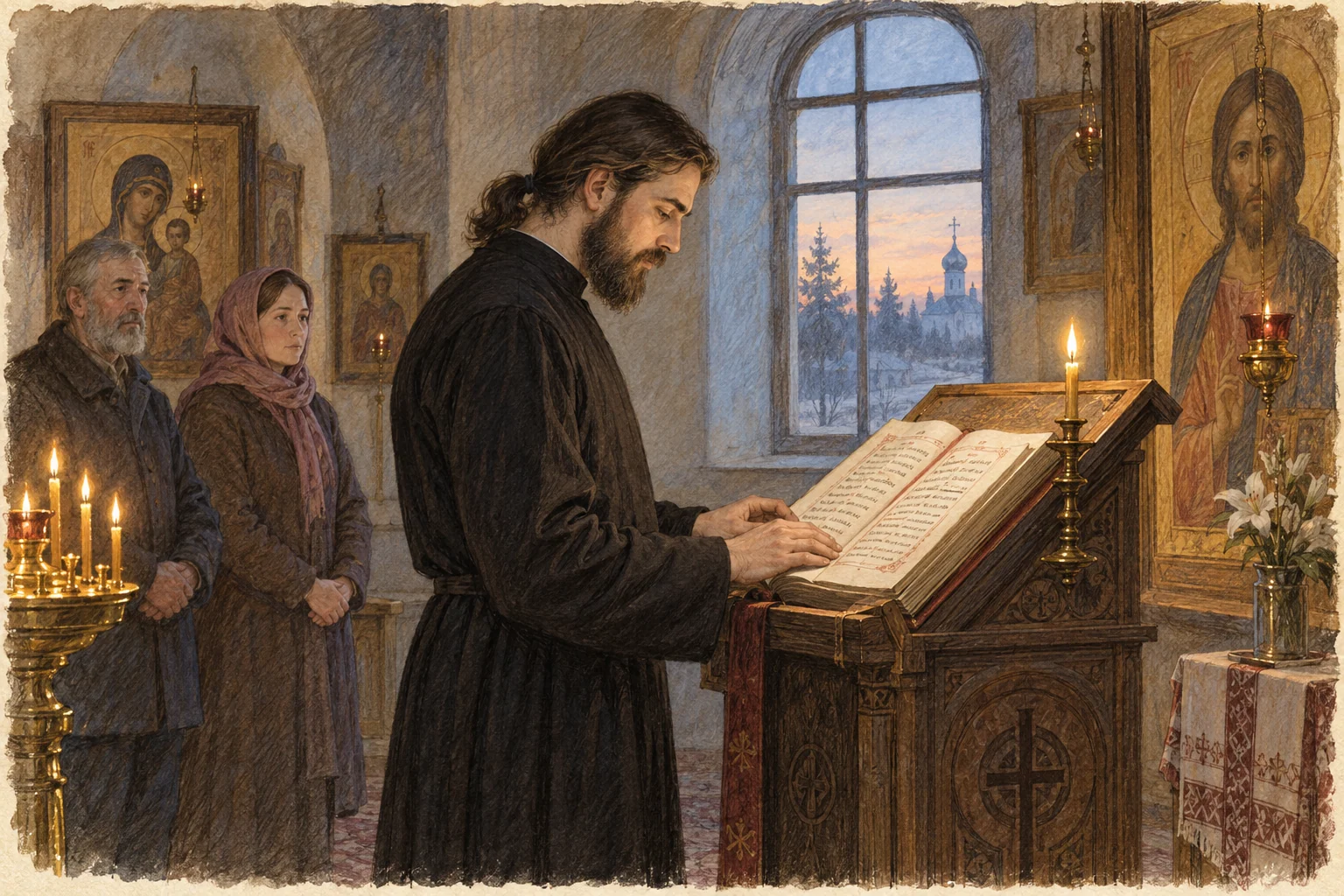
The Six Psalms come near the beginning of Matins: Psalms 3, 37, 62, 87, 102, and 142 in traditional Orthodox numbering. Read consecutively in two groups of three, they join sorrow, repentance, thanksgiving, and hope. This is not merely a collection of the Bible's saddest passages. It gives a voice to prayer in different conditions of human life.
Finding the Right Texts
In English Bibles using Hebrew-based numbering, the corresponding psalms are 3, 38, 63, 88, 103, and 143. Different numbers do not mean different prayers. Compare the opening words, or use a printed order of Matins when uncertain.
Psalm 3 expresses trust amid threats; Psalm 37 voices the burden of sin and suffering; Psalm 62 longs for God as the source of life. In the second group, Psalm 87 does not conceal profound distress, Psalm 102 gives thanks for mercy, and Psalm 142 asks for guidance. These brief landmarks cannot replace the texts, but they help a listener recognize their movement.
Why People Keep Still
The usual practice is attentive standing, with the lighting subdued. Outward quiet helps the congregation hear a single reader instead of treating the prayer as background for movement. If you arrive during the reading, stop in an accessible place. Lighting candles and approaching icons can wait for a more suitable moment.
This does not prohibit helping someone or leaving when unwell. Quiet serves prayer, not the reverse. A parent may gently take a distressed child outside. Someone who cannot stand comfortably may sit. Pushing yourself toward fainting in order to maintain an outward posture does not help you or the surrounding congregation.
Hearing Difficult Words
Biblical lament does not require someone to pretend that pain has already disappeared. A person may pray before feeling any consolation. Psalm 87 should therefore never be used to diagnose another person's spiritual condition. Severe emotional distress does not establish a lack of faith or personal blame.
The Six Psalms place language about sin beside language about external danger, but they do not authorize us to call every illness a punishment. These are prayers addressed to God, not a complete theory explaining misfortune. If a particular line troubles you, discuss that line with a priest after the service. You do not have to resolve your whole experience of suffering while the reader continues.
Learning to Listen
At home, read one psalm in a translation you understand. Notice who is speaking, what is feared, what is requested, and where thanksgiving appears. Try recognizing that psalm at the next service, then gradually add the others. This is more workable than demanding immediate comprehension of every phrase in all six.
Do not correct nearby worshippers for moving or making the sign of the cross: detailed customs vary. Nor should distraction become another reason for despair. When you recognize a word, return quietly to the prayer. The aim is not flawless immobility but learning to stand before God with gratitude and with experiences you cannot yet express in your own words.
If following on a phone, lower its brightness and silence notifications beforehand. When reading in dim light is difficult, simply listen: the Six Psalms are proclaimed for everyone, not assigned as compulsory screen work. Afterwards, return to one remembered petition. An attentively heard line can become the beginning of a deeper encounter with its whole psalm.
Six voices, not a single continuous story
These psalms do not form the biography of one person who experienced every named condition within a few minutes. A transition from suffering to thanksgiving does not mean that someone in pain must immediately become calm. Hear each text as a distinct address within the shared prayer. In one you may recognize your own experience; another may call to mind someone whose life is currently very different from yours. That difference does not prevent you from praying together.
Notice how the request changes: a person seeks protection, asks for mercy, or desires instruction in God's way. This prevents the entire sequence from becoming an exercise in anticipating danger. In particular, do not automatically identify every enemy mentioned with a colleague or relative involved in a disagreement. Before applying a line to someone else, ask what help you yourself can seek without demanding another person's defeat. Listening can widen concern rather than rehearse an argument.
The reader and your own page
When using a book, remember that the reader sets the shared pace. You do not need to whisper ahead to finish a private reading. If you lose your place, listen without the page for a while. Participation is not incomplete because every sound could not be matched with its printed word. At home, however, stop over an unfamiliar expression, compare a translation, and return to the beginning of a sentence. Study and listening during worship have different purposes, and allowing each its place reduces unnecessary frustration.
Explaining it to a child
Before the service, explain that everyone will listen to several biblical prayers and that conversation can wait. Choose a simple theme, such as asking for help or giving thanks for life. Do not demand that a small child keep as still as an adult, or describe the subdued lighting as something threatening. Afterwards, ask which words they recognized without setting a memory test. If something frightened them, discuss that particular line calmly instead of forbidding questions. Gradual familiarity is more helpful than fear of making a mistake in front of other people. It also gives adults an opportunity to notice which parts need further explanation.