
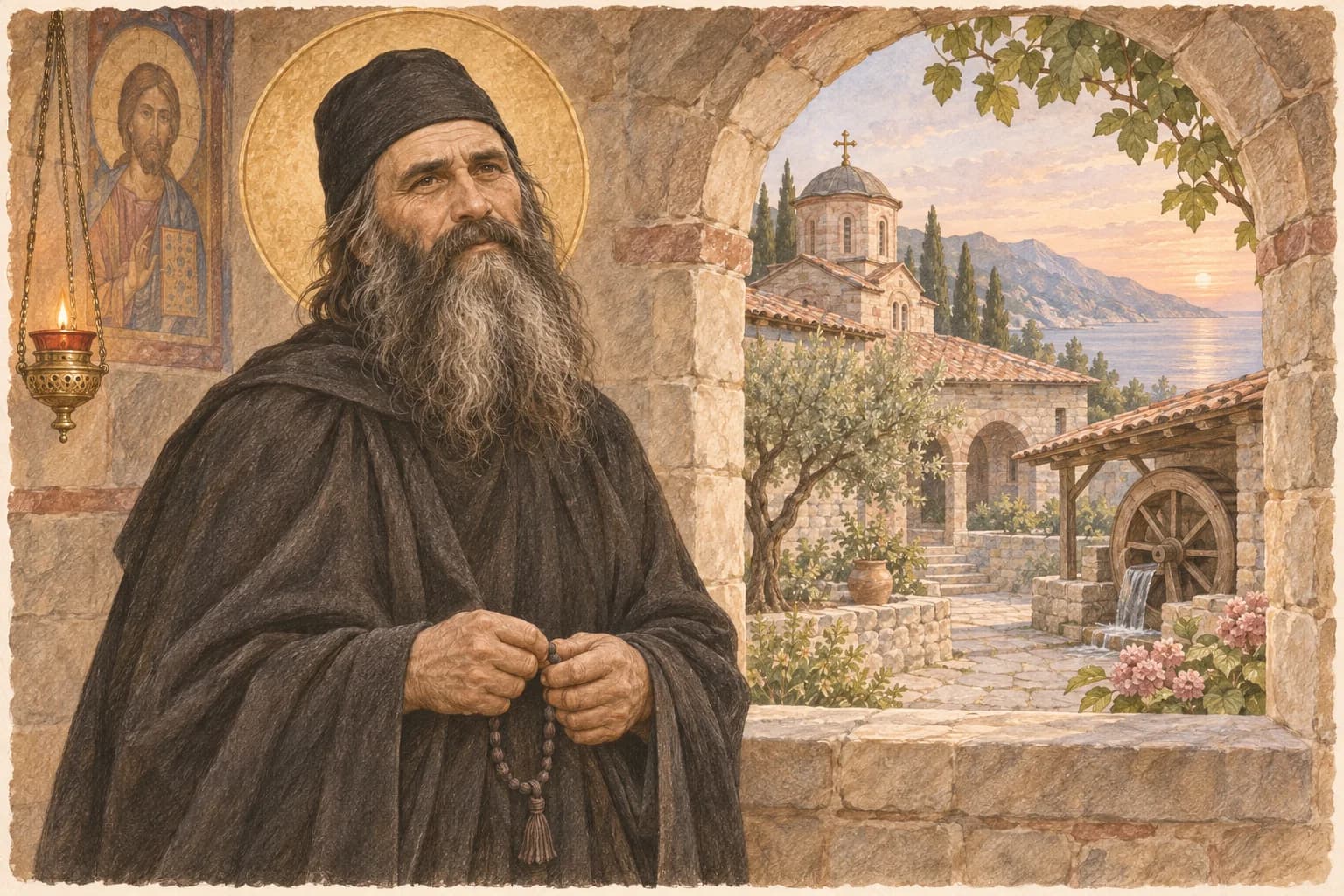
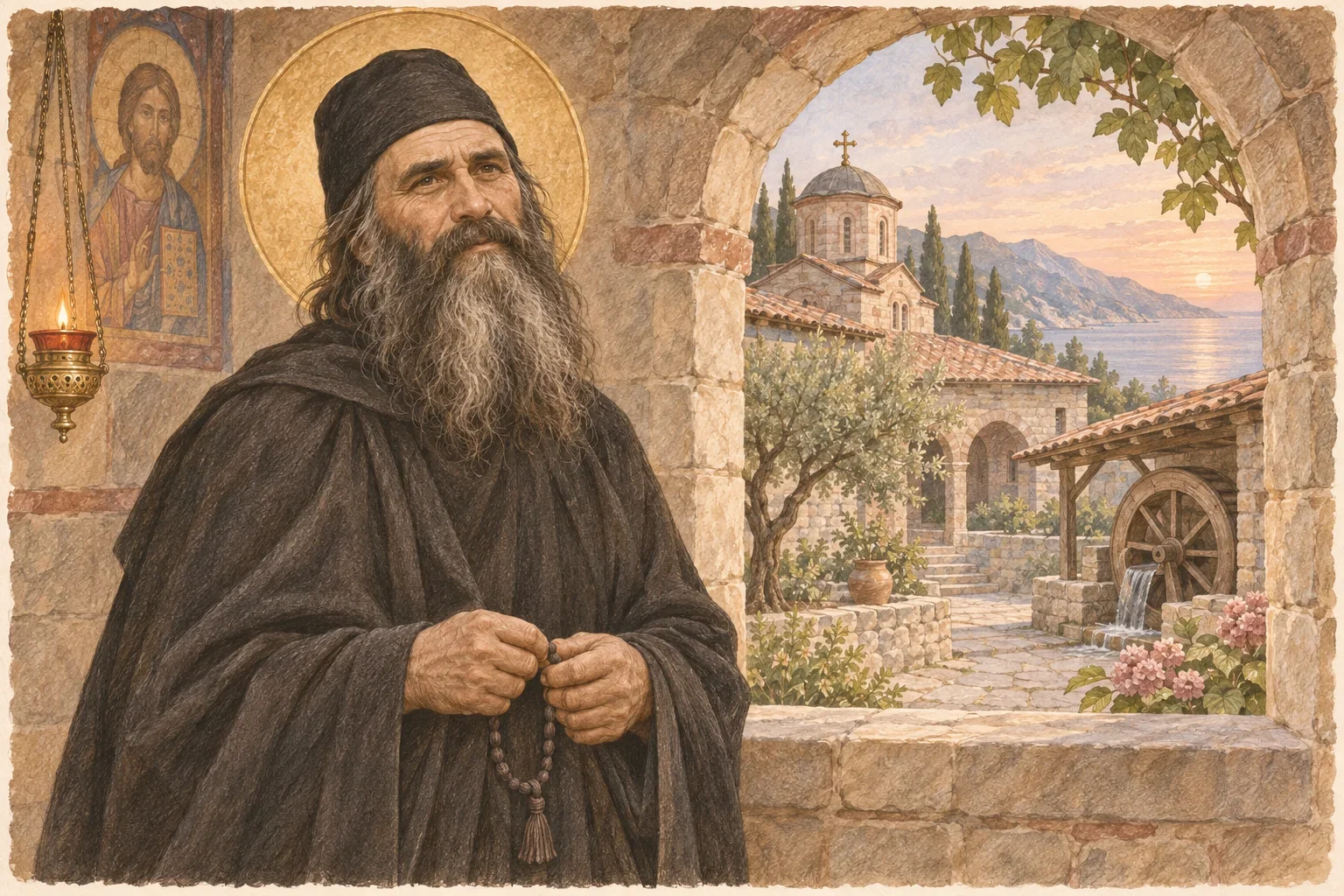
Saint Silouan was a monk of the Russian Saint Panteleimon Monastery on Mount Athos around the turn of the twentieth century. Love for people and prayer for the world are central to his spiritual legacy. His writings should not be reduced to one severe phrase detached from that witness.
His life and writings became widely known through Archimandrite Sophrony’s work. Distinguish the saint’s own notes from the biographer’s explanation. This makes the source of a particular statement clearer and avoids confusing the book’s different voices.
Ascetic language is not an invitation to self-abasement or refusal of help in serious psychological distress. An experienced monk’s words should not indiscriminately become a self-directed exercise. Despair calls for support rather than competition in severity towards oneself.
Begin with a connected account of his life and love for others. Discuss difficult expressions with a pastor before trying to apply them. A practical starting point is refusing bitterness towards a particular neighbour and seeking support when overwhelmed.
Semyon Antonov and the Russian monastery on Athos
Silouan the Athonite was born in 1866 into a peasant family and bore the name Semyon Antonov before monastic life. He arrived on Athos in 1892, and his life became associated with the Russian Monastery of Saint Panteleimon. Monastery records mention ordinary responsibilities: work at the mill, practical assignments and attention to the community’s affairs. He died in 1938.
This outward account may appear less eventful than the biography of a traveller or church leader. It is important precisely here not to invent adventures to make a story more entertaining. Silouan’s significance concerns above all his experience of prayer and witness to God’s love. Everyday work was not a backdrop to supposedly real spiritual life. His treatment of workers and fellow monks showed how prayer could be joined to attentive care for other people within the responsibilities actually entrusted to him.
Humility without contempt for the human person
For Silouan, humility is connected with knowing God and relinquishing complacent superiority. It is not an instruction to regard a human person as useless or undeserving of care. Acknowledging one’s sin should open the possibility of repentance rather than close it through the conviction that change is impossible. His teaching on humility therefore belongs with his testimony to mercy and love.
The distinction becomes practical in a conflict. Someone can acknowledge harshness, ask forgiveness and change their conduct without accepting an invented responsibility for everything that happened. Conversely, endless declarations of personal worthlessness may conceal unwillingness to take a concrete step. When reading Silouan, ask whether a thought leads towards honesty and love or becomes a cycle of sterile self-abasement. The latter cannot automatically be counted as spiritual progress simply because its language sounds severe or religious.
Why prayer for enemies matters so much
One of the recognisable themes of his legacy is love and prayer extending beyond one’s own circle. Seeking good for an enemy does not mean declaring evil good or abolishing justice. It means refusing to desire a person’s final destruction and hoping for their conversion. Such prayer resists the habit of sustaining one’s inner life through continual hatred.
This can be especially difficult after serious harm. A victim cannot be required immediately to feel warmth or restore access to a dangerous person. It is possible to maintain distance, seek protection and still learn not to organise one’s interior life around revenge. In Silouan, love for enemies is a profound theme of spiritual experience, not a convenient short command for silencing another person’s pain. An honest beginning may simply be acknowledging the inability to pray in that way and asking for help, without pretending to have reached a spiritual state one has not reached.
His struggle against despair is not a dangerous technique to imitate
Silouan is associated with demanding language about the soul’s condition that popular retellings sometimes detach from its accompanying refusal of despair and hope in God. Such expressions arose within a particular spiritual experience. They are not universal exercises instructing everyone deliberately to induce terror, sleeplessness or a sense of personal destruction.
If reading intensifies severe anxiety, depression or intrusive thoughts, there is no need to continue experimenting in order to prove zeal. Pause, speak with a trustworthy pastor and seek clinical help when needed. A spiritual text does not replace assessment of a health condition. The fundamental direction of Silouan’s legacy is towards hope and love. An interpretation that makes despair the final goal reverses that direction. Recognising the limits of one’s present understanding is more responsible than copying an isolated expression as though it were a self-administered method.
How to read the book about Elder Silouan
Archimandrite Sophrony Sakharov, who knew the elder personally, played a major role in preserving and explaining his legacy. His book combines an account of Silouan’s life and spiritual experience with Silouan’s own writings. Readers should distinguish the disciple’s explanatory narrative from the elder’s texts. This makes interpretation more precise and helps quotations be attributed accurately.
Begin with the biographical account to encounter the person and monastic setting, then move to short passages from the writings. Slow reading and repeated attention to love, repentance and prayer are useful. There is no obligation immediately to experience everything described or reproduce a monk’s daily rule. For a lay reader, a meaningful result might be greater attentiveness towards a difficult person and a refusal to take pleasure in someone else’s misfortune. That is a modest step, but one directly connected with the substance of the book.
A question for reflection
Does your reading nurture hope and attention to other people?