
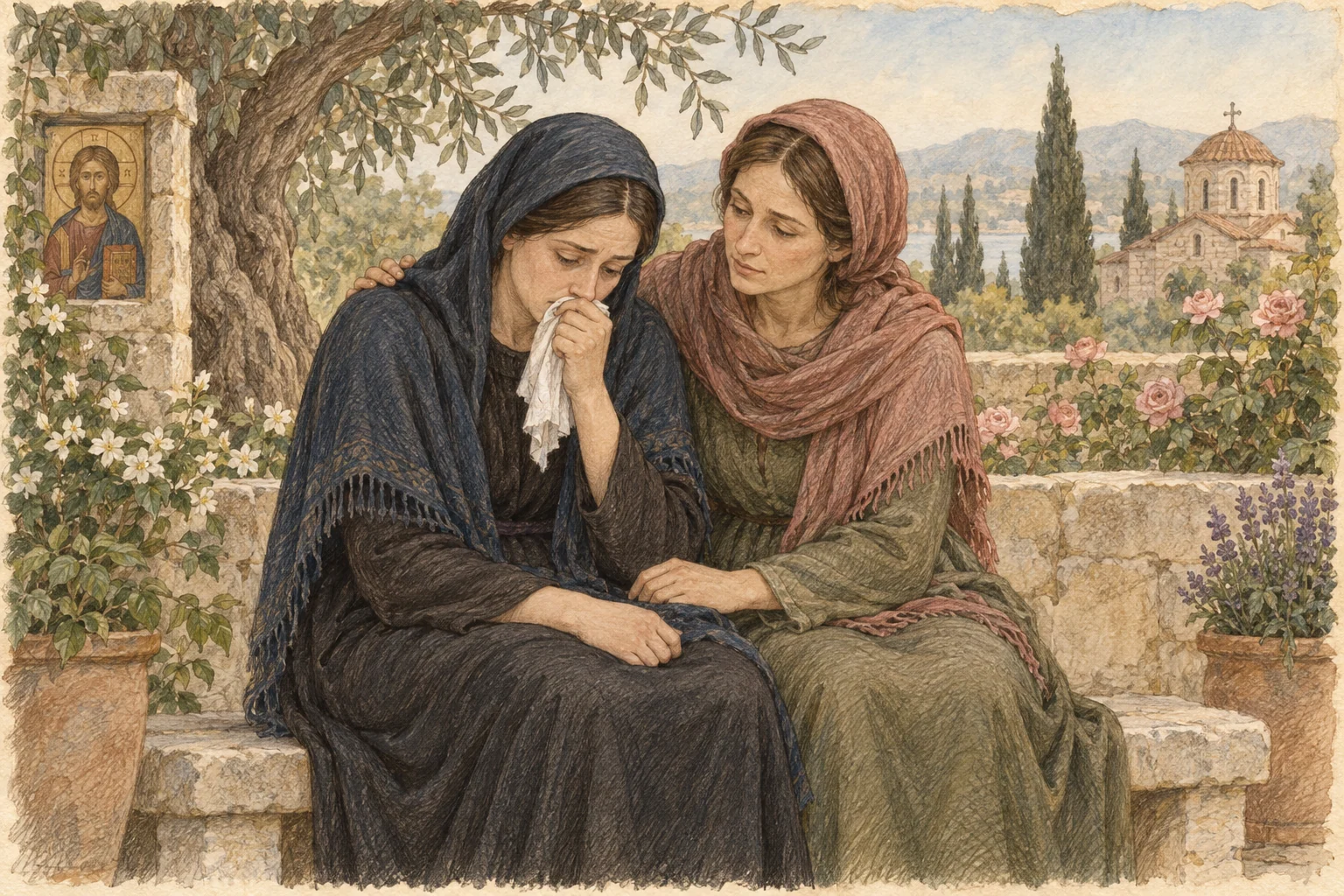
After a child's death, a family first needs gentle presence and practical support, not an explanation of why the tragedy happened. Neither a visitor nor an article can know the hidden meaning of a particular loss. It must not be attributed to parental guilt, insufficient prayer, or a lack of love for the child.
Be Present Without a Ready Explanation
Statements about having more children, the death being for the best, or needing to be strong can deepen isolation. Another child does not replace the one who died, and hope in the resurrection does not cancel present pain. Christ weeps at Lazarus's tomb in John 11:35. Tears are not evidence of unbelief that others need to correct immediately.
You can say simply that you are sorry, that you are available, and ask whether you may bring a meal. If the parents want to talk about their child, listen without redirecting the conversation towards your own experience. If they do not, avoid questioning. Do not publish details, photographs, or fundraising appeals without the family's agreement, even with good intentions.
Help That Reduces the Burden
Offer a definite task: shopping, transport, caring for other children, or household work. Agree on a time and keep the commitment. Saying only that they should ask if they need anything can leave organisational work with someone who has very little energy. Equally, do not enter the home or sort the child's belongings without permission.
Remember the other parent, siblings, and relatives whose grief may be less visible. Family members do not have to grieve alike. One person's silence does not prove indifference, and another's tears do not establish weakness. Decisions about remembrance, belongings, and visiting the grave should not be rushed or shaped by demands to grieve correctly.
Prayer and Pastoral Conversation
Contact a parish and explain plainly that a child has died and the family needs prayer and support. Mention circumstances relevant to the appropriate service, including whether the child was baptised. You do not need to know every service name beforehand. Pastoral care is also appropriate after pregnancy loss. The Orthodox Church in America's particular service shows attention to this loss, but does not establish the practice of every Russian diocese.
When long prayers are impossible, a brief request for God's mercy and strength for today is enough to begin. Relatives should not measure prayer by the amount read. Nobody should promise that one service will immediately remove the pain or describe continuing grief as disobedience. Faith allows suffering to be brought before God without pretending it has disappeared.
When Further Support Is Needed
Grief can be uneven, without one compulsory timetable or sequence of feelings. When daily life is difficult to manage, support from a doctor, psychologist, or bereavement professional is appropriate and compatible with prayer. There is no need to wait until the suffering becomes sufficiently serious to ask. NHS guidance on bereavement also recommends seeking support when coping is difficult.
If someone expresses an intention to harm themselves or cannot remain safe, urgent local emergency assistance and the presence of a trustworthy person are needed. A general article is not enough. Support matters later too, after the funeral and other people's return to ordinary routines. A considerate call a month afterwards may be as necessary as practical help in the first days.
Remembrance Belongs to the Family
Ask whether the parents would welcome hearing their child's name, having the birthday remembered, or receiving a photograph you have kept. Not every day is right for that conversation, and agreeing once does not mean being ready to discuss the loss at any time. Offer to preserve pictures, letters, or small belongings, but leave decisions about displaying, storing, or giving things away to those closest to the child. Do not organise a clearing away of the past without their request.
When there are other children, adults can agree on a simple, truthful explanation without making an older sibling responsible for comforting the parents instead of living their own life. A child may want to ask a question, draw, or return to playing. Do not require prolonged silence as proof of love. Offer participation in family remembrance without pressure, and an opportunity to talk separately with a trusted adult, especially when the parents can barely speak themselves.
Support Beyond the First Weeks
Offer a small, definite choice: groceries today or tomorrow, a phone conversation or a meal left at the door. Asking what you should do in general may be too broad. If an offer is declined, do not take offence or demand an explanation. Ask whether you may check in later. Respecting refusal helps the family accept assistance without fearing that they will also have to comfort the person providing it.
Before returning to work or parish activities, discuss what may be shared and who can answer practical questions. Parents should not have to recount the circumstances of the death repeatedly. On an important date, offer quiet company or ordinary household help rather than arranging a surprise. Participation in memorial prayer should not become a public announcement that the family has recovered. People may pray while continuing to experience profound pain; neither a helper nor a congregation needs to turn that moment into an assessment of their progress.
Sources
- Orthodox Church in America: Service After a Miscarriage or Stillbirth
- NHS: Grief After Bereavement or Loss