
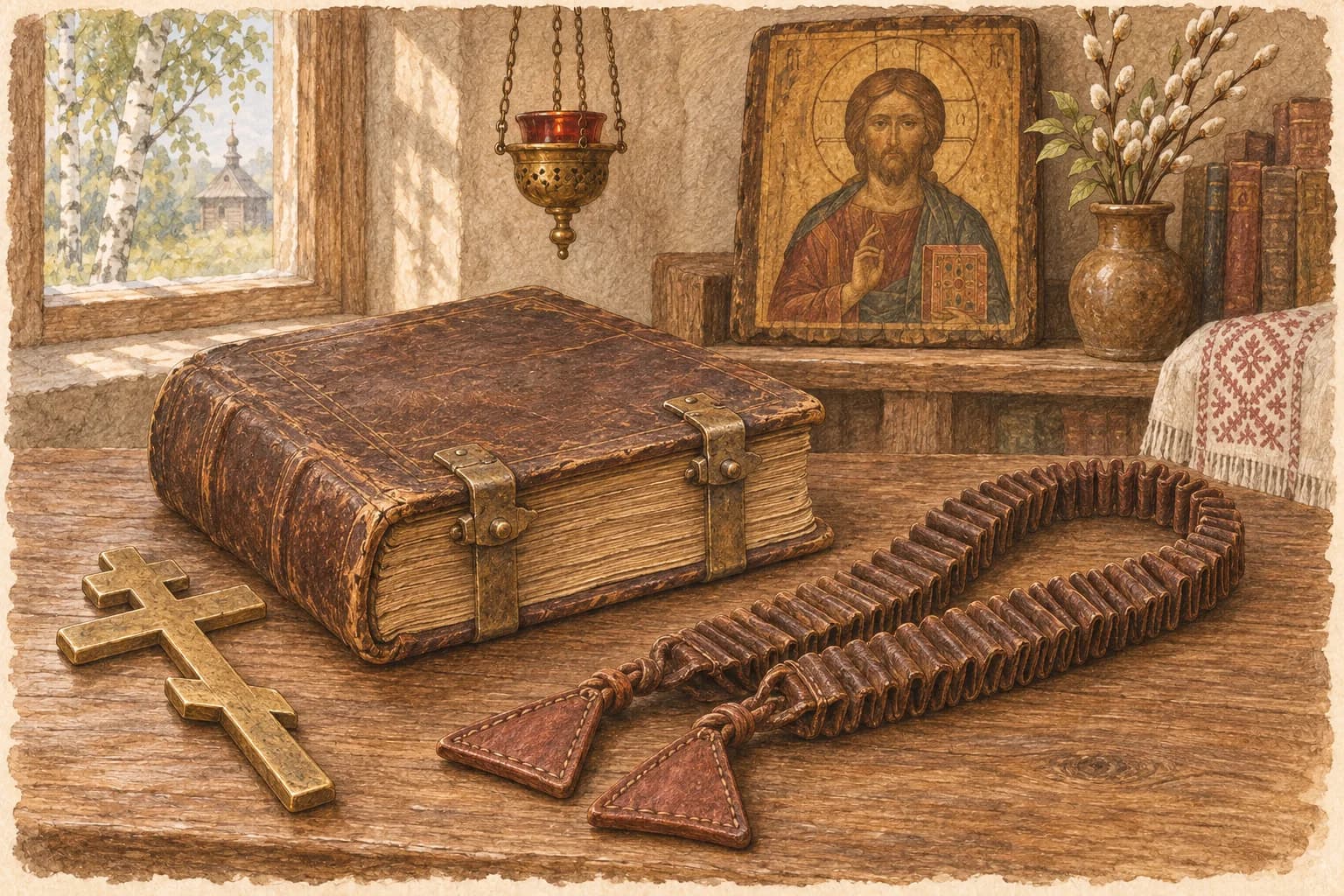
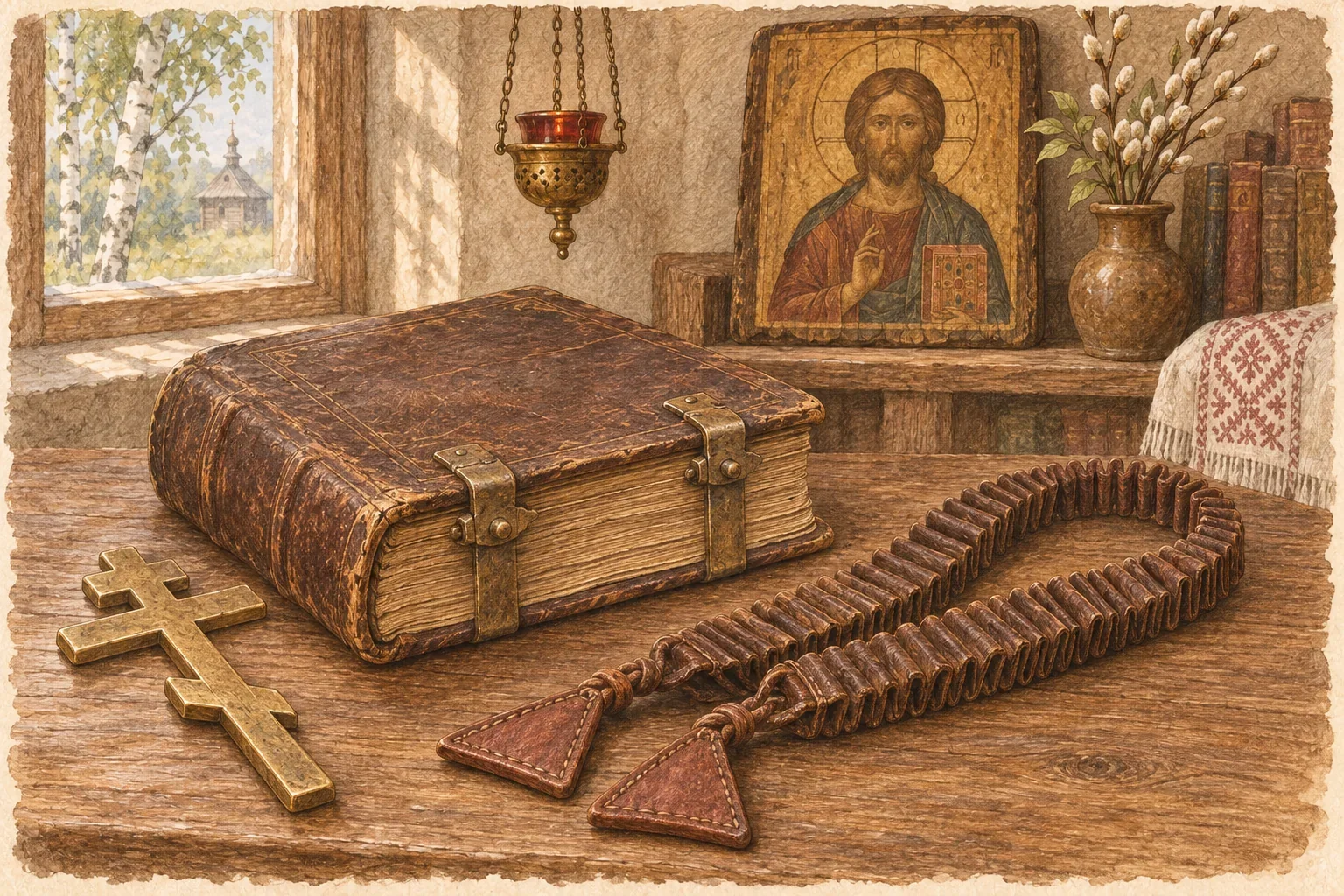
The Old Believer movement arose from rejection of seventeenth-century church reforms and the ensuing division. It is more than a preference for crossing oneself with two fingers. Different Old Believer communities vary, including in their understanding of priesthood and communal organisation.
The reforms concerned liturgical books and ritual practice. The conflict had serious ecclesiastical and social consequences. Understanding it requires distinguishing textual revisions, decisions by church authorities and the experiences of people who suffered persecution.
Using the old rite does not itself mean being outside the Russian Orthodox Church: there are Edinoverie parishes within it. Dress, singing or the two-fingered sign cannot reliably establish someone’s affiliation. Old Believers should not be presented as a single centralised organisation.
Before visiting a community, establish its name and arrangements for visitors. Questions about sacraments depend on ecclesial affiliation, not simply familiar appearances. Discuss the history without mocking another person’s faith or family memory.
Seventeenth-century reforms and the dispute
Under Patriarch Nikon, liturgical books and ritual practices were revised with reference to accepted Greek models. Familiar differences include the two-fingered and three-fingered sign of the cross, the spelling of the name Jesus, particular liturgical actions and ways of performing texts. Participants did not regard this as a disagreement about insignificant design: ritual expressed fidelity to the ecclesiastical tradition they had received.
Opposition to the reforms and subsequent decisions led to division, persecution and serious human consequences. Understanding that history does not require justifying violence because it was committed for a religious purpose. Nor should the dispute be reduced to a modern difference of taste. Contemporary understandings of church authority, the authority of liturgical books and ritual unity all need consideration.
Priestly and priestless communities
Old Belief did not develop as one organisation governed from a single centre. A major distinction concerns priesthood: priestly communities retain or recognise particular forms of sacerdotal hierarchy, while priestless communities historically developed without a priesthood they accepted. Different communities and traditions exist within these broad categories. Calling someone an Old Believer does not identify every detail of their doctrine and practice.
This matters especially for questions about baptism, marriage and worship. The arrangements of one community cannot be presented as the rule for every Old Believer. When planning a family visit or investigating ancestral history, establish the community’s affiliation, location and period. Such specificity helps interpret records in which similar everyday terminology may accompany substantially different ecclesiastical circumstances.
Edinoverie and the old rite
Edinoverie parishes preserve the old rite while remaining in communion with the Russian Orthodox Church. Their existence explains why a two-fingered sign of the cross or an old printed service book does not itself establish ecclesiastical separation. The issue concerns not only ritual form but also the community’s ecclesial communion and the hierarchy it recognises.
In 1971 the Local Council of the Russian Orthodox Church confirmed the lifting of condemnations of the old rites and recognised their equal dignity. This was an important development in the treatment of ritual heritage, but it cannot automatically be described as full reunion with every Old Believer body. Recognising a rite as legitimate and restoring ecclesiastical communion are distinct matters. Brief popular accounts frequently overlook precisely that distinction.
Respectful conversation and visiting a community
Begin by setting aside caricatures: Old Believers do not all live in isolation, dress alike or reject every modern technology. Family arrangements and degrees of strictness differ. If you want to understand a custom, ask about its meaning rather than testing someone against an image from a film. Serious conversation recognises that the other person knows their own community better than an outside observer does.
Before attending worship, ask where guests may stand and which actions are open to people of another ecclesial affiliation. There is no need to imitate unfamiliar gestures ostentatiously or debate during a service. Family questions about marriage or sacraments require attention to circumstances and ecclesiastical guidance; historical research requires documents. Confusing those tasks usually increases misunderstanding. Respecting family memory does not require drawing inaccurate theological conclusions.
Checking accounts of an Old Believer family
Family memory may combine religious affiliation, local customs and the personalities of particular relatives. If a grandmother wore certain clothes or refused a particular household practice, that does not establish a rule for every Old Believer. For a historical account, it is more important to identify the place, the community and documents that explicitly name its affiliation.
Be especially careful with accounts of supposedly secret prohibitions that do not identify the community or period. They may concern an actual religious norm, a family habit or a response to remembered persecution. Clarifying the distinction need not express distrust of older relatives; it preserves their memory more accurately. Record the account as personal testimony while separately noting which details have independent support. Descendants wishing to visit an ancestral church should contact the community and explain their historical interest. Family descent should not be presented as an automatic entitlement to participate in every sacred action: ancestry and present ecclesial affiliation are different questions.
A question for reflection
Which particular community are you asking about?