
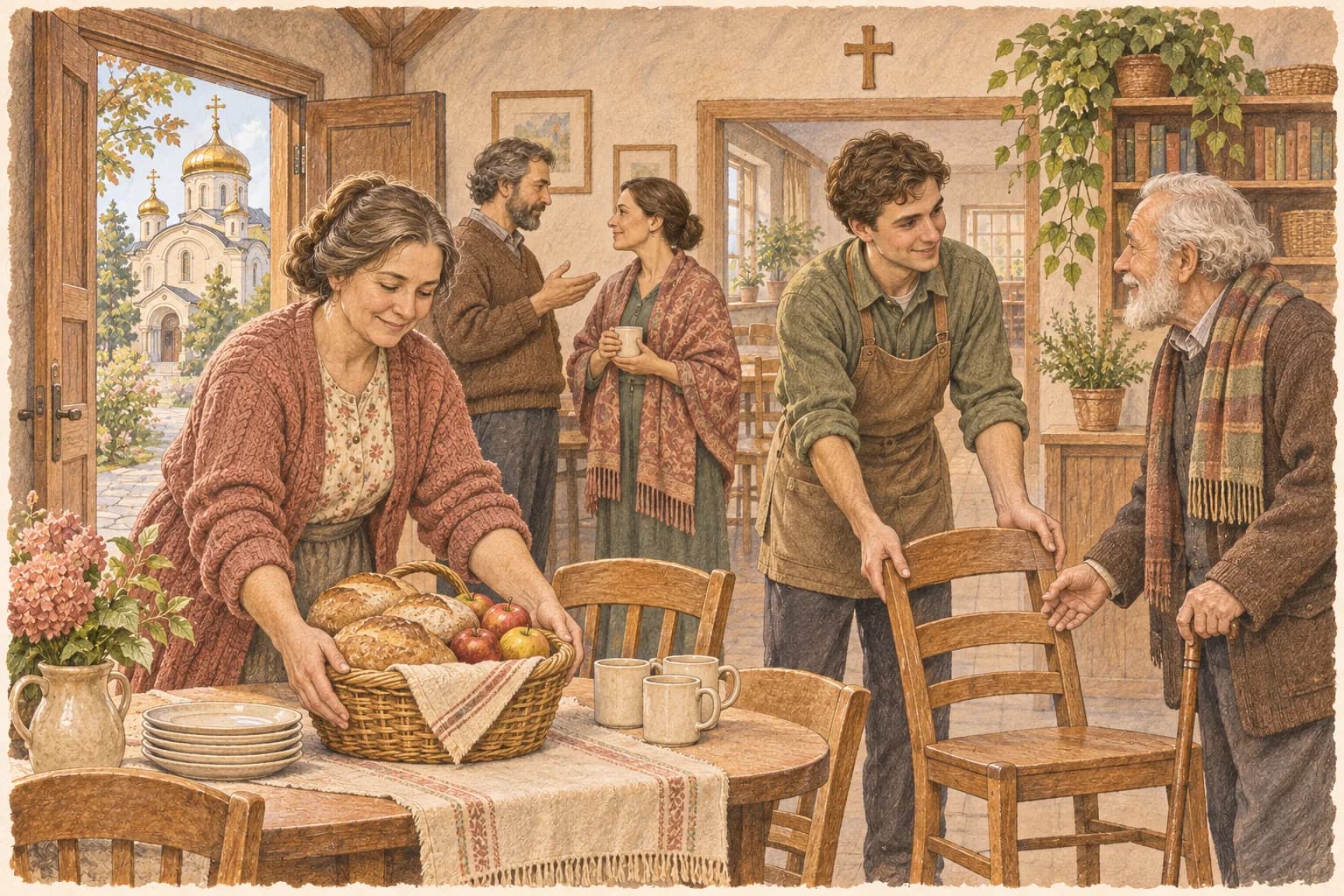
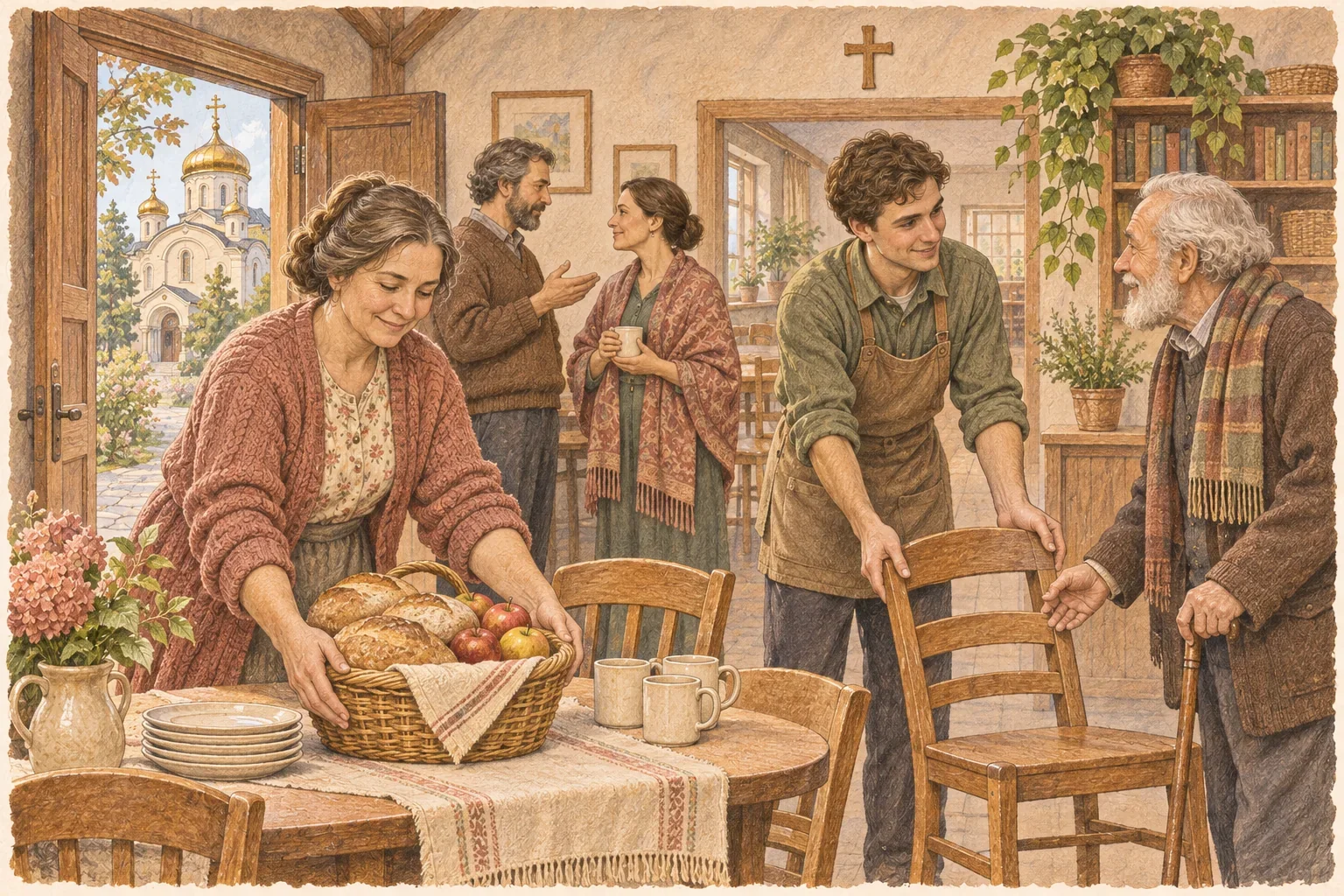
In Christian faith, the Church is more than a building or administrative organisation. It is life in communion with Christ through shared faith, prayer and sacraments. Architecture or a list of institutions cannot by itself explain what the Church is.
A parish makes this shared life visible as people gather for worship, learn and help one another. Yet the Church is wider than one familiar community. A personal relationship with the rector does not exhaust belonging to that communion.
Confessing the holiness of the Church does not make each member incapable of wrongdoing. Harmful actions require honest examination rather than religious excuses. Conversely, one conflict does not provide a complete account of the whole Church’s life.
Begin by attending worship and finding an opportunity to ask questions afterwards. An introductory conversation or open class may help where available. You need not pretend to be someone who has already resolved every doubt.
How Church, church building and parish relate
In everyday language, church can mean a building. That sense is clear when someone asks for directions to a church. In the Creed, however, the reference is not to an architectural monument. A church building provides a place for assembly and worship; a parish gathers particular people and their ministry; the Church is not confined to one building or membership list. The destruction of a building does not mean that the faith of everyone who worshipped there has disappeared.
A parish is not an independent religious club that reinvents its beliefs by majority vote. Its life is connected to the bishop, other communities and a shared confession. This unity is expressed in more than documents: through baptism, the Eucharist, prayer and the received Tradition, a person enters a life that existed before they arrived. Getting to know parishioners can make that life visible, but their personal friendships do not create the Church from nothing.
Why the New Testament speaks of the Body of Christ
In Paul’s letters, the image of a body helps explain the unity of different people. The members have different functions but need one another. Church unity therefore does not require identical ages, temperaments or occupations. Someone helping a sick person, singing in the choir or learning to pray is not inferior merely because their contribution attracts less attention.
The image also has a deeper meaning: the Church is joined to Christ as its Head, not simply held together by participants’ shared interests. The Eucharist stands at the centre of that communion. Yet the body image must not become an excuse for suppressing persons. The diversity of gifts remains, and care for vulnerable members becomes the community’s responsibility. A practical question follows: does the community notice someone who is struggling, or assess them only by how convenient and useful they are? The New Testament image calls for mutual responsibility rather than the disappearance of individual people into an institution.
One, holy, catholic and apostolic: what these words mean
The Creed’s descriptions are not advertising for an institution in which everything always goes perfectly. Oneness concerns communion with Christ and a common faith. Holiness concerns God’s presence and sanctifying action, not a claim that every action of every Christian is sinless. Catholicity concerns the fullness of church life and its openness to people of different nations, rather than merely the holding of meetings or councils.
Apostolicity points to continuity with the apostles’ original witness, their faith and the ecclesial life handed on from them. This does not require preserving every material condition of the first century: modern means of communication can serve the same proclamation. A useful new medium must not, however, silently alter the faith being communicated. The four descriptions belong together. Organisational continuity alone, detached from living the Gospel, does not exhaust what the Church confesses when it speaks these words.
Encountering church life without pretending
A first-time visitor does not have to pretend certainty about every question. You can attend a service, learn its sequence, ask about introductory conversations and gradually get to know the community. Attending worship and participating in the sacraments involve different kinds of preparation. If you are not baptised or do not know the arrangements for Communion, first ask a priest rather than automatically copying the movements of others.
There is no need immediately to join every group, make a large donation or accept a permanent responsibility. A sustainable step is often more helpful: read a Gospel passage, return for another service or assist with a particular task. If a conflict occurs, distinguish the content of the faith, an individual person’s behaviour and the arrangements of that parish. A mistake may be named as a mistake and help sought. Christian fellowship does not require abandoning truth in order to preserve a pleasant outward appearance.
Why personal faith belongs with shared worship
Faith concerns personal conscience: no one can repent or trust God in another person’s place. It does not follow that Christian life is necessarily solitary. The Gospel describes disciples gathered by Christ, while Acts describes common prayer, the breaking of bread and care for those in need. Participation in a community teaches love not only for chosen friends but also for people whose habits differ from our own. Relationships can be difficult without making shared worship unnecessary. Personal responsibility and ecclesial communion support one another when community is not replaced by coercion and personal life is not reduced to indifferent isolation. Both dimensions belong to the Christian understanding of belonging.
A question for reflection
What concrete step would help you encounter church life rather than only opinions about it?