
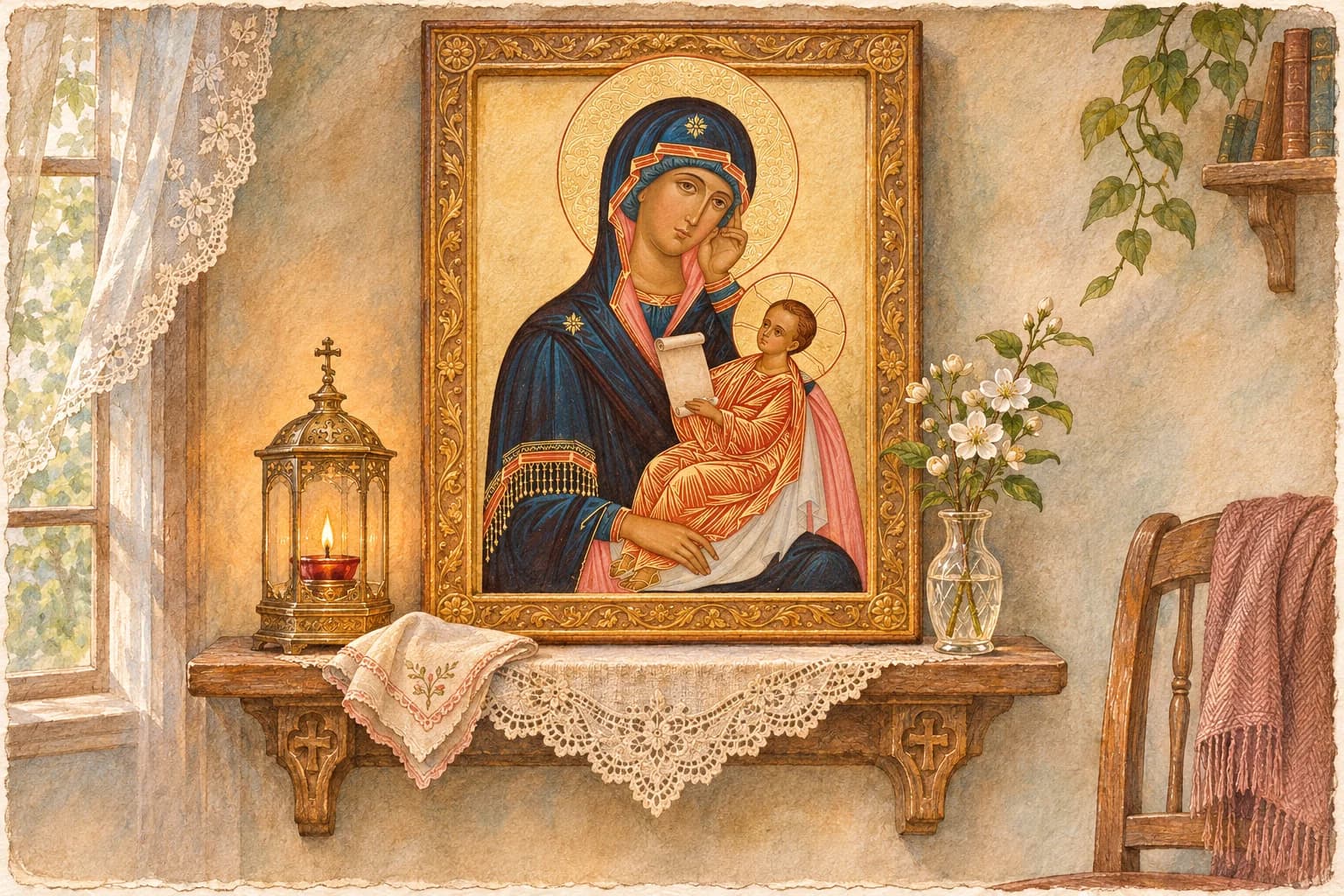
Soothe My Sorrows expresses an appeal to the Mother of God for consolation in grief. It does not promise immediate removal of every cause of suffering. Prayer allows someone to bring pain honestly before God without pretending to feel calm.
The composition and title belong to the church context of the Mother of God’s intercession. Notice inscriptions and the particular copy when examining an icon. Do not merge the histories of different copies into one anonymous legend.
Serious distress may require help from relatives and professionals. Seeking them does not betray faith. No one should be told to stop treatment or grieving merely because they have already prayed before an icon.
Choose a manageable time for prayer and someone you can talk with. State the specific need when asking for help. Accepting support can matter more than searching for an increasingly complicated prayer rule.
The title as a prayerful request
Soothe My Sorrows addresses the Mother of God with a request for consolation. The verb expresses relief and the easing of a painful condition, not a demand that every personal plan be fulfilled immediately. The title can help someone begin praying when they cannot yet describe what they feel in detail: the sorrow has already been named and can be brought before God without a lengthy explanation.
The request itself does not specify what form the answer will take. Circumstances may change, or a person may receive strength to endure a difficult period, encounter someone able to help or find the clarity to make a decision. Christian consolation is more than a comfortable mood. It can coexist with tears and remembrance of a loss without denying the seriousness of what has happened or requiring a person to pretend that the experience no longer hurts.
Reading Mary’s gesture and the depiction of Christ
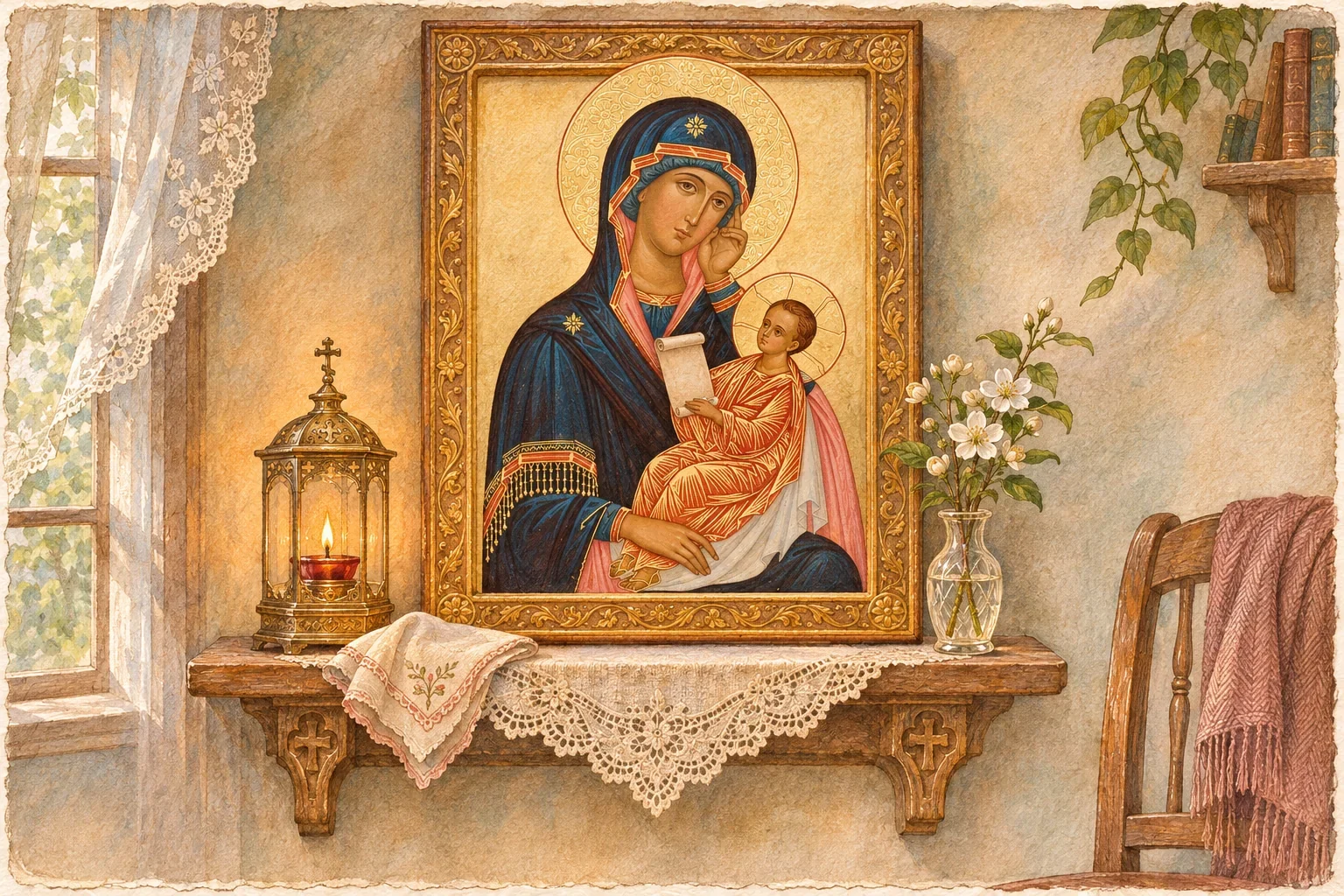
In common versions, the Mother of God inclines her head and brings a hand towards her face, while the Child is shown with a scroll. This contemplative gesture distinguishes the image from many others and suggests attentive concern for human sorrow. It does not make the icon a psychological portrait from which the viewer must infer one exclusive earthly emotion.
The scroll and Christ’s presence keep the meaning within the Gospel: consolation is connected with turning towards God and living by his word. Inscriptions on individual copies should be read in their own right; do not assume every reproduction contains an identical text when it is invisible or different. Where a metal cover conceals details, the designation and complete composition are more dependable than a guess based on one fragment of a photograph.
The image’s veneration in Moscow
The Moscow history connects veneration with the church of Saint Nicholas at Pupyshi. The church narrative describes an image neglected for a time and subsequently brought back to attention through an account of a sick woman’s healing. The commemoration is rooted in that event. The movement from a forgotten object to renewed prayer helps explain the importance of recovered consolation in the image’s history.
The source also mentions later testimonies of help during serious public calamities. These should be presented as church remembrance rather than converted into statistical evidence for treating a particular disease. The icon’s history concerns people’s prayers and the assistance they recognised. Medical conclusions require a different kind of evidence and cannot automatically be drawn from a devotional narrative. Keeping those purposes distinct allows the account to be read respectfully and accurately.
Bereavement and the weariness of waiting
People approach the image in different circumstances: after a loved one’s death, during illness, following a family separation or amid prolonged uncertainty. These experiences do not all require the same words and actions. One person may need to tell the story, while another needs quiet company from someone willing to remain without offering advice. Prayer should not become a test of whether grief is progressing at an approved speed.
When supporting someone, avoid promising that pain will disappear after a specified number of prayers. Ask instead whether company, practical assistance or some time alone would help. Remembrance of a loss may endure for a long time. The absence of immediate relief does not establish that the person prayed badly or is unworthy of consolation; accusations of that kind only deepen isolation and make it harder to seek support.
A manageable approach to a difficult day
When strength is limited, choose a short time for prayer, complete one necessary task and contact someone you trust. A serious difficulty does not automatically require imposing an extensive prayer rule. A manageable approach helps prayer remain living rather than becoming another source of exhaustion. If desired, discuss a rule with a priest who understands the person’s condition.
In severe distress, state the need for help plainly. When life or health is in danger, seek urgent assistance rather than waiting for the experience to disappear simply through standing before an icon. The image’s title supports the appeal for consolation but does not prohibit receiving human care. Asking, listening and remaining present can become the concrete support a person has lacked. Spiritual encouragement is most useful when it makes that connection possible rather than replacing it with an obligation to cope alone.
A question for reflection
Whom can you tell about your sorrow without hiding it behind the right-sounding words?