
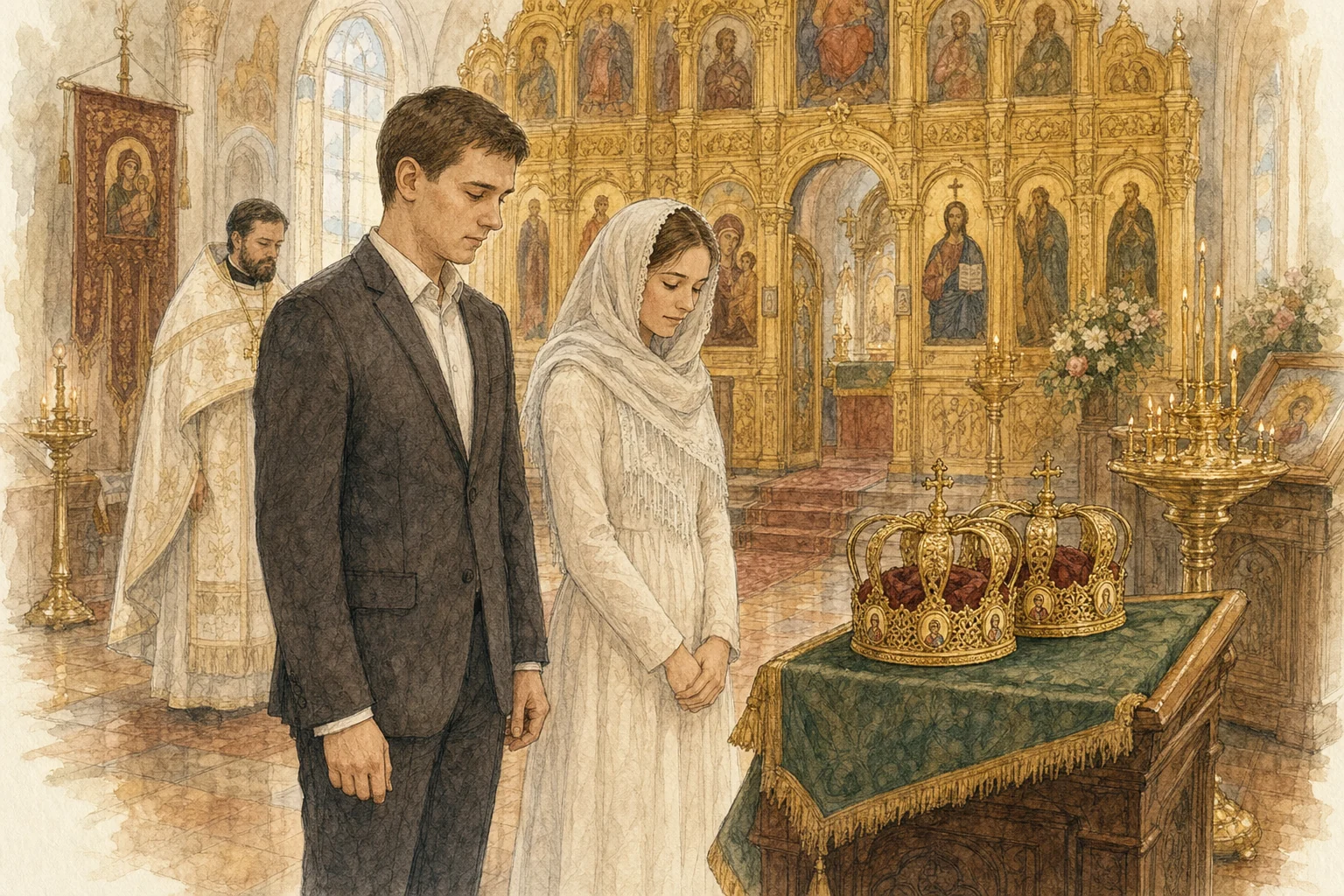
An Orthodox wedding is more than a beautiful addition to a civil celebration. It is a Sacrament in which husband and wife ask God’s help for faithfulness, love, patience and a shared life. The best preparation begins not with an ideal checklist, but with an honest conversation at the parish.
What the Sacrament means
The Church prays for the couple and their common path. This does not promise a life without difficulty or replace everyday work on a relationship. Love grows through forgiveness, care, truthfulness and a willingness to remain together in hard moments.
Begin with a parish conversation
Contact the church early and explain your situation. This is not an exam. It is a chance to discuss preparation, possible dates and the questions that matter to your family.
What to discuss
Ask about the meaning of the promises, preparation, the date, practical arrangements and personal circumstances. A real conversation is kinder and safer than trying to apply a generic online checklist to every family.
Choosing a date
The church calendar and parish practice can affect whether a date is possible. Confirm it with the parish before inviting guests or arranging a celebration.
The day of the wedding
Arrive without haste, follow the guidance given in church and do not worry about memorising every action. The wedding is prayer, not a performance for guests.
Family and photographs
Confirm attendance, photographs and other practical matters with the parish in advance. Relatives can help keep the day peaceful when they remember that the church is a place of prayer.
After the wedding
The Sacrament opens a path rather than closing a task. A family’s church life continues after the day itself through prayer, care, faithfulness and participation in parish life.
If spouses relate to faith differently
Do not hide this question. Speak honestly with one another and with a priest. Pressure rarely helps; patient conversation makes room for truth and respect.
Civil marriage and church preparation
Orthodox parishes normally ask a couple to have a legally registered marriage before the Church wedding. Confirm which documents the parish needs and when they must be shown.
Civil registration and the Sacrament are not rivals. One establishes the legal family; the other brings the spouses' common life into the prayer of the Church.
Do not book guests, travel and a banquet around an assumed church date before this order has been confirmed.
Who may be married in the Church?
The ordinary preparation assumes a man and woman who are free to marry, legally married, baptised and approaching the Sacrament voluntarily.
A previous marriage, divorce, another Christian confession or an unusual family circumstance may require additional pastoral or diocesan guidance.
Do not rely on a friend's experience as a universal rule. Bring the actual situation to the priest early.
Confession, Communion and prayer
Preparation may include Confession, Communion, prayer and a conversation about Christian marriage. The parish will explain the sequence and timing.
This is not a spiritual entrance examination. It helps the couple approach the wedding as a Sacrament rather than only a ceremony.
Health, work and different levels of church experience can be discussed honestly instead of concealed.
What happens during the wedding?
The service includes the betrothal and the crowning, prayers for the couple, Scripture readings, a common cup and a procession led by the priest.
These actions speak of fidelity, shared joy, sacrifice and a life walked together with God. They are not decorative scenes for a photograph.
The priest and parish workers will guide you. You do not need to rehearse every movement as if preparing for a performance.
Rings, crowns, candles and other items
Ask the parish for the exact list. Practices differ concerning rings, candles, icons, towels and who provides particular items.
Buy nothing merely because an online checklist calls it mandatory. Simplicity does not diminish the Sacrament.
If holding a candle or standing for a long time is medically difficult, discuss an accessible arrangement beforehand.
Clothing and appearance
Choose modest, comfortable clothing suitable for prayer and the season. Confirm any parish guidance concerning the bride's dress, head covering and the practical use of crowns.
Clothing should allow the couple to stand, walk and remain attentive without constant adjustment. The goal is not to reproduce an idealised photograph.
A medical device, disability or pregnancy should be mentioned so the service can be organised safely and respectfully.
Witnesses and holding the crowns
Customs concerning witnesses and who holds the crowns vary. Ask the parish whom to invite and what that person will need to do.
Choose a calm, reliable person who respects the service rather than building a ceremonial group only for appearance.
Donation and wedding expenses
Ask directly about the parish's practical arrangements. A donation supports the church and its ministry; it is not a price for God's blessing or a guarantee of happiness.
Do not let decoration, clothing and hospitality create debt or resentment. The Sacrament does not become greater when the celebration becomes more expensive.
What the wedding does not guarantee
The Sacrament does not make conflict impossible, erase addiction, heal abuse automatically or remove the need for honest work on a relationship.
Serious danger, violence or coercion should not be covered with religious language. A person's safety matters, and professional and pastoral help may both be needed.
Wedding prayer asks for grace to live faithfully; it does not give one spouse spiritual power over the other.
Building family life afterward
Begin with sustainable practices: a short shared prayer, honest conversation, participation in the Liturgy and willingness to ask forgiveness.
The anniversary can become a day of gratitude and renewal rather than only a date for photographs.
Different levels of church experience require patience. Forced prayer and public pretence rarely build trust.
If the family already has difficulties
Do not use the wedding as a final attempt to avoid a necessary conversation. Name the difficulty before setting the date.
Pastoral guidance can accompany family counselling, addiction treatment, medical care or legal protection. Church prayer does not require rejecting appropriate professional help.
Additional questions
Do we need an expensive celebration?
No. The scale of the reception is a family decision and does not determine the meaning of the Sacrament.
What if one spouse is only beginning church life?
Say so honestly during preparation. The purpose of the conversation is to find a truthful path, not to reward polished answers.
Can personal circumstances be discussed privately?
Yes. Ask for a conversation rather than explaining sensitive details in front of guests or parish visitors.
Common questions
Can we discuss a personal situation?
Yes. A personal conversation is exactly where such questions belong.
How do we confirm a date?
Contact the parish before beginning the wider arrangements.
Next step
Start with that simple conversation. You do not need a perfect scenario before you approach the church; clarity grows through an honest first step.