
Amen expresses affirmation and assent, often explained in prayer as truly or so be it. This ancient word is retained across different Christian liturgical languages. It is not a magical seal without which God would supposedly fail to hear a person.
During worship, the response Amen expresses the community’s participation in a prayer. It therefore matters to hear what we are affirming. In Gospel speech the word also introduces solemn statements rather than appearing only at the end of prayers.
Habitually saying the word is not identical to attentive assent. Yet noticing distraction does not require anxiously repeating a prayer until it feels perfect. Return your attention and continue, rather than making the response a test of flawless performance.
At home, avoid rushing the final word and recall the prayer’s meaning. In church, respond according to the congregation’s practice so that your volume does not interfere with others. Attention matters more than making the ending conspicuous.
Where the word Amen comes from
Amen comes from Hebrew and is associated with affirmation, faithfulness and truth. It entered Christian prayer through biblical and liturgical tradition. Many languages retain it, which is why the Russian amin and English Amen are recognisably related. Here a translation can explain the meaning while the word itself remains the traditional form of a prayerful response.
Depending on its position, it may affirm the truth of what has been said or express assent to a prayer. No single everyday replacement captures every use. At a prayer’s conclusion it expresses agreement and participation; before a statement in Gospel speech it plays a different grammatical role. Notice who says it, where it appears and which words it qualifies.
Why the congregation responds after a prayer
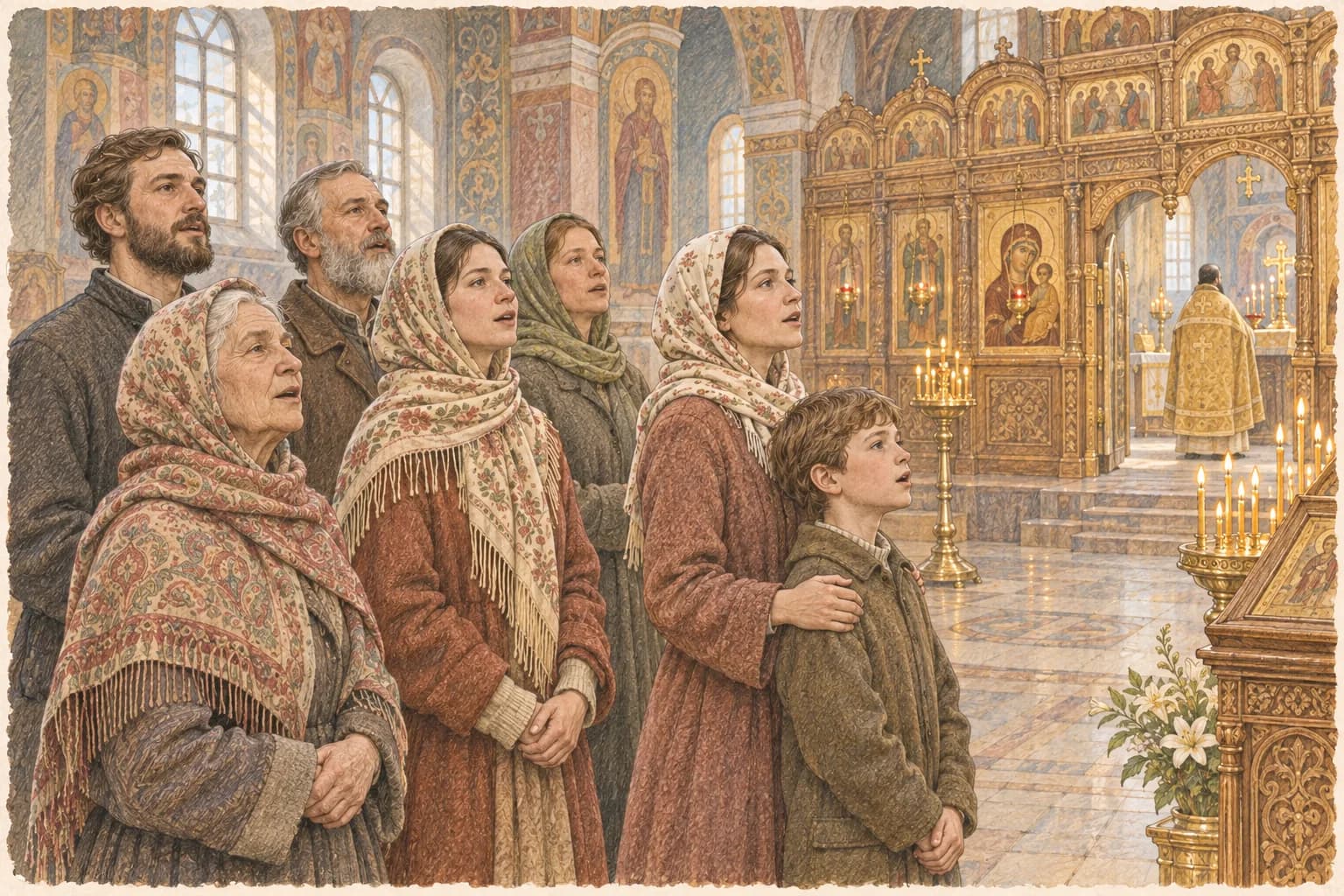
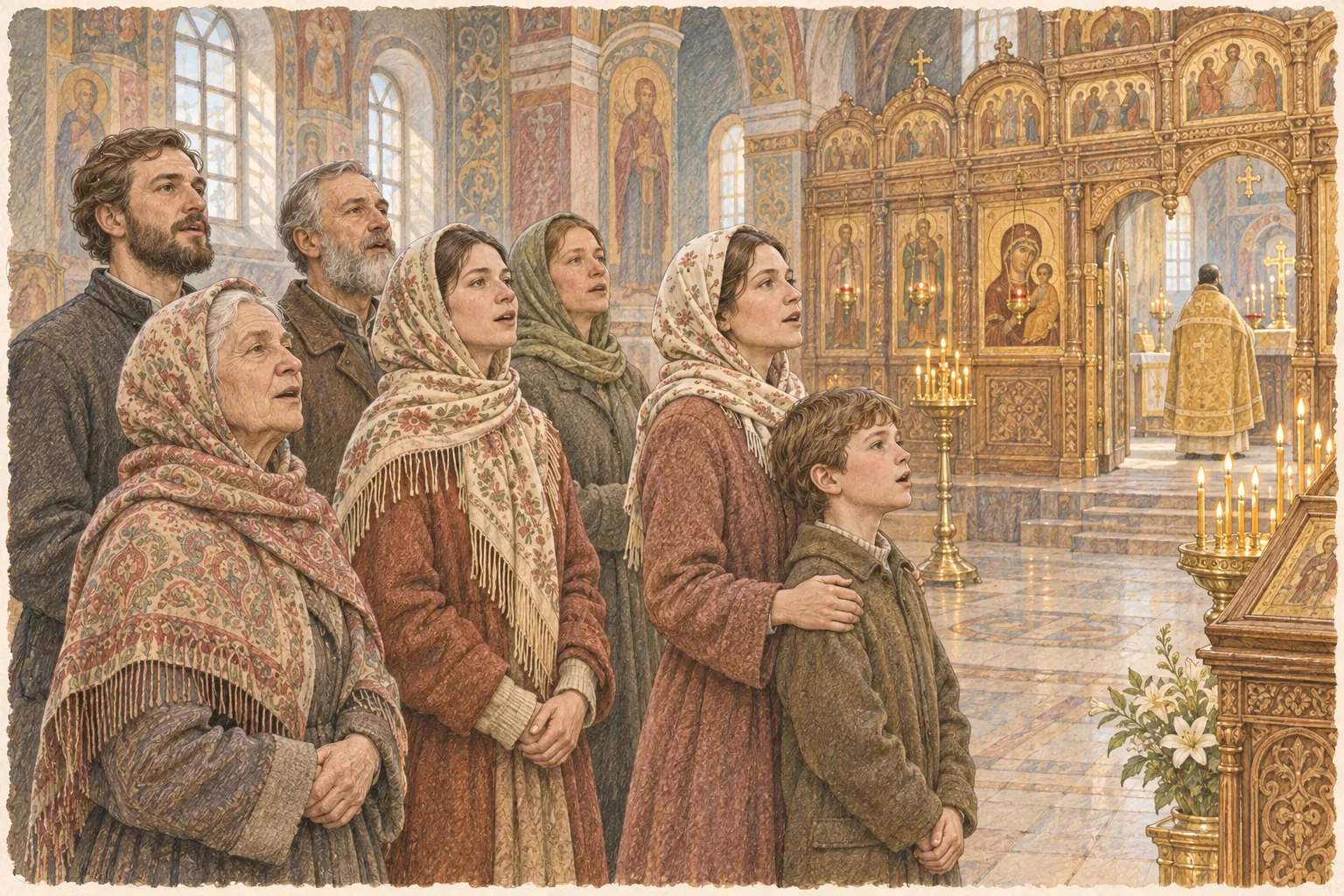
During worship, not every text is spoken by everyone simultaneously. A minister may proclaim a prayer while the choir or congregation responds. Amen in that position shows that the community is not merely watching a priest’s private action. Those present join the prayer’s content and express their assent in an established form.
For the response to be meaningful, listen to what precedes it. A newcomer, especially someone unfamiliar with Church Slavonic, cannot understand everything immediately, but attention can grow. Begin with recurring liturgical exclamations, compare them with a translation and identify the thought concluded by the response. The familiar short word then becomes more than an audible signal that another section has finished.
What the Gospel’s affirmations mean
Gospel translations include sayings of Christ introduced by expressions such as truly or verily. The underlying form is connected with the same word Amen. Here it does not conclude the listeners’ prayer but introduces and emphasises the statement. In some passages the form is repeated; that repetition belongs to the saying rather than instructing readers to repeat a prayer response twice.
This illustrates why a dictionary definition without context is insufficient. Someone who knows the explanation so be it may try to insert it everywhere and produce an awkward sentence. Read the whole statement first and identify the function: response, affirmation or solemn introduction. For closer study, consult a commentary on the actual Gospel passage instead of collecting unrelated explanations of the isolated word.
Must every personal prayer end with Amen?
When following a printed prayer sequence, preserve its text and order, including the appointed conclusion. Someone praying in their own words may also end with Amen. But forgetting the word should not be imagined as a technical mistake that automatically invalidates the prayer. Prayer is not a computer command that functions only when the exact final character is present.
Care for established forms still has value. Traditional words teach the language of prayer and connect a person with the Church’s life. When reading a shared text, avoid private additions and repetitions that disrupt others. In personal prayer, attention to honesty, thanksgiving and meaning is more helpful than anxious checking for a supposedly mandatory verbal key.
Joining a shared response as a newcomer
Follow the local arrangements during a service. If the choir is responding, there is no need to shout over it to prove your participation. If the congregation sings together, join calmly at the shared pace. You can listen first when a melody is unfamiliar. What matters is participation in prayer and consideration for those nearby, not producing the greatest volume.
If you are unsure what the preceding prayer meant, treat that as an opportunity to learn rather than pretending to understand. Afterwards, find the text, ask for an explanation or read an accessible commentary. Recurring responses gradually become connected with the service’s overall content. Even noticing which thought is concluded by Amen can help turn passive attendance into more attentive participation.
What the word does not promise
Amen does not give someone a right to every wish they have spoken. A request may be mistaken or based on an incomplete understanding of circumstances. Christian prayer involves trust in God rather than compelling Him through a formula. Messages demanding that readers post Amen to receive help should therefore not be confused with a liturgical response. A comment count does not measure faith or guarantee that a request will be fulfilled.
A question for reflection
What exactly are you affirming when you say Amen after this prayer?