
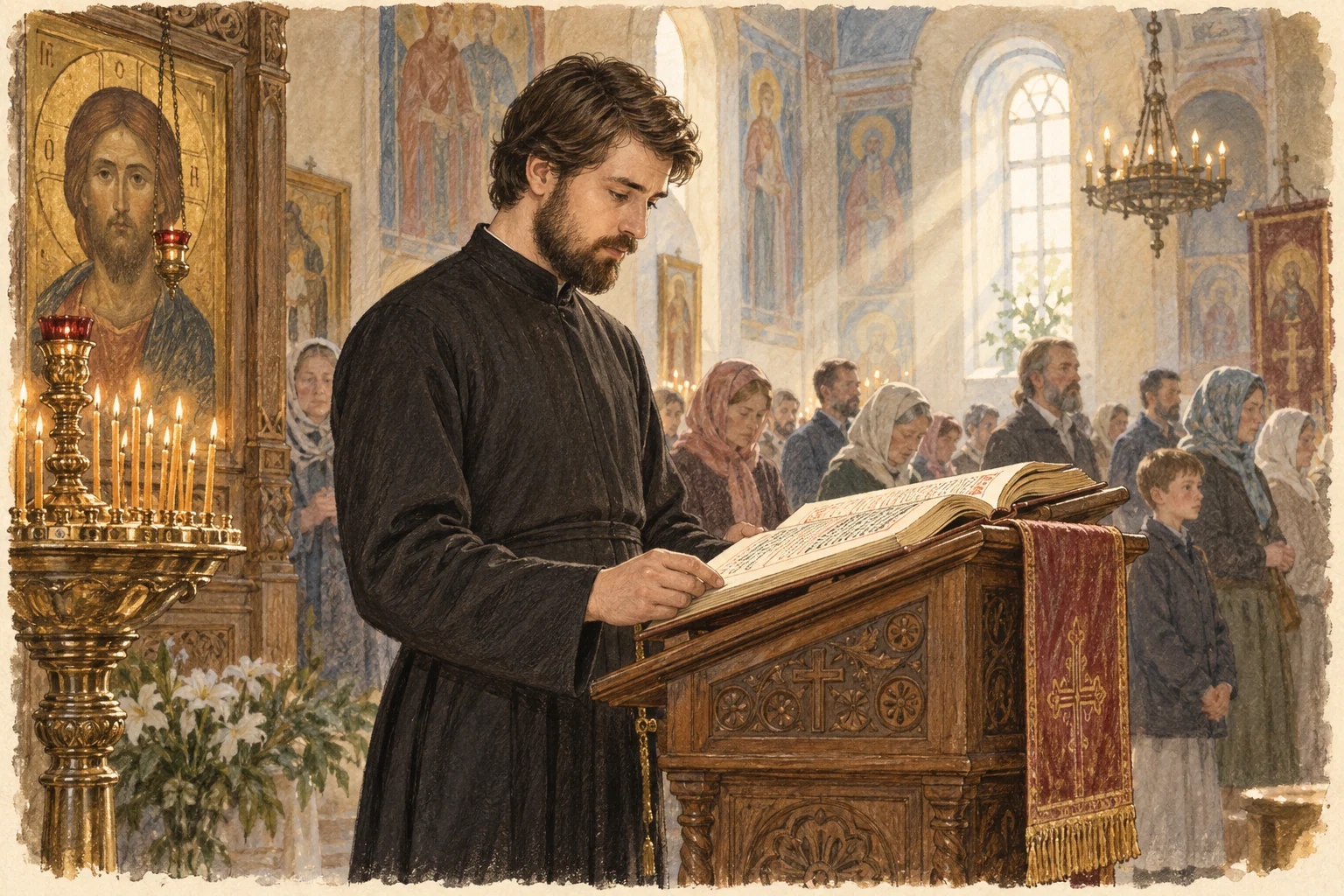
The reading before the Gospel at the Divine Liturgy is commonly called the Epistle reading. It comes from Acts or an apostolic letter, not from any story about a saint called an apostle. The liturgical book containing these readings is also called the Apostle. It differs from both a complete New Testament and the book of the four Gospels.
What Is Being Read?
The letters address particular communities or individuals about faith, church life, moral decisions, unity, and hope. A passage may therefore begin with an address to the brethren, while its argument depends on an earlier paragraph. Acts more often supplies a narrative of an event, conversation, or sermon.
The liturgical calendar determines the reading. A day may have several appointed passages, such as the ordinary reading and one for a feast. A reader should not independently substitute a more attractive text. As a visitor, simply find the day's reading beforehand in the calendar used by the parish.
The Prokeimenon
The prokeimenon is a short verse, usually from the Psalms, with an additional verse and repeated response. It prepares attention for Scripture rather than filling time while the reader finds a page. Its words may express the day's theme or the Church's common prayerful response.
After the Apostle, Alleluia is sung with verses, and the Gospel follows. A useful sequence to remember is prokeimenon, Apostle, Alleluia, Gospel. This is a listening aid, not an examination. Missing one element through distraction does not prevent you from joining the reading that is happening now.
Following a Long Sentence
Apostolic letters often contain extended sentences joined by “for,” “therefore,” or “so that.” First listen for the main action instead of trying to catch every word. Is the apostle giving thanks, warning, comforting, or explaining? Then ask whom he addresses and what difficulty is being discussed.
Reading the passage beforehand in an understandable translation makes public proclamation much easier to follow. Read several verses before and after it as well. Teaching about love, for example, becomes more concrete when seen as a response to division and rivalry within a community rather than as a decorative quotation for a greeting card.
When You Could Not Understand
Unfamiliar language, acoustics, fatigue, or the pace of reading can interfere. Do not conclude that Scripture is not for you. Remember the book's name or one phrase and find the passage after the service. A priest or catechist can help with a specific paragraph more readily than explain an entire book in one brief conversation.
Do not use an isolated sentence as a verdict on another person. Apostolic teaching should be read in context and alongside the Gospel. If asked to serve as a reader, confirm the assigned passage, check unfamiliar names, and practise clear delivery beforehand. The aim is not an impressive performance, but to make the scriptural words genuinely audible to the gathered congregation.
At home, identify one sentence connecting the passage and restate it plainly. Then return to the original: did your summary lose a condition or contrast? This checks understanding rather than rewriting the apostle. It can help you follow an argument at the next Liturgy even while some words remain unfamiliar. Bring the exact reference when asking someone to explain it.
The reader need not be a priest
The apostolic passage may be read by a reader or a prepared lay member of the parish. The absence of priestly vestments does not make the Scripture less important. As the OCA's account explains, the name Apostle identifies the scriptural books from which the reading comes. Listeners attend primarily to Scripture, not to the social standing of the person at the reading desk. Preparing and appointing that person nevertheless remains a responsibility of the parish.
If you are asked to read for the first time, clarify more than the reference. Ask where to stand, how to begin and finish, and whether a microphone is used. Settle these matters in rehearsal. In a long sentence, identify meaningful pauses so that a breath does not separate words that belong together. If you misread a word, correct it calmly. A small slip does not need to become an interruption filled with apologies, nor should concern about performance eclipse the passage's meaning.
Following one passage beyond the service
For study at home, ask three questions of a letter: what difficulty is identified, what response does the apostle offer, and what reason supports it? This distinguishes an instruction from its grounds. A word such as therefore invites you to look back for the reasoning behind the conclusion. Copying only the final sentence can remove that argument and turn encouragement into an unexplained demand. Reading the surrounding paragraph often restores the connection.
In a group, allow each person to summarize what they heard before checking the printed text together. A misunderstood word may account for very different summaries. If the argument remains unclear, make the question specific: whom does a pronoun identify, what connects two sentences, or why is a contrast introduced here? A priest or teacher can address such questions directly. Careful attention to language does not diminish the prayerful character of the reading; it helps the congregation hear the words being addressed to it.