
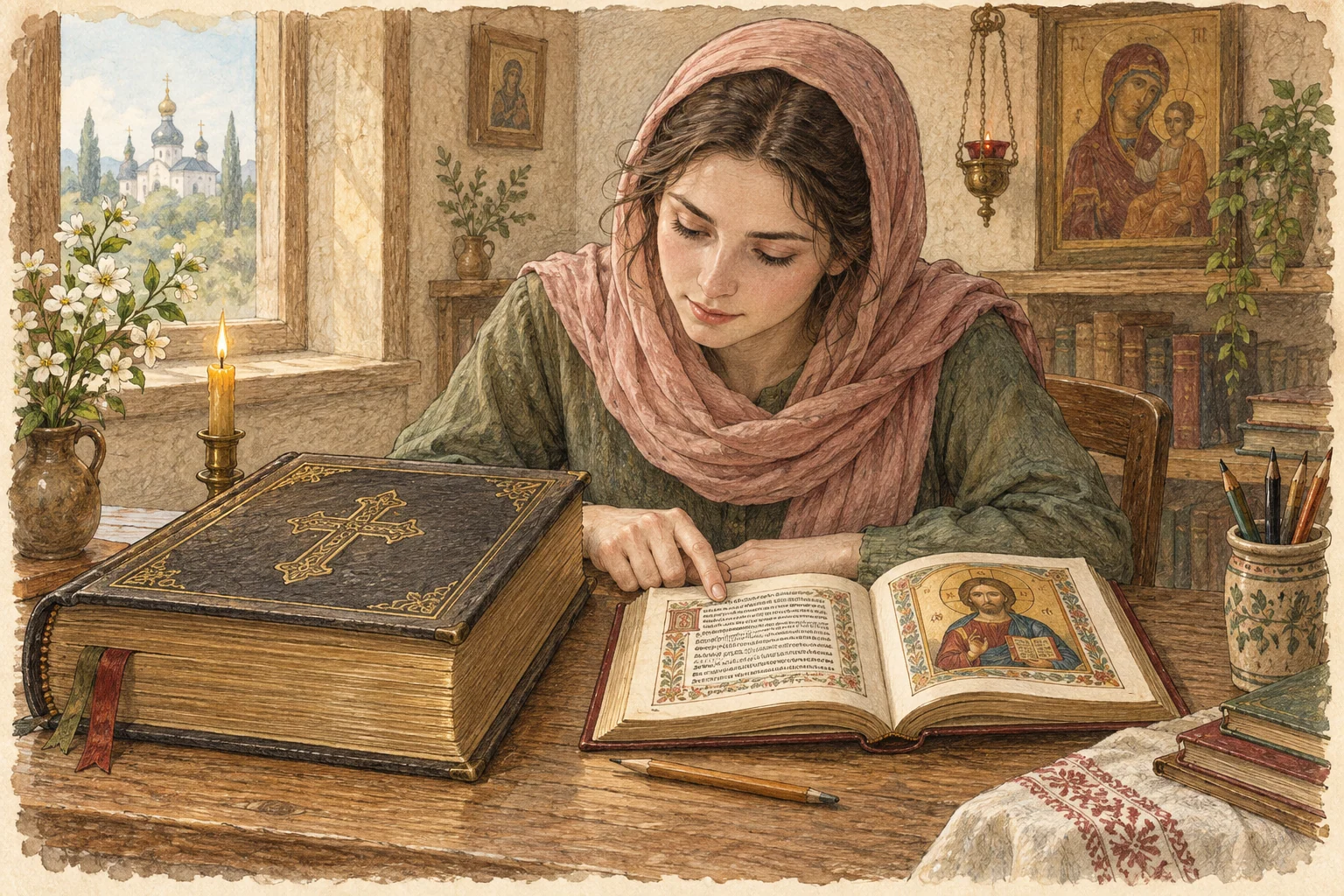
The Gospels belong within the Bible; they are not a separate alternative to it. “Bible” names the collection of Old and New Testament Scriptures. “Gospel” can mean the good news about Christ, one of the four Gospel narratives, or a separate volume containing those narratives together.
What the Bible Contains
The Old Testament includes books about creation, Israel's history, the Law, wisdom, and the prophets. It is not one continuous text in a single genre. Genesis, the prayers of the Psalms, and prophetic warnings need to be read with their different forms in mind. “Old” does not mean useless or without continuing value.
The New Testament contains 27 books: four Gospels, Acts, the apostolic letters, and Revelation. “New Testament” and “Gospel” are therefore not completely interchangeable. A volume containing only the four Gospels will not include Romans, for example, even though Romans belongs to the New Testament.
Why the Gospels Are Central
Matthew, Mark, Luke, and John bear witness to Jesus Christ: his words, deeds, death, and Resurrection. For Christians this is the centre of reading the whole Bible. Old Testament promises and images are understood in relation to Christ, while the apostolic books describe the life of communities receiving this good news.
This central place does not make the other books disposable. Without the Old Testament, expressions such as covenant, Passover, prophet, and sacrifice lose much of their setting. Without Acts and the letters, it is harder to see how faith in Christ took shape in the Church's life. The different parts of Scripture illuminate one another.
The Book on the Altar
A liturgical Gospel book presents the Gospel texts with arrangements for public reading. It may include reading tables, lection divisions, and special indications showing where passages begin and end. It is not a “fifth Gospel” but a book prepared for a particular use. Its design and supplementary sections differ from an ordinary home edition.
The Apostle book, used for the reading before the Gospel at the Liturgy, is another liturgical volume. It contains Acts and the letters. Moving from one book to another does not mean moving from biblical to non-biblical material. Both readings belong to Holy Scripture.
Checking an Edition
Look at the contents page. “New Testament and Psalms” means those sections, not a complete Bible. A children's retelling may be useful, but it is not the full text. A collection of sermons normally places biblical excerpts alongside an author's explanation, which should be distinguished from Scripture itself.
Check the language and translation too. Church Slavonic and modern Russian are not the same language printed in different alphabets. English translations also vary in style and vocabulary. Understanding matters for reading at home, while a parallel text can help connect home study with worship. A separate Gospel volume is suitable for beginning; a complete Bible gives access to the whole collection rather than only its central part.
Old Testament book totals can differ between Christian editions because of their contents and counting conventions. A different total alone does not identify which texts are absent. Compare contents pages by book title. For Orthodox use, this is particularly helpful: the word “Bible” on a cover does not explain every feature of that volume's contents or translation tradition.
Giving a biblical passage its address
When referring to Scripture, give the book, chapter and verses rather than a page number: pagination changes between editions. Matthew 1:1–17 directs the reader to the Gospel according to Matthew, chapter one, verses one through seventeen. The book's name matters, because many biblical books have a first chapter. If someone sends you an excerpt as an image, ask for its full reference so that you can read the surrounding sentences as well.
A printed page may contain several kinds of writing: the biblical narrative, a section heading, a translator's footnote and an editor's explanation. Before describing a sentence as something the Bible says, check which of these it belongs to. An explanation can be valuable without becoming Scripture itself. In a reading notebook, keep the passage's reference separate from your question or the commentator's answer. This makes it much easier to return to the actual words later.
Choosing where to begin
Suppose you have a complete Bible, a small volume of the Gospels and a prayer book at home. These are not competing alternatives. To become familiar with Christ's life and teaching, read one Gospel consecutively; when it refers to a prophet, turn to the complete Bible. A prayer book supports a rule of prayer but is not a guide to the Bible's entire contents. A psalm encountered there can subsequently be found in its setting in the Psalter.
Your first reading need not become a promise to finish every page of a large volume immediately. Choose a manageable passage and follow the narrative: who is speaking, to whom, and what happens next? An unfamiliar name can be checked later without interrupting every sentence. Mark a difficult passage instead of silently replacing it with a more comfortable retelling. Over time, this gives you a sense of both the individual book and its place within the larger collection. Understanding the difference between Bible and Gospel then becomes a practical aid to reading, not merely a definition to memorize.