

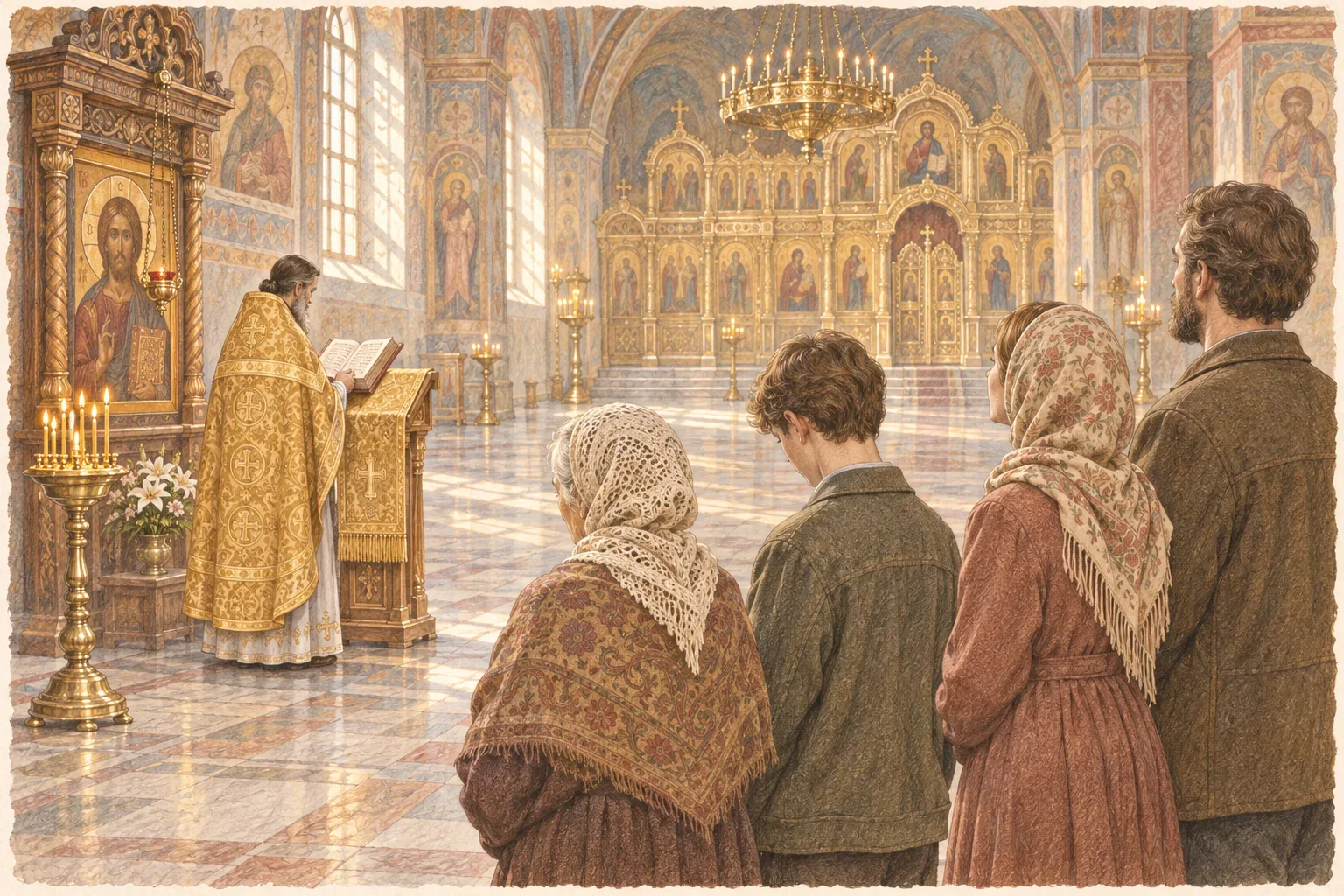
A thanksgiving service is the Church’s prayer of gratitude to God. People request it after receiving help or experiencing an important event, but gratitude is not limited to extraordinary deliverance. It can embrace ordinary gifts that are easily taken for granted.
Shared prayer places thanksgiving beyond personal achievement. It also recalls those through whom help came: medical staff, relatives or colleagues. Thanking God and expressing appreciation to people belong together rather than competing with one another.
The service is not payment of a debt to God after which prayer becomes unnecessary. A large financial offering is not a prerequisite for gratitude. Ask the parish about the actual arrangements for the service and prayer requests.
Briefly explain the occasion to the priest. If it concerns another person’s health or private life, avoid unnecessary public disclosure. A manageable act of help for someone else can continue the thanksgiving, without grand promises you cannot sustain.
What thanksgiving can embrace
Recovery, a child’s birth, completing a difficult undertaking, a loved one’s return or unexpected help can all prompt thanksgiving. Yet gratitude does not require a proven miracle. Being able to work, receiving a friend’s support, restoring a relationship or simply living through a peaceful day can also reveal gifts easily overlooked. Giving thanks helps a person recognise that not everything good is the product of personal merit.
Gratitude must be distinguished from declaring every desired outcome morally right. If success was achieved through deception or humiliating someone, a religious ceremony cannot justify the conduct. The circumstances still require honest reflection and responsibility. Christian thanksgiving belongs with truthfulness about one’s life, rather than a ceremonial endorsement of the idea that a winner may do anything.
Arranging a thanksgiving service
Begin with the parish timetable, since there may already be a regular time for services of supplication and thanksgiving. Explain the request to a parish worker or priest in straightforward terms: you would like to thank God after a recovery and want to know when a thanksgiving service can take place. Ask locally whether a separate service is appropriate, how names are submitted and how long attendance is likely to take. An online advertisement is not a reliable way to select a rite.
If a family is attending, agree who can come and explain any significant limitations to the organiser. A young child or someone recently discharged from hospital may find prolonged standing difficult. Gratitude does not require conspicuous endurance of exhaustion. If an immediate visit is impossible, discuss praying at home now and attending church when circumstances permit.
Why thanksgiving is not a transaction
A person may think that help has been received and must now be paid for so that it will not be withdrawn. That fear turns the relationship with God into a calculation. A thanksgiving service neither purchases continued good fortune nor settles an invoice for past assistance. It freely acknowledges goodness, turns to the Giver of life and expresses a desire to live more attentively, honestly and mercifully.
An offering supports the church and its ministry, but does not measure the sincerity of gratitude. The spiritual value of an event cannot be priced by the amount in an envelope. If finances are difficult, explain that when making arrangements. Do not promise a gift that deprives your family of necessities merely because you fear appearing ungrateful. Responsibility towards those close to you is compatible with thanking God.
Speaking about the help received
A personal experience may encourage others, but the account should remain accurate. If health improved after prayer, you can thank God while also acknowledging clinicians’ work, treatment and the circumstances you do not fully understand. There is no need to turn your experience into medical proof or promise another patient the same course of recovery.
Obtain someone’s consent before publicly telling their story. A diagnosis, family conflict, financial assistance or the circumstances of a child’s birth may be sensitive information. Arranging a service usually requires only a brief explanation rather than detailed publication. Gratitude does not become less sincere when it protects another person’s privacy and is expressed without photographs for social media.
Continuing thanksgiving after the service
After worship, make gratitude concrete where you can. Call someone who helped, fulfil a promise, return what was borrowed or support a person now facing a similar trial. These are not compulsory payments for a benefit, nor a universal list of church requirements. They are ways of allowing appreciation to become more than words.
A grateful person does not have to stop experiencing anxiety or sadness altogether. Joy at recovery can coexist with fear of recurrence, and appreciation for help can coexist with exhaustion. Such feelings can be discussed honestly. Prayer does not require presenting a picture of uninterrupted wellbeing. It helps a person remember goodness received and continue living without denying difficulties that still remain.
A question for reflection
Whom have you not yet thanked for their part in the help you received?