
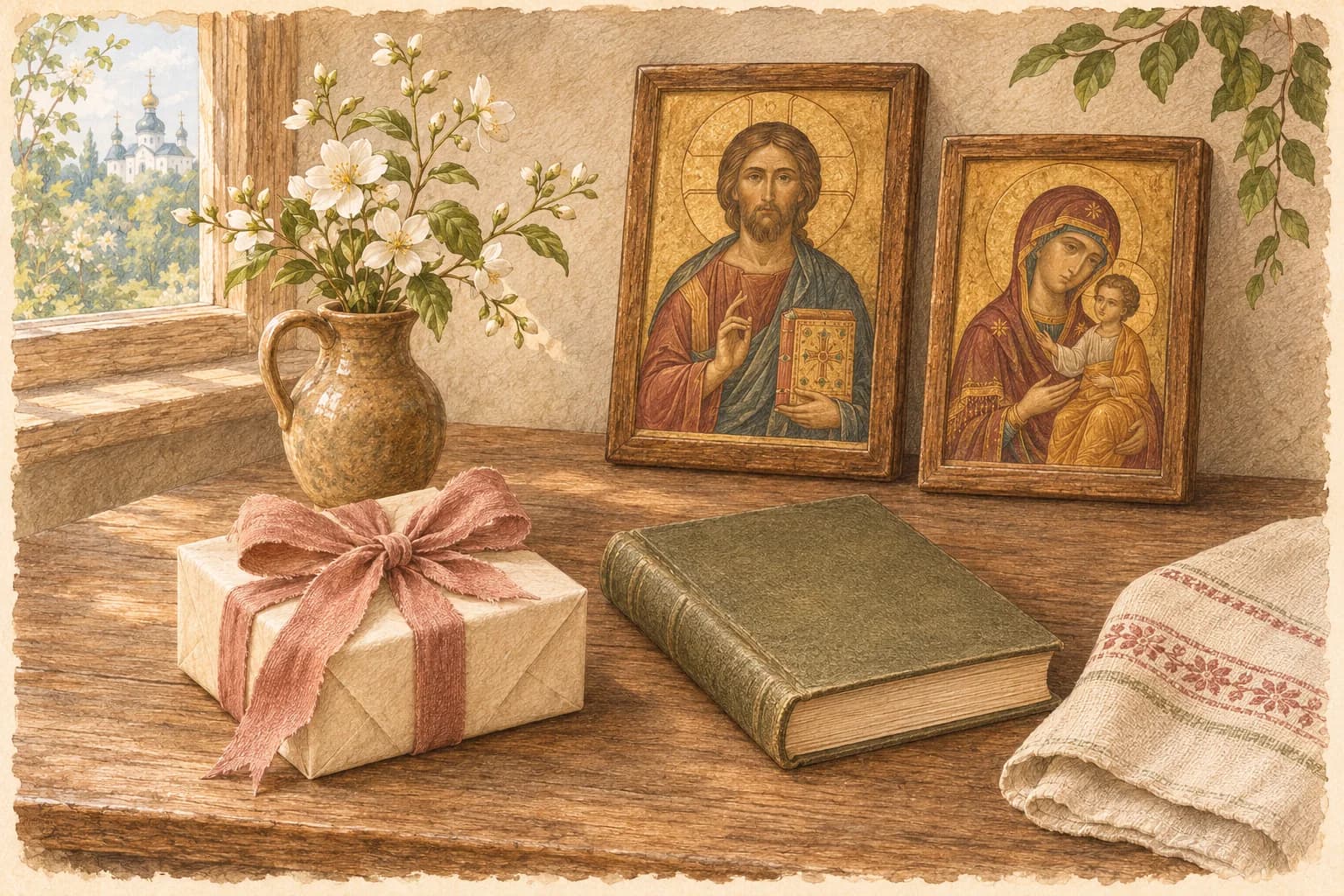
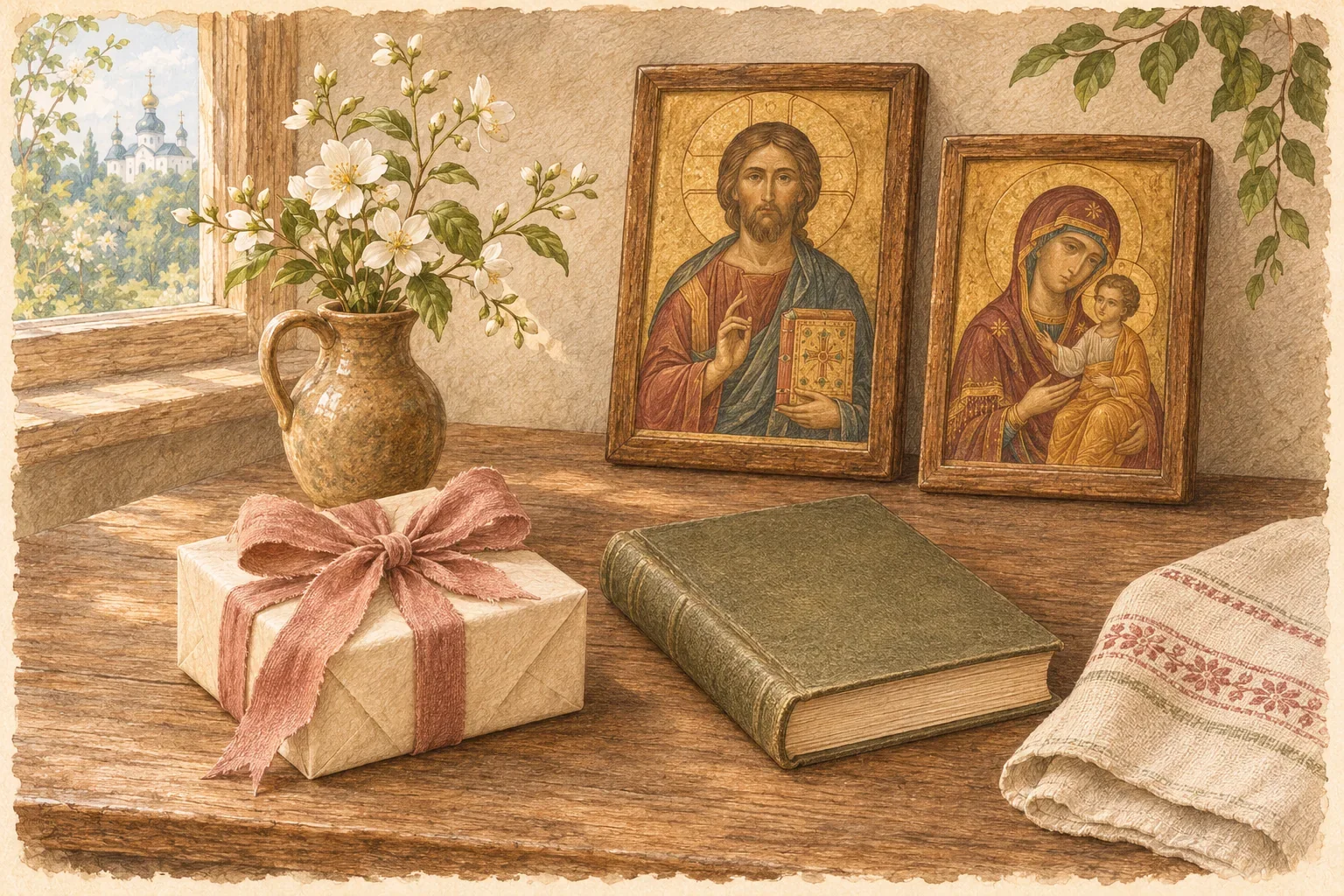
A suitable gift for an Orthodox wedding crowning is something the couple needs and you can afford. The Church does not prescribe a compulsory guest gift list. Ask the couple’s wishes rather than buying an expensive object solely because it is advertised as essential for the ceremony.
An icon, a worthwhile book, practical help at home or another agreed gift may be appropriate. Before choosing an icon, ask what the couple already has. If selecting a patron saint’s image, verify the saint: sharing a personal name does not always identify the same saint.
A sacred gift does not guarantee a conflict-free marriage. An icon’s price, size or rarity does not measure the strength of a blessing. Do not promise automatic protection for the marriage or dictate where a gift must stand in someone else’s home.
Wishing the couple peace and being ready to support them matter more than displaying expenditure. A sincere greeting and practical help are appropriate when funds are limited. Leave arrangements for ceremonial items to the couple and parish; a guest’s gift should not become an imposed purchase.
Begin by understanding the couple’s occasion
An Orthodox crowning may accompany the beginning of married life or take place many years after a civil marriage. In the first situation the couple may need ordinary things for a new home; in the second they may already have an established household, children and clear preferences. One list of ideal crowning gifts cannot suit everyone. Understand what the couple is celebrating and how they are arranging the day.
Asking about wishes is appropriate and respectful. Offer a few possibilities or agree on a joint gift from friends. If the couple requests no material presents, there is no need to override that wish from fear of arriving empty-handed. A sincere greeting, a thoughtful letter or agreed practical assistance may be more welcome than an object for which there is no space. A church occasion does not oblige guests to demonstrate generosity through a particular expenditure.
Choosing an icon thoughtfully
If the couple wants an icon, clarify the image and size. For prayer at home, an intelligible depiction, sound workmanship and a suitable place to display it matter. A very large icon can be impractical even when gratefully received. An expensive metal covering, a rare technique or a claim that one image is exceptionally powerful does not measure the gift’s spiritual value.
Patron-saint icons require knowing the couple’s actual patrons. The same personal name can belong to several saints, so confirming the choice is better than relying solely on a seller. If considering a traditional wedding pair of icons, find out whether the couple or their parents have already prepared one and whether it is needed in their arrangements. A guest should not independently determine the items used in the rite or treat their present as a compulsory condition for the sacrament.
Books and gifts for shared life
A book can be a good gift when it suits the readers’ interests and experience. Beginners may benefit more from a clear ecclesiastical account of marriage and family responsibility than from a difficult work chosen merely for its impressive length. Check the author, publisher and contents. Do not use a book as a concealed rebuke to one spouse or a means of correcting someone who did not ask for that instruction.
A practical present is not inappropriate simply because the occasion is religious. Agreed help with a household task, a family trip or something the couple has long intended to buy may express genuine care. A short, kindly greeting is enough if you want to accompany a material present with a spiritual wish. There is no need to assign sacred properties to an ordinary object or claim that it will guarantee harmony in the home.
Money, a donation or a shared gift
A monetary gift can be appropriate when the couple finds it useful. The amount should reflect your means rather than a need to match someone else’s envelope. Do not undertake burdensome expenditure from fear of appearing insufficiently religious or close to the family. Where friends combine contributions, agree on a budget that allows participation to remain voluntary.
A donation to a church or charity in the couple’s name is best discussed beforehand. A worthy recipient does not remove the question of whether the couple actually wanted that form of gift. Do not share their personal details or arrange a public dedication without agreement. If they themselves requested a charitable option, retain confirmation of the transfer and pass it on quietly, without making the amount or your generosity the central subject of the celebration.
When to give the gift and what to say
Before the crowning, the couple needs to attend to worship and practical arrangements. Large packages, long speeches and urgent photography can distract them. Ask where presents should be received: after the service, at a family gathering or in advance. If taking photographs, respect the church’s arrangements and the couple’s wishes rather than rearranging the worship space for a desirable shot.
A greeting may wish them fidelity, patience, mutual care and the ability to listen. There is no need to promise a life without difficulties after the sacrament or joke about one spouse’s subjugation to the other. Crowning concerns responsibility and prayer for the family, not a guarantee of effortless living. The deeper meaning of a gift appears later: whether relatives and friends can support the couple respectfully, without intruding into every disagreement or demanding obedience to their advice as a form of gratitude.
A question for reflection
Does the gift meet the couple’s wishes, or only your own expectations?