
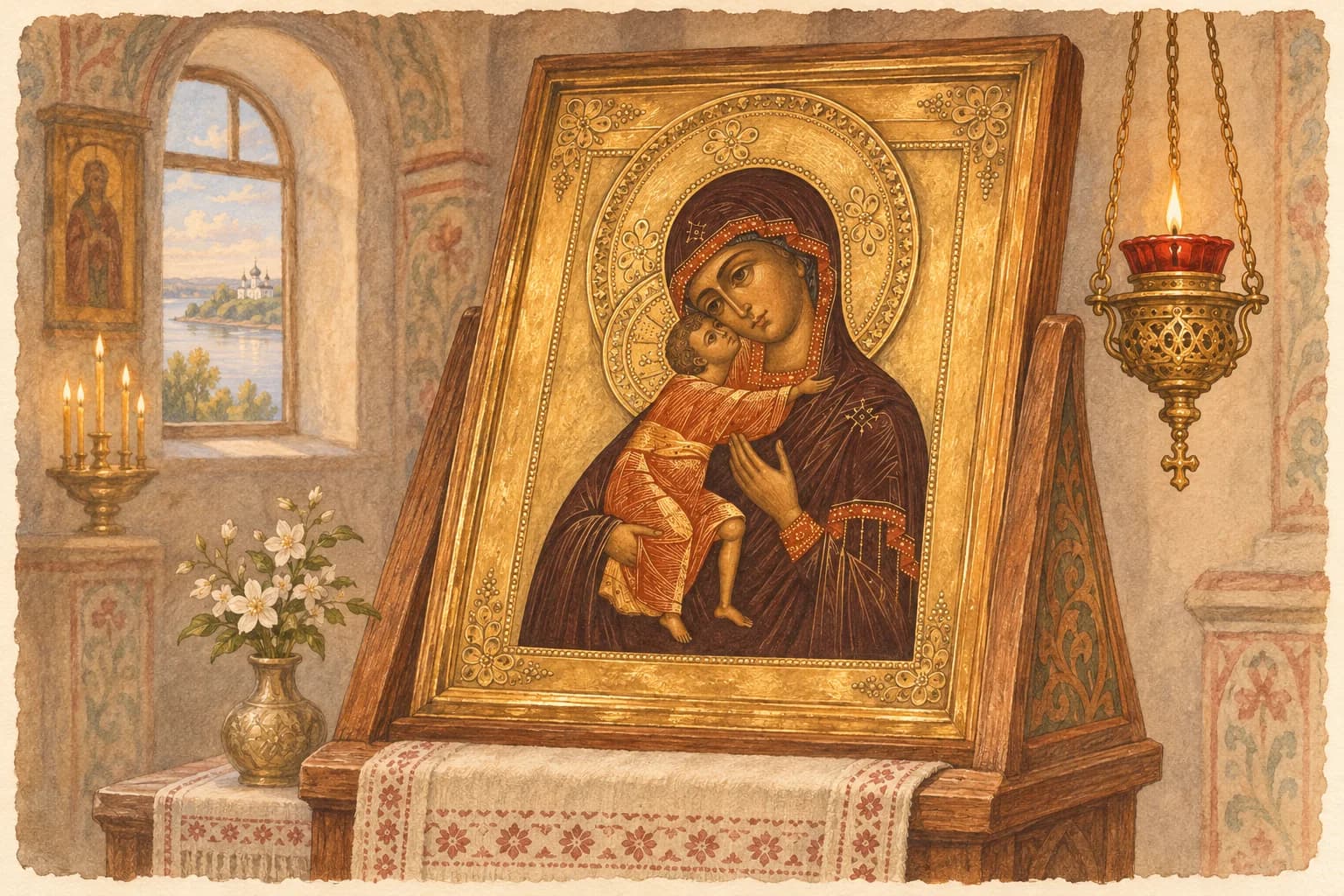
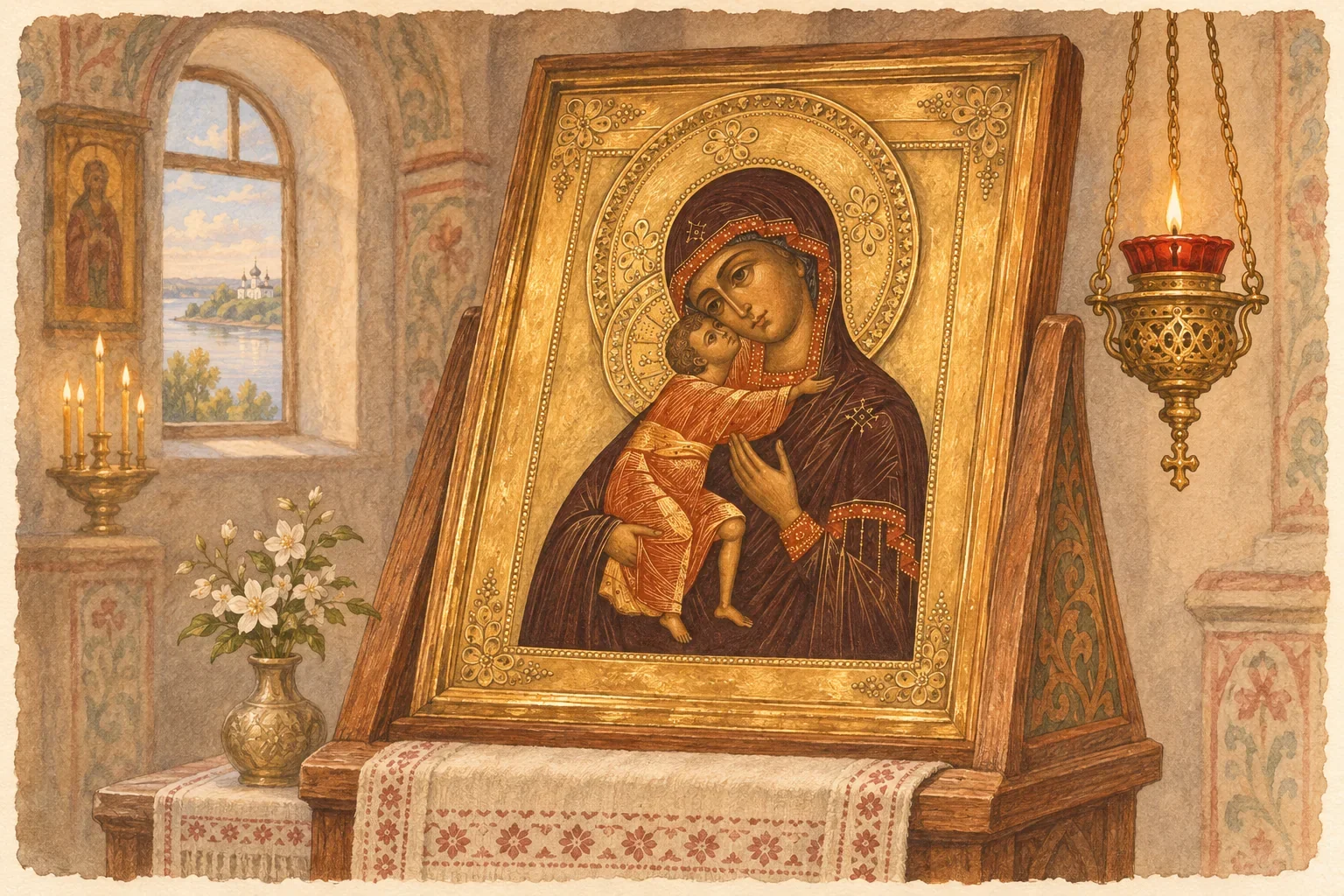
The Feodorovskaya Icon is a venerated image of the Mother of God with the Christ Child, historically associated with Kostroma. Its name does not indicate a different Mother of God from the one shown in other icons. It identifies a particular iconographic and church tradition.
The image expresses the closeness of Mother and Son and is usually associated with the Tenderness type. Its history includes church traditions and documented events from different periods. Distinguish these when describing the origin of the historic icon.
People often pray before it concerning family and children, but veneration does not guarantee pregnancy or an uncomplicated birth. Prayer should not be opposed to medical care. Nor is this the only suitable icon for family prayer.
When choosing an icon, check the inscription, image and provenance. To visit a venerated historic icon, confirm its current location and access with the church responsible. An old account of a transfer is not a current visitor schedule.
The composition: the closeness of Mother and Child
The Feodorovskaya belongs to the family of Tenderness icons. The Mother of God holds the Child, their faces draw close, and the gestures express personal intimacy. Yet the image is more than an everyday scene of maternal affection. It confesses that the Son of God truly became human and received human life from his Mother. Attentive looking therefore leads from a recognisable human relationship towards the content of Christian faith.
This image has particular features in the Child’s posture and the arrangement of his legs that distinguish it from related types. A small photograph or a metal covering may conceal those details. Begin with the inscription and the whole composition rather than identifying the type solely by clothing colour. Pigments, ornament and condition can vary between copies without changing the image’s basic identity.
Where the name comes from
The name does not mean that the Mother of God was called Theodora. Church history associates it with the Great Martyr Theodore Stratelates, a church dedicated to him in Kostroma and the tradition of the image’s discovery. The narrative concerns the appearance of the sacred image and its reception by the townspeople. Early details should be presented as tradition rather than as a complete itinerary of the wooden panel reconstructed by modern historians.
Three levels help explain the title: the image depicts Mary with Christ; its name belongs to a local history of veneration; and a household icon is a copy or reproduction of that image. Keeping those levels distinct prevents the common mistake of assuming that the person after whom a church was named must be the figure portrayed in the image associated with it.
Kostroma and the beginning of the Romanov dynasty
The Feodorovskaya’s special prominence is associated with Kostroma and the election of Michael Feodorovich Romanov as tsar in 1613. In ecclesiastical and historical memory, the image accompanies the blessing of the new ruler and the ending of the Time of Troubles. This explains its subsequent veneration within the royal family. It does not turn every prayer before the icon into support for a particular contemporary political programme.
Dynastic devotion also helps explain certain names. Some women entering the imperial family and receiving Orthodoxy were given the patronymic Feodorovna in connection with this revered image. That was a specific historical practice, not a general rule for baptismal naming. It should not be applied to every person or used to explain each family record without further evidence.
Prayer before this image
People traditionally bring family concerns before the Feodorovskaya, including pregnancy and anticipation of a child’s birth. This connection reflects lived devotion to the Mother of God, not a division of her assistance into narrowly assigned specialities. One may ask for peace, patience, health and the ability to care for loved ones without selecting a different image for every separate need.
During pregnancy, continue appropriate medical care and discuss limitations on activity with clinicians. Prayer does not require travelling to a distant shrine against medical advice. Someone unable to make the journey can still turn to God at home or in a nearby parish. The image supports attention in prayer, but divine concern is not confined to one geographical location. This distinction is especially helpful when relatives make an anxious expectant parent feel that a particular journey is compulsory.
Distinguishing the revered image from a household copy
The ancient image, its well-known copies and a modern reproduction have different material histories. The designation Feodorovskaya identifies an iconographic relationship but does not establish an object’s age. Darkened paint, a metal cover or an artificially aged frame does not prove antiquity either. For a family heirloom, record what is supported: who gave it, where it was kept and whether older photographs survive.
Domestic prayer does not depend on proving museum value. A clear image, respectful placement and understanding whom the prayer addresses matter more. If you wish to visit the Kostroma shrine, check current diocesan information, since location and access arrangements can change. An older pilgrimage account may help explain history while being unsuitable as practical directions for a journey today. Preserving these distinctions allows affection for a family image without inventing its provenance.
A question for reflection
Are you seeking an explanation of the image, help with prayer or its current location?