
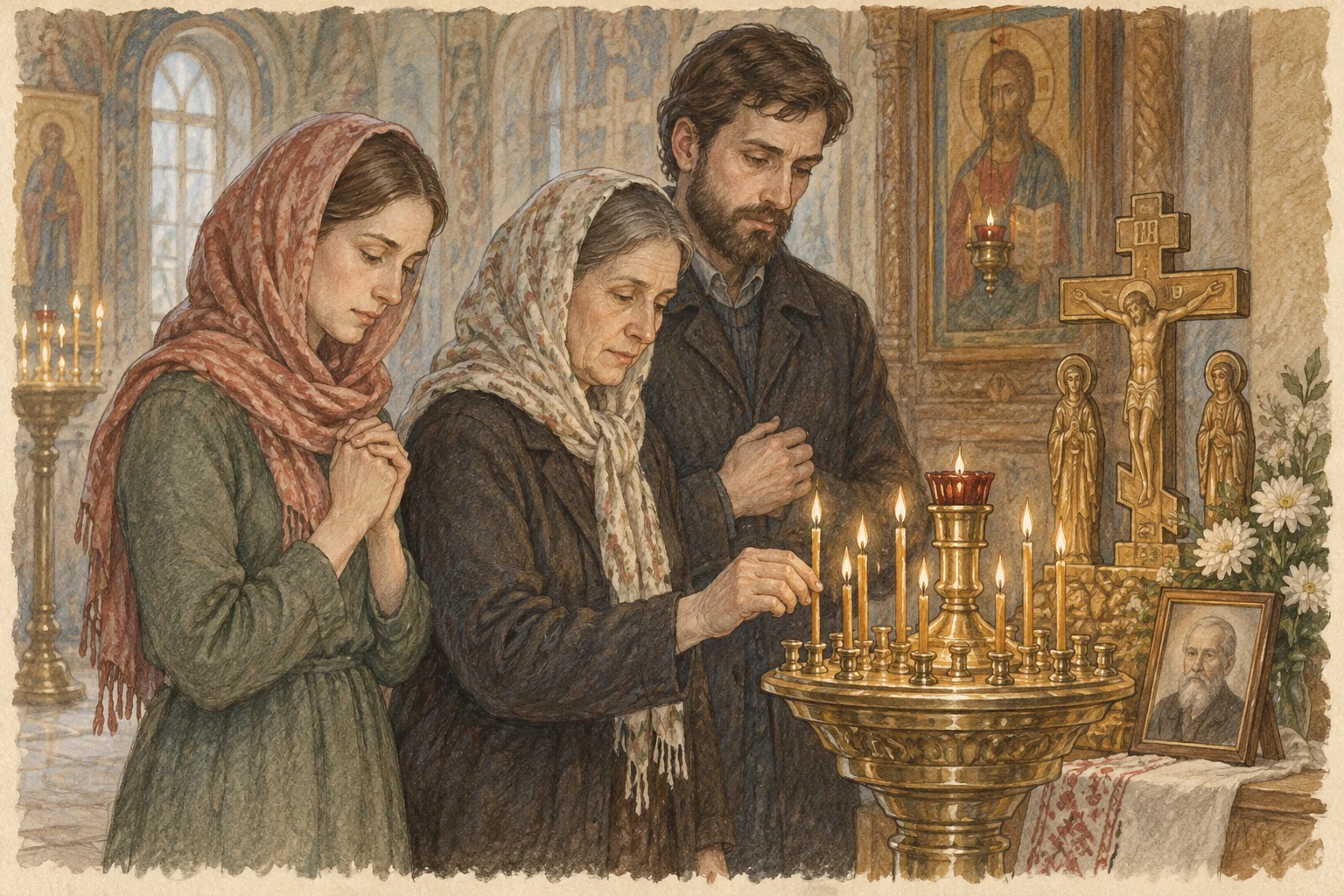
The anniversary of a death can be a day of prayer, grateful remembrance, and care for those living with the loss. It does not require repeating the entire funeral or organizing a large reception. Choose a few manageable actions in advance, while leaving room for different feelings and capacities within the family.
Arranging prayer at church
Annual commemoration is part of Orthodox practice, described in the OCA's explanation of prayers for the departed. Contact the parish beforehand to ask about the Divine Liturgy and a memorial service. Give the person's baptismal name and mention any circumstances requiring a private conversation with the priest.
Do not assume that a service can be held at your preferred hour. The church calendar and parish schedule may call for a different arrangement. If the exact anniversary is unsuitable for the service, agree on another date and pray at home on the day itself. An organizational change does not mean that you have abandoned the person's memory.
Making the day manageable
Write down what matters most: prayer, a short cemetery visit, or time with relatives. Also identify what can be omitted. Share the work so that one person is not responsible for transport, cooking, telephone calls, and everyone else's emotional needs at once.
If the grave is in another city, you need not force a difficult return journey into one day. Arrange care for the burial place and choose a separate visit. Avoid measuring your remembrance against photographs of another family's memorial gathering. Visible arrangements cannot reveal the depth of someone's love.
Do you need a memorial meal?
A shared meal offers time together, but it is not a test of respect for the deceased. A simple meal at home or tea with a few relatives may be enough. Tell guests the time, location, and likely length of the gathering so that older people and families with children can plan realistically.
Ask someone to begin gently with a memory of the person. Give guests permission to remain quiet. This is not the occasion to settle inheritance disputes or judge whose grief is more appropriate. Where relationships are strained, keep the gathering short rather than requiring reconciliation on a particular date.
Ways to preserve a living memory
Sort photographs, identify faces and dates, or record an older relative's recollections. Children may have questions about someone they scarcely remember. Instead of saying only that the person was wonderful, describe a particular incident: something they taught you, someone they helped, or an activity they enjoyed with the family.
Helping people in need can also express remembrance, but it is not payment for the departed person's welfare. Find out what an individual or organization actually needs. Unrequested items can create work rather than relieve it. A small, timely contribution may be more useful than an inconvenient gift chosen for a striking photograph.
When the anniversary is painful
Do not expect to feel the same way every year. You might want company or need more quiet. Tell people what would help: a walk together, an evening call, or assistance with an ordinary household task. If your wellbeing continues to deteriorate, seek professional support alongside pastoral care. Prayer and such support need not compete. The anniversary should not become an examination of your faith or your ability to hold back tears.
When Relatives Live in Different Places
There is no need to bring everyone to one place at any cost. Arrange a short call, share one memory or photograph, and discuss prayer in your own parishes separately. Do not require proof that someone attended church or visited the grave. Work, illness, or caring responsibilities may limit another person's availability without their wanting to explain every detail. Shared remembrance does not require an identical timetable for the whole family.
Check whether an older relative can comfortably use the proposed means of communication. An ordinary telephone call is better than a complicated video meeting they cannot join. If collecting stories for a family archive, ask permission to record them and separately to share them. Different recollections can be preserved without requiring everyone to repeat one approved description of the deceased. Other people's private lives, however, need not be exposed merely to make the archive comprehensive.
When the Relationship Was Complicated
Not everyone experiences the anniversary as a day of wholly happy memories. The relationship may have involved hurt, separation, or serious conflict. You do not need to invent a closeness that never existed or force yourself to deliver a formal tribute. Quiet prayer and a manageable good deed can be chosen without offering a public judgement on the person's entire life. Declining to speak does not mean refusing remembrance; sometimes it is an honest way to avoid hurting yourself or others.
Leave room after the gathering to go home, eat, rest, or speak with one trusted person. Every hour need not contain an obligatory activity. Helpers can ask whether an evening call would be welcome instead of assuming their role ends after the meal. Next year's arrangements can be different. A family tradition supports people when it takes account of their actual capacities rather than requiring an unchanging sequence regardless of age or circumstances. Changing the plan can preserve its purpose instead of diminishing it.