
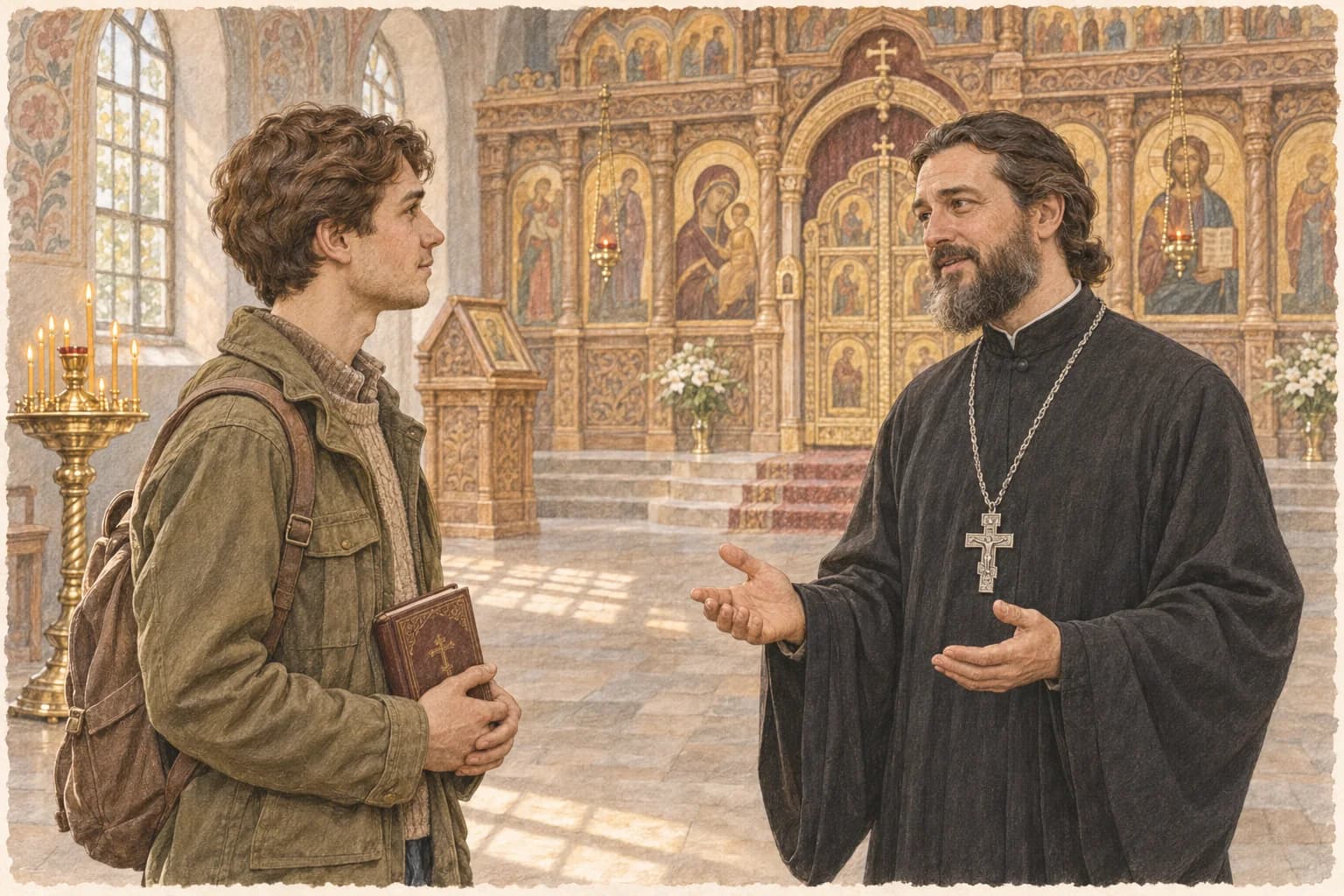
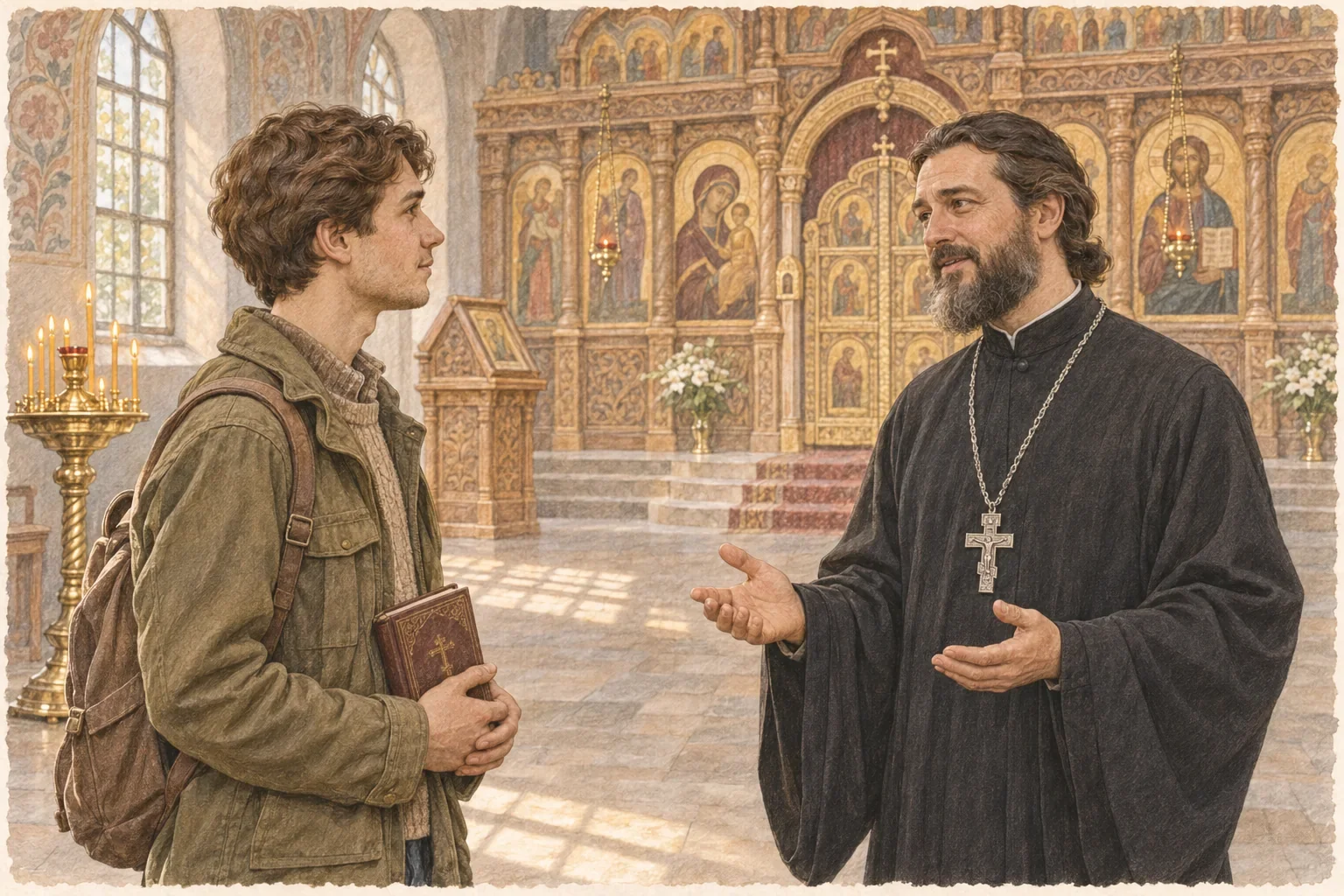
Hiereus is a term for a priest, or presbyter. In a Russian parish listing it identifies priestly ordination rather than a special kind of service. You may ask this priest about confession or pastoral conversation within the arrangements of his parish.
A priest is ordained by a bishop and serves in communion with him. A church directory may list a priest, archpriest and hieromonk side by side. These do not represent three different kinds of baptism or three levels of validity of the Divine Liturgy.
The title does not reveal a particular man’s age, education or experience. A short title is not evidence that he must be inexperienced. His assignment and availability for a thoughtful conversation matter more when you seek personal pastoral help.
Father followed by his name is sufficient in ordinary conversation. If you do not know the name, ask him or a parish worker politely. Unfamiliarity with ecclesiastical forms of address need not prevent you from asking a meaningful question.
Why priest, presbyter and hiereus appear together
In Russian church usage, these words can describe the same minister. Presbyter is connected with the ancient word for an elder; hiereus comes from Greek and means priest. When a Russian parish website places ierei before someone’s name, it primarily identifies his ordination. It does not indicate seniority, nationality or a special variety of religious practice.
In everyday speech, priest usually refers specifically to a presbyter. In a theological book, the context may be broader, so a term must be interpreted according to the author’s subject. A current parish directory presents a simpler task: distinguishing deacon, priest and bishop and identifying whom to approach when a matter calls for pastoral or sacramental ministry.
How a man becomes a priest
Priestly ministry begins through ordination by a bishop, not merely by graduating from an educational institution. Theological education matters for preparation, but a diploma does not authorise someone to celebrate the Liturgy independently. Serving in the altar, reading during worship or participating in parish life for many years does not itself make someone a priest either. Those forms of service have their own value and are not implicit ordination.
A candidate’s preparation and admission are considered by ecclesiastical authority, and an outside observer may not know all the circumstances. A brief anecdote therefore cannot establish someone’s suitability or the legitimacy of an appointment. If the practical question is whether a person actually serves in a particular church, check the official appointment and diocesan connection rather than relying on clothing or confident speech.
What priestly ministry involves
A priest celebrates services and sacraments entrusted to presbyters, preaches, hears confession and helps people address questions of Christian life. This ministry is exercised in communion with the bishop and according to ecclesiastical appointment. A priest is not an independent owner of the parish and does not invent a private version of church teaching for visitors.
At the same time, he is a person with limited time and particular experience. One priest may devote much attention to catechesis, another to visiting the sick, and another to teaching or youth work. Dividing responsibilities helps a parish function consistently. If you are referred to a particular priest, this may reflect his assignment and availability rather than a ranking of the other priests’ personal worth.
Why a short title does not establish inexperience
Clergy names may be accompanied by different titles and offices. Readers sometimes treat them as a ranking system: a longer designation supposedly means better advice. Yet a title does not automatically show how clearly a person explains things, how attentively he listens or how much experience he has with a particular difficulty. A priest with a simple title may be a mature, experienced pastor, while a newly appointed rector may be younger than some colleagues.
It is more useful to identify what help you need. Are you beginning to read the Gospel, preparing for baptism or returning after a long absence? Ask who holds those conversations and how to arrange one. A sacrament does not gain additional power from the celebrant’s honorary title. Ecclesiastical ranks should not become a price list or quality scale for spiritual assistance.
Starting a conversation without mastering etiquette
You can simply greet the priest and explain that this is your first visit and you do not know whom to approach. Ask his name if necessary, then address him as Father followed by the name. The Russian term batiushka is also familiar in Russian parish life, but calmness and respect matter more than reproducing a formula perfectly. It is entirely reasonable to ask for an explanation of an unfamiliar gesture or custom.
Distinguish a brief organisational enquiry from a private conversation. Asking the service time takes little time; discussing a complicated family history calls for an agreed appointment. You do not need to tell every detail to the person at the candle desk simply to request a meeting with a priest. Name the general topic, ask about arrangements and then explain the actual concern to the intended listener.
How a priest differs from a deacon
A deacon assists in worship and has an ordained ministry of his own, but does not independently celebrate the Liturgy as a presbyter does. A request for sacramental confession therefore belongs with a priest, not simply anyone wearing liturgical vestments. If you cannot distinguish vestments, ask the person’s name and ministry; that is an ordinary newcomer’s question. A deacon is not an unordained assistant either: his ministry belongs to a distinct degree of holy orders. Understanding the distinction clarifies responsibilities rather than ranking anyone’s human worth.
A question for reflection
What question have you postponed because you were unsure how to address a priest?