
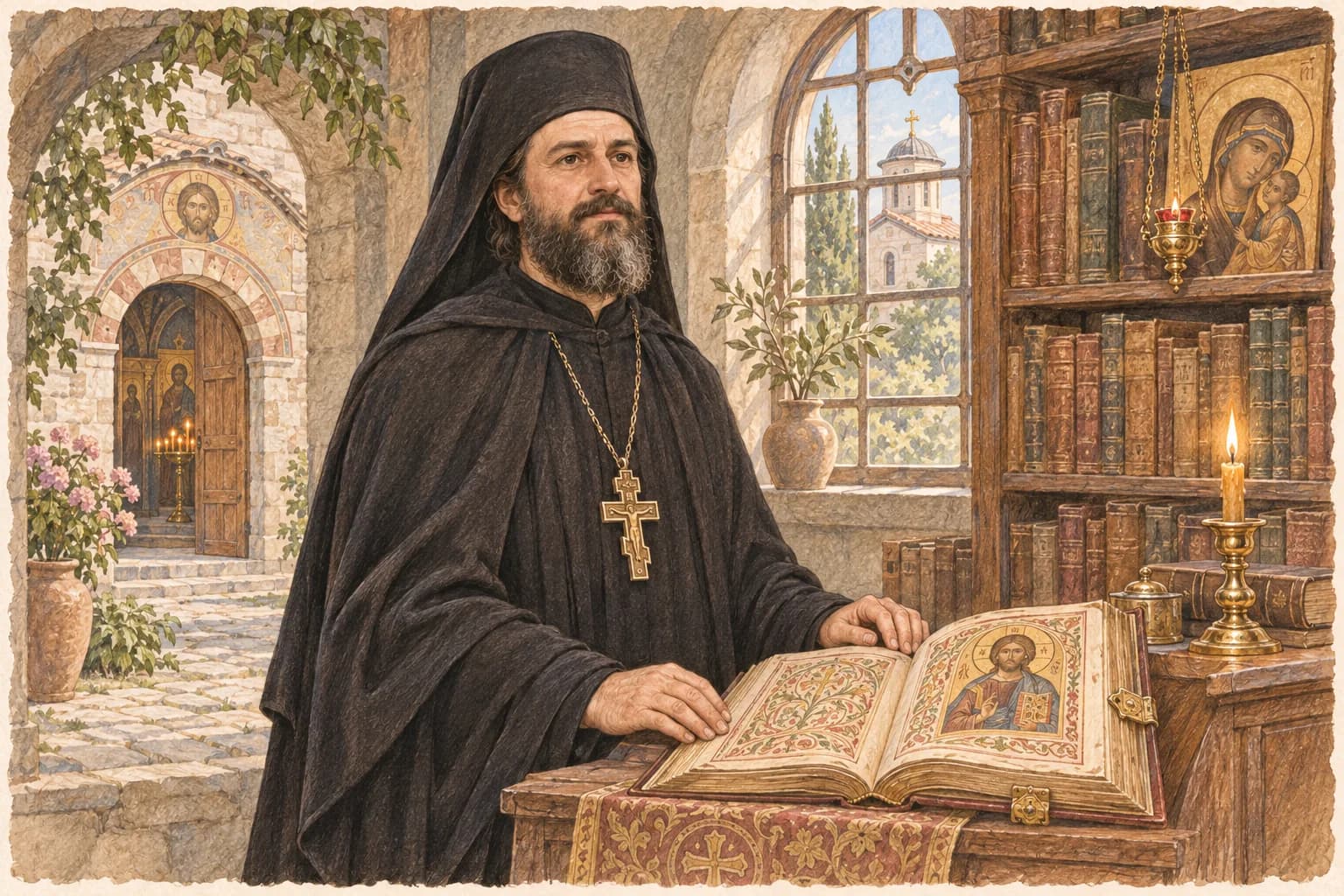
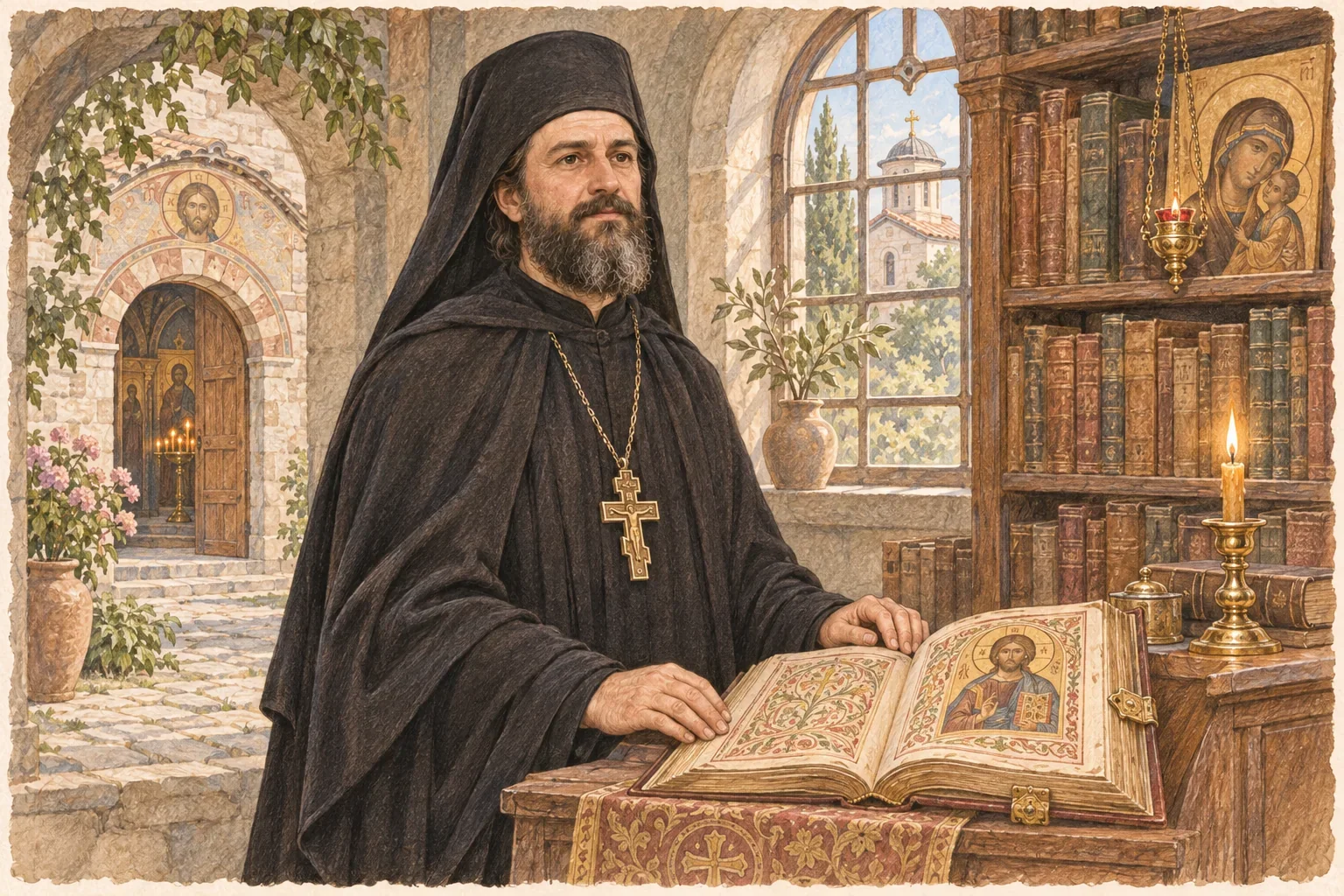
A hieromonk is a monk ordained to the priesthood. He combines monastic life with priestly ministry and may celebrate the Divine Liturgy and other services within the order of the Church. Becoming a monk does not itself make someone a priest: ordination by a bishop is a separate act.
The title describes two aspects of a person’s church life, rather than a specialist occupation as a spiritual adviser. A hieromonk may serve in a monastery, a dependency or another assigned ministry. The title alone does not tell you his schedule, duties or availability to visitors.
A hieromonk is not a more valid priest than a married parish priest. The Church’s sacramental life is not measured by outward austerity. Personal maturity, pastoral experience and an actual assignment matter more than expectations of extraordinary advice from someone wearing monastic clothing.
If you want confession or a conversation with a particular hieromonk, first ask his monastery about arrangements. Addressing him as Father followed by his name is sufficient. Describe your concern plainly; there is no need to test his knowledge or ask him to predict the future.
Why monastic life and priesthood are distinct
Monastic tonsure dedicates a person to a particular form of Christian life involving prayer, renunciation of personal possessions, chastity and obedience within the order of the Church. Ordination to the priesthood entrusts a different ministry: celebrating the sacraments and providing pastoral care. These callings can be combined, but one is not an automatic reward for the other. A monastery may include monks who live there for decades without being ordained. Their monastic vocation is not incomplete because of that.
Consequently, becoming a monk does not automatically allow a man to hear sacramental confessions. Priestly ordination and an appropriate ecclesiastical assignment are required. Conversely, a parish priest may have married before ordination and remain fully a presbyter. Monastic life should not be imagined as promotion on one professional ladder that every Christian is expected to climb.
Monk, hierodeacon, hieromonk and archimandrite
These names become clearer when you ask what each describes. Monk identifies monastic status. Hierodeacon identifies a monk ordained as a deacon: he assists in worship but does not celebrate the Liturgy independently as a priest. Hieromonk combines monastic status and priestly ordination. In contemporary Russian usage, archimandrite is a senior title for a monastic priest, not an additional degree of the sacrament of ordination.
Hegumen commonly identifies the leader of a monastic community, although older biographies require attention to historical usage. In one account the word describes an office; in another it reflects an earlier practice of honorary titles. Visitors should check a person’s current position on the monastery’s official website. That information explains who makes administrative decisions and who has been assigned to receive pilgrims.
Which services may a hieromonk celebrate?
As a priest, a hieromonk may celebrate the Divine Liturgy, baptism, confession and other rites entrusted to presbyters. Ordination does not, however, give him unrestricted permission to serve wherever he chooses. A priest ministers in communion with his bishop and according to his ecclesiastical assignment. Service times, confession arrangements and pastoral visits depend on the actual parish or monastery where he serves.
If someone needs a priest at a sickbed, there is no requirement to find a monastic priest specifically. What matters is who can come and coordinate the visit. The same principle applies to baptism: the sacrament’s validity does not depend on whether the priest is a monk or a member of the married parish clergy. For a conversation, look for someone able to understand the issue and give it time, rather than the most impressive title.
Preparing for a first meeting
Suppose you visit a monastery hoping to discuss a family conflict. First ask who receives lay visitors and whether an appointment is needed. At the meeting, briefly explain your family circumstances, the difficulty and the help you are seeking. Do not begin by demanding an immediate binding decision on behalf of an absent spouse. The priest is hearing one account and may reasonably suggest another time for a more considered conversation.
Confession and pastoral conversation can overlap, but they are not identical. In confession a person brings their own repentance; in a conversation they ask questions and clarify possible next steps. A lengthy discussion of household arrangements is better held away from the confession stand when others are waiting. Arranging another time is not necessarily a refusal to help: it can protect privacy and allow a difficult question to be considered without haste.
Must I seek an exceptional spiritual elder?
Hieromonk and spiritual elder are not synonyms. Elder in its spiritual sense refers to recognised experience of prayer and pastoral guidance; it does not follow automatically from age, a beard or monastic clothing. Promises to solve every problem instantly, claims of guaranteed predictions and demands for secret money transfers do not establish spiritual authority.
You can begin church life in an ordinary parish near home. Regular worship and the opportunity to return to a conversation may be more helpful than occasional journeys in search of extraordinary advice. A meeting with a hieromonk serves a pastoral purpose when it helps you pray attentively, examine your own actions honestly and take greater responsibility towards other people. There is no obligation to seek a miraculous sign in every conversation.
A question for reflection
Do you need confession, pastoral conversation or information about services, and who can arrange it?