
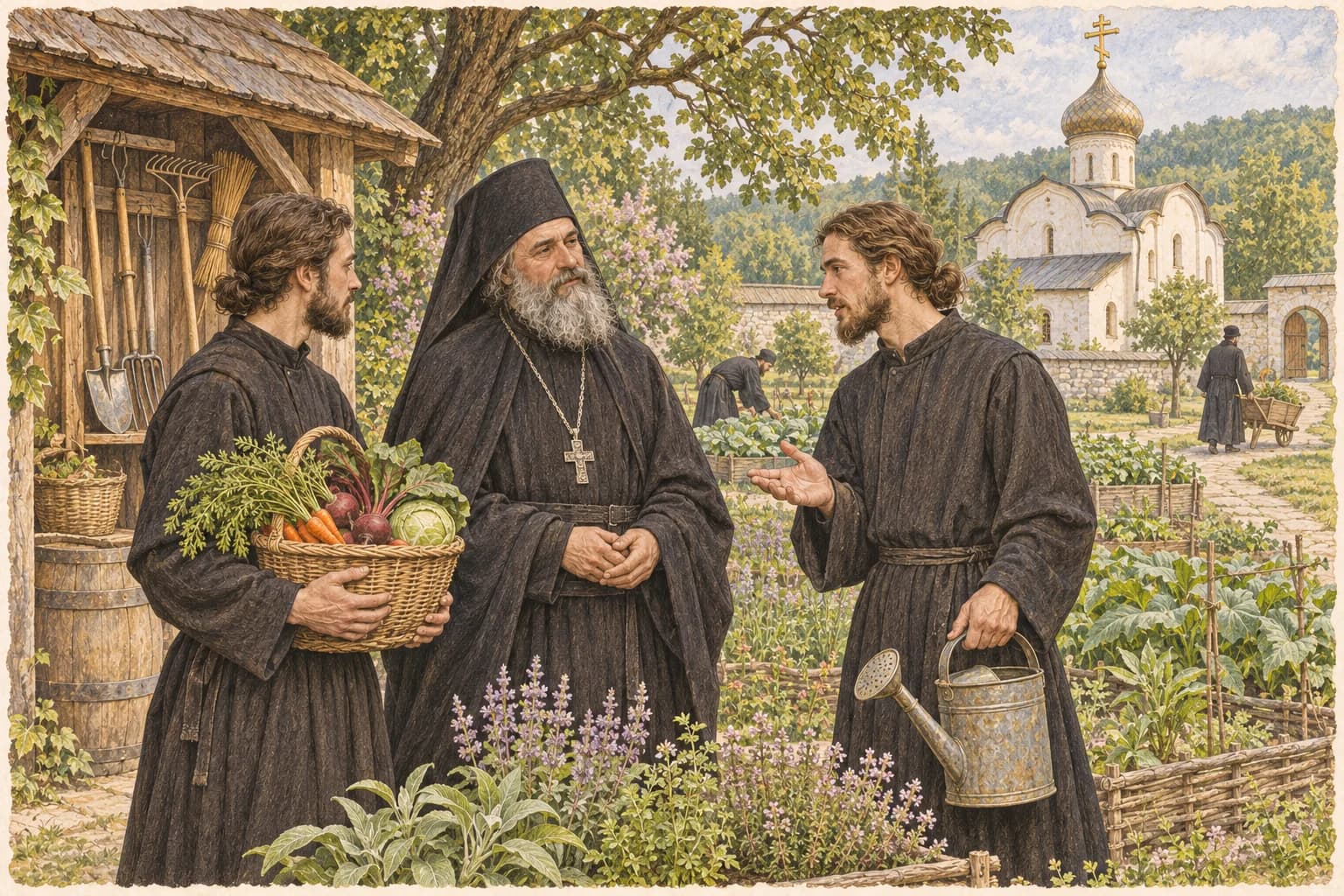

Hegumen is a title associated primarily with leadership of a monastic community. In Russian church history it has also been used as a rank for a monastic priest. Check a monastery’s official information to establish someone’s actual office rather than relying only on the title before his name.
A superior cares for the community, worship and the practical running of the monastery. This is responsibility before church authority and other people, not personal ownership of the monastery. Administrative decisions accompany spiritual duties without turning the superior into an independent source of church law.
Hegumen is not a separate degree of ordination alongside deacon, priest and bishop. Nor is every instruction from every hegumen automatically binding on every layperson. Obedience within a monastery and the responsibilities of someone living in a family have different contexts.
For travel, accommodation or a working visit, contact the monastery’s designated person first. Request an appointment for a personal conversation. This respects the community’s arrangements and helps keep an organisational question distinct from confession.
From the meaning of the title to monastery life
The title hegumen comes from a Greek word associated with leadership. In a monastery, leadership concerns the whole shared life, not simply conducting services: the prayer timetable, assigned responsibilities, receiving new members and attending to everyday needs. Describing a hegumen merely as the senior priest in a building therefore misses much of the role. His responsibility concerns people who have chosen a particular form of communal Christian life.
Nevertheless, a historical title and a present-day office do not always correspond exactly. Russian practice has included the use of hegumen as an honorary rank for a monastic priest; current appointment procedures should be checked against official church documents. Dates matter when reading a biography. A nineteenth-century title cannot simply be interpreted through the personnel arrangements of the present day.
Superior, deputy and hegumen: reading an official listing
A monastery’s description may contain several leadership terms. Superior is a general designation for the head of the community. In some monasteries a bishop formally holds that position while a deputy, commonly called a namestnik in Russian, oversees daily affairs. Hegumen may identify a community leader or form part of a person’s recognised title. Read the description of that particular monastery instead of drawing conclusions from one word beside a name.
For instance, arranging a pilgrimage does not require mastering the entire hierarchy. The pilgrimage office or reception can direct the request appropriately. Someone considering monastic life should ask who receives enquiries and how an initial meeting is arranged. A photograph of the superior on a public website does not mean personal documents should be sent to an unverified social-media account bearing his name.
Spiritual leadership and practical responsibility
A monastery needs heating, food, maintenance and care for members who are ill. These matters are not opposed to prayer: stable daily arrangements support the community’s worship and service. A hegumen has to relate the monastery’s needs to its actual resources and the capacities of the people living there. Leadership includes listening, distributing responsibilities and avoiding arrangements in which some people’s enthusiasm becomes an excuse for continually overburdening others.
Spiritual authority does not remove ecclesiastical accountability. A monastery belongs within the Church and operates under a particular canonical and legal structure. The title cannot justify changing church teaching arbitrarily, controlling every visitor’s family decisions or demanding unconditional transfer of their property. Serious decisions must be intelligible to the person concerned and made without deception or coercion.
Questions to ask before a working visit
A working visitor helps the monastery but does not thereby become a monk or take monastic vows. Before travelling, ask about the length of the stay, the work involved, accommodation, meals and arrangements for continuing prescribed treatment. Explain any limitations on physical activity beforehand. Work that exceeds a person’s capacity does not become medically safe merely because it is undertaken at a religious institution.
Agreeing arrangements with the responsible person avoids expecting the hegumen to meet every visitor personally at the gate. During the stay, follow the agreed routine and direct questions to the person assigned to support guests. If an unforeseen difficulty arises, discuss it openly. An ordinary guest visit does not remove an adult’s ability to end the stay and return to family responsibilities.
How to address a hegumen and what to expect
In ordinary conversation, Father followed by the name, or Father Hegumen, is appropriate. Formal correspondence may use a more ceremonial address, but a newcomer’s uncertainty about etiquette should not overshadow the substance of a request. Introduce yourself briefly and explain whether you want to visit, discuss a monastic vocation or ask a pastoral question. Detailed personal information is better reserved for an agreed private meeting.
The title does not promise an immediate answer to every life situation. A superior may refer someone to another priest, recommend reading or suggest a later appointment. That is not necessarily indifference: care for the community and receiving visitors both require time. The value of a meeting lies in greater clarity, responsibility and the ability to live the Gospel, rather than in how long the superior gives one visitor his undivided attention.
A question for reflection
Which part of your question needs the superior, and which can the monastery office answer?