
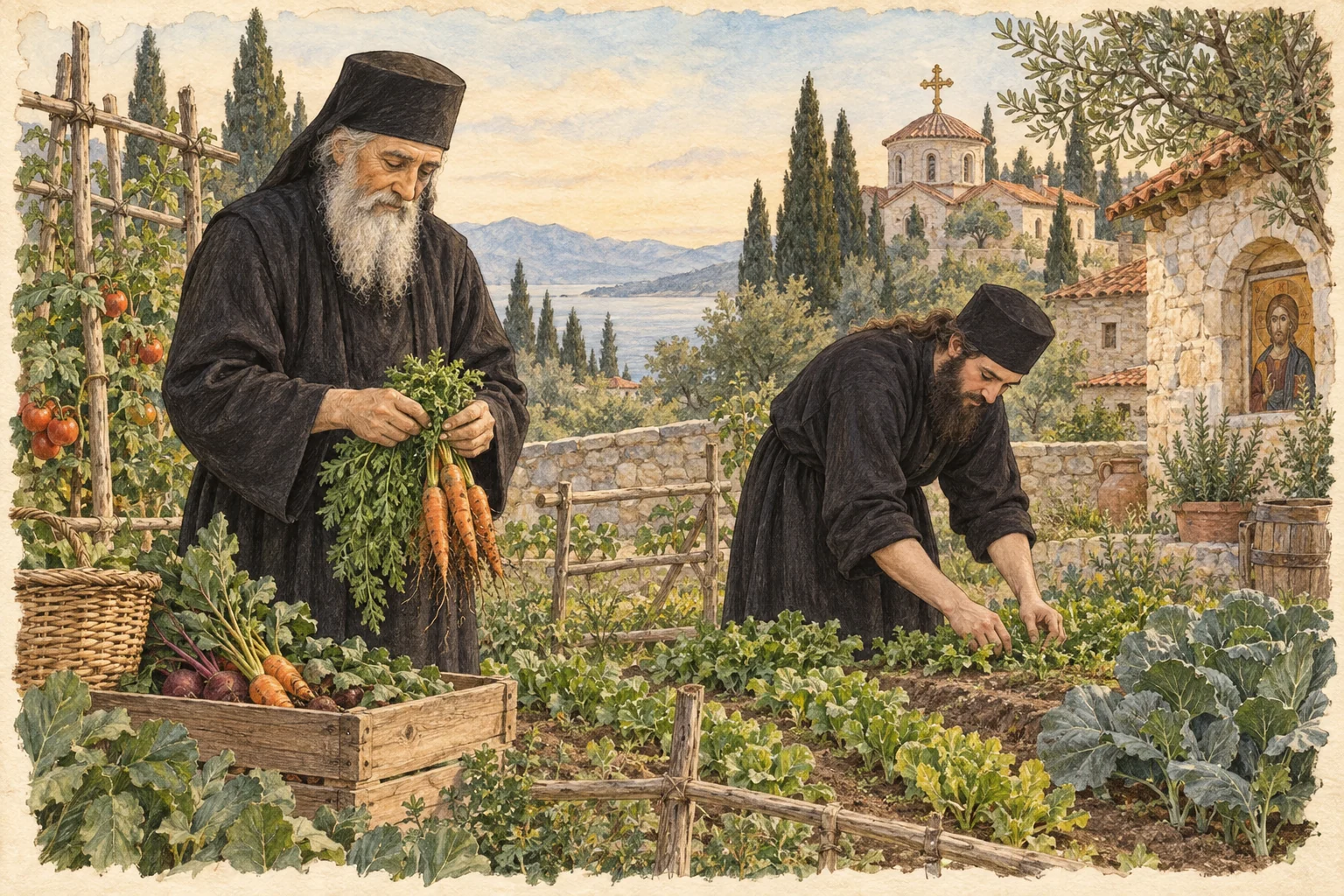
Monasticism is a particular Christian calling, not a profession or a way to disappear from difficult circumstances. Its clothing, daily rhythm, and places of residence are visible. Yet unusual living arrangements alone cannot explain it. At its heart is the dedication of a whole life to God.
Understanding the vows
An Orthodox account of monasticism identifies chastity, poverty, and obedience. A monk or nun renounces marriage, personal accumulation as an aim, and a self-directed spiritual life. These commitments do not make someone automatically free from error; they orient a life of work, prayer, and repentance.
A monk is not necessarily a priest: monastic tonsure and ordination are different. You therefore cannot assume that anyone in monastic clothing can hear confession. Simply ask who receives confessions and how a conversation can be arranged.
Prayer, community, and work
A monastery's service cannot be reduced to the activities visible to guests. The OCA's explanation of monasticism's significance emphasizes prayer, hospitality, and spiritual care. Communities undertake different kinds of work; a workshop or guesthouse does not turn the monastery into merely a business.
Avoid judging a community member by how much attention you personally receive. Someone working in the kitchen or caring for the grounds may be doing necessary work rather than avoiding you. Respecting the schedule acknowledges that the community does not exist solely to provide visitors with memorable experiences.
Testing an intention over time
In its answer about entering a monastery, the OCA warns against treating monastic life as escape from people and problems. A wish to change everything after bereavement, a separation, or deep disappointment deserves careful discussion. Pain neither proves nor disproves a vocation.
Begin with an honest conversation with a priest who knows you and an agreed introduction to a particular community. Discuss not only inspiration but health, responsibilities toward children and relatives, debts, and expectations. A short visit is not sufficient evidence for a lifelong decision.
Questions during an introductory visit
Ask about guest accommodation, possible dates, work arrangements, and whom to approach with questions. Find out how that community distinguishes a pilgrim, a temporary volunteer, and a novice. Kitchen work is not a promise of future tonsure, and a few visits do not make someone a member of the monastery.
Notice your response to repeated ordinary tasks, the need to cooperate, and the absence of constant excitement. At the same time, do not conceal exhaustion, pain, or an inability to carry out a task. An honest account of your limits differs from demanding that everything be arranged according to your preferences.
Avoiding premature decisions
Do not give away possessions, stop necessary treatment, or sever family relationships merely because a story has moved you. Decisions with serious consequences need time and responsible discussion. Spiritual guidance must not be replaced by pressure from an unfamiliar person demanding immediate, irreversible action.
If an intention to enter a monastery does not develop, the encounter need not be regarded as failure. You may return to parish life more attentive to prayer, work, and other people. Different Christian callings are not a competition, and a person caring faithfully for a family should not have that responsibility belittled. Discernment includes being able to speak truthfully about the path you are actually living.
Observe an Ordinary Day, Not Only a Feast
During an agreed stay, notice the recurring routine: how work begins, whom to tell when a task is finished, and when questions can be asked. A festive service reveals only part of a community's life. Someone may love silence and church singing without yet understanding how they respond to extended shared living, limited personal time, and different temperaments. Bring these questions honestly to a conversation instead of concealing them beneath general enthusiasm.
If given an ordinary practical task, first clarify the expected result and working arrangements. Do not reorganise a room on your own initiative to prove your usefulness. Equally, do not continue dangerous work silently when you cannot use the equipment. Willingness to learn includes asking again and explaining difficulty. Attention to a modest task offers more material for discerning an intention than imagining future extraordinary spiritual achievements.
Discussing Your Intention With Relatives
Relatives may hear an interest in monasticism as a promise to disappear immediately. Explain your actual stage: reading, having conversations, hoping to visit, or discussing a longer stay. Do not announce as settled something you are still exploring. Identify the responsibilities you currently retain and how they will be met during a visit. This can distinguish concrete family concerns from anxiety caused by a lack of information, without requiring everyone to feel the same way about the possibility.
Do not ask strangers to certify a vocation on the strength of a few eloquent letters. Keep questions for your next meeting: which expectations proved accurate, what surprised you, and what remains difficult to discuss? If acquaintance with the community shows that returning home is presently more honest than continuing, discuss departure and the handover of tasks. A decision not to pursue this path need not be hidden in shame or explained as universal hostility to your spiritual intentions. It can be described truthfully as what you have learned at this stage.