
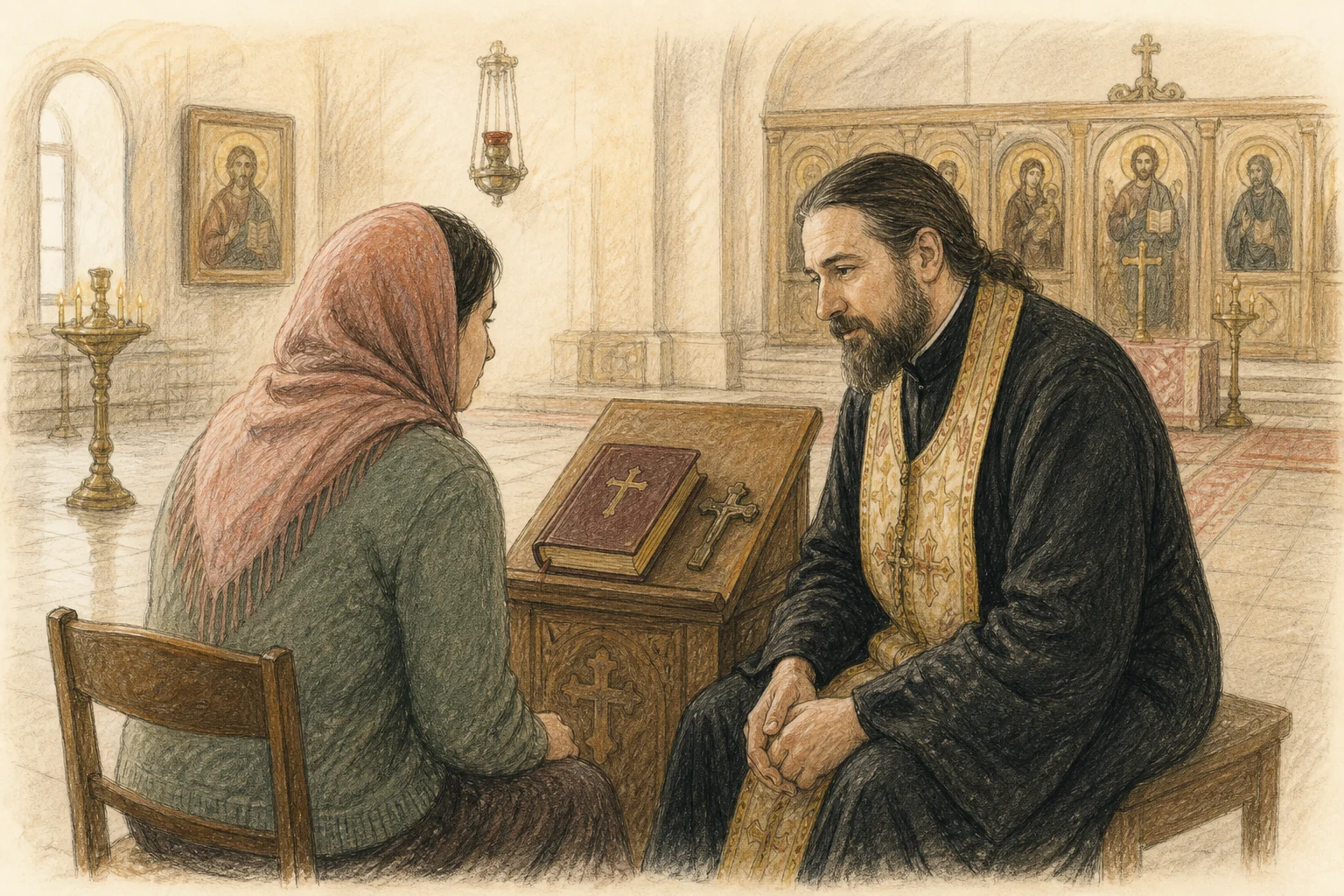
After a long absence, begin simply: contact a parish, tell the priest approximately how many years it has been, and ask for a separate appointment if the conversation may be lengthy. Beforehand, remember the principal deliberate sins, continuing destructive patterns, and harm that needs repair. You are not required to reconstruct a perfect chronological archive of every thought.
In confession, speak about yourself concretely and without excuses. Returning is not a reason for shame before the parish. The Church exists for repentance and healing.
Why the first step feels difficult
A person may fear judgment, not know the order, remember a painful earlier experience, or believe too much has accumulated. Shame says, “repair yourself completely and then come.” Repentance, however, begins with returning rather than after self-cure.
A priest hears human weakness regularly and should not be shocked by it. You are not proving that your fall is exceptional; you are seeking God’s forgiveness and a new path.
To whom is confession made?
Sins are confessed to God in the presence of a priest, who serves as witness of the Church and pastor entrusted to help, give counsel, and read the prayer of absolution. The priest does not own forgiveness.
The sacrament is more than emotional relief, though truth spoken honestly may bring relief. Its center is reconciliation with God and return to ecclesial life.
How to arrange the time
Do not arrive without warning five minutes before a festal Liturgy to recount twenty years. Call, use the contact page, or approach after a service and ask for time for confession after a long absence.
Clarify when to come, how to prepare, and whether a preliminary conversation is appropriate. Services are listed on the schedule page.
How to prepare at home
Pause in quiet, read the Lord’s Prayer, and ask God to reveal truth without despair. Examine life through the Gospel commandments: relationship with God, other people, your body, work, and responsibilities.
Write the main themes if memory is anxious. Set a reasonable limit, perhaps thirty minutes, and then return to ordinary duties. Endless self-analysis is not the same as repentance.
What should certainly be named?
Name grave deliberate acts, long-standing habits, addiction, hatred, betrayal, violence, deception, destruction of family, and conscious withdrawal from God. Do not hide what matters behind “I am sinful in everything.”
Name what continues now and requires a decision. If ecclesial language is unfamiliar, use ordinary words: what happened, whether you understood the harm, and whether it repeats.
Do not turn confession into an autobiography
Context can clarify responsibility, but a long account of how other people forced you often pushes personal choice aside. Give the necessary circumstance briefly and return to the question: what did I do?
The priest will ask when clarification is needed. Avoid unnecessary intimate detail and do not provide the full names of other people.
May a written list be used?
Yes. A short note helps preserve the main points and avoid wandering into a story. Use key phrases rather than an essay of many pages. You may look at it while speaking.
After absolution, handle the paper in a way that protects privacy; there is no required ritual of burning it. Our article on a list before confession explains healthy boundaries.
What if past years are hard to remember?
Say honestly, “I have forgotten much; I am naming what I remember and understand now.” God does not demand impossible memory work. A sincerely forgotten sin differs from a consciously concealed one.
If an important act comes to mind later, name it next time without imagining that the earlier confession was automatically erased.
Repeated sins
Do not conceal a pattern merely because it was confessed before. Say that it recurred, approximately how often, what conditions maintain it, and what you attempted to change.
Repentance is not proved by the promise “never again” spoken without a plan. A real next step is more useful: remove access, end a harmful contact, enter treatment, or make restitution.
Addiction and mental health
Alcohol, drugs, gambling, and other addictions require specialized support as well as spiritual effort. Confession serves truth and responsibility but cannot replace a clinician, treatment program, or safe environment.
Depression, trauma, anxiety, and obsessive-compulsive disorder can shape feelings of guilt. Tell the priest about a diagnosis and continue care with qualified professionals.
When harm or a crime has occurred
Repentance requires stopping evil, protecting the person harmed, making restitution where possible, and accepting lawful responsibility. Confession must never be used to hide ongoing abuse or avoid competent authorities.
Do not contact a victim impulsively when renewed contact may cause further harm. Plan repair with pastoral and professional guidance. In immediate danger, establish safety first.
Fear of condemnation by the priest
A pastor may identify an act as sin and prescribe a serious path of repair, but he must not humiliate the person, disclose confession, or enjoy power. Firmness and cruelty are not identical.
If an interaction was clearly humiliating or unsafe, you may approach the rector or another canonical Orthodox priest. This is different from searching endlessly for someone who will approve the answer you prefer.
What is a penance?
A penance is a pastoral medicine: prayer, abstinence, restitution, or a temporary discipline in Church life. It is neither a financial fine nor payment for God’s forgiveness.
If the rule is unclear or impossible because of health, ask immediately instead of disappearing. Do not modify it independently according to an online forum.
Will Communion be allowed immediately?
Confession and Communion are connected, but admission also considers present condition, the gravity of continuing sin, Church order, and pastoral responsibility. The Chalice is not an automatic prize for completing a conversation.
If time and concrete steps are required, clarify them and remain in contact. A delay is not identical to expulsion from the Church.
Bodily and prayerful preparation
Sleep, avoid alcohol before confession, arrive sober, and come early. Do not prescribe yourself a severe multi-day fast, especially during illness.
Read penitential prayers in a manageable amount and a Gospel passage. The main preparation is a decision not to hide the truth and to begin repair.
What happens at the analogion?
Ordinarily, a person stands before a cross and Gospel book, the priest reads initial prayers, listens, asks questions, and gives guidance. With repentance he reads the prayer of absolution, placing the epitrachelion over the head.
Do not record the conversation, and silence the phone. If disability makes standing or speech difficult, explain beforehand so that the arrangement can be adapted.
What to do afterward
Give thanks to God, write down assigned practical steps after leaving, ask forgiveness from people where that is safe and appropriate, and return to prayer and worship.
Do not spend the day checking whether you “felt sincere enough.” Practice begins with the nearest honest and loving action.
If you fall again
Do not wait another ten years because of shame. Stop the harm, seek necessary help, and return to confession. Repetition is serious, but it does not make repentance meaningless.
Discuss triggers and concrete support. One spiritual instruction without a change in environment may not be enough.
Scrupulosity and compulsive confession
If you repeatedly confess the same doubtful thought, seek complete certainty, or return because a word may have been imperfect, tell both the priest and a qualified mental health professional. Religious compulsion is not healed by an ever longer inventory.
A stable confessor can set boundaries: one preparation period, no repeated checking, and trust in absolution. Clinical treatment and pastoral care can work together.
Frequently asked questions
Must I recount absolutely everything since childhood?
Name known serious sins and what shapes present life. Do not reconstruct every thought; answer the priest’s clarifying questions.
May I come if I know no prayers?
Yes. Say so when arranging the meeting, and the parish will explain minimal preparation. There is no need to conceal inexperience.
Will the priest remember me and my sins?
A pastor is bound to preserve the seal of confession. Do not let an imagined memory prevent return to God.
May I confess in another parish?
You may approach another canonical Orthodox church, though stable pastoral relationship is more helpful than random searching for a convenient answer.
What if I feel no remorse?
Say so honestly and begin by acknowledging harm and a desire to change. Feeling may come later; a will toward truth already matters.
The first concrete step
Write or call: “I have not confessed for a long time and want to return. When can we speak without haste?” Then make a short list of the main things and come.
Do not wait until you make yourself worthy. The sacrament of repentance is given precisely to a person who needs to return.