
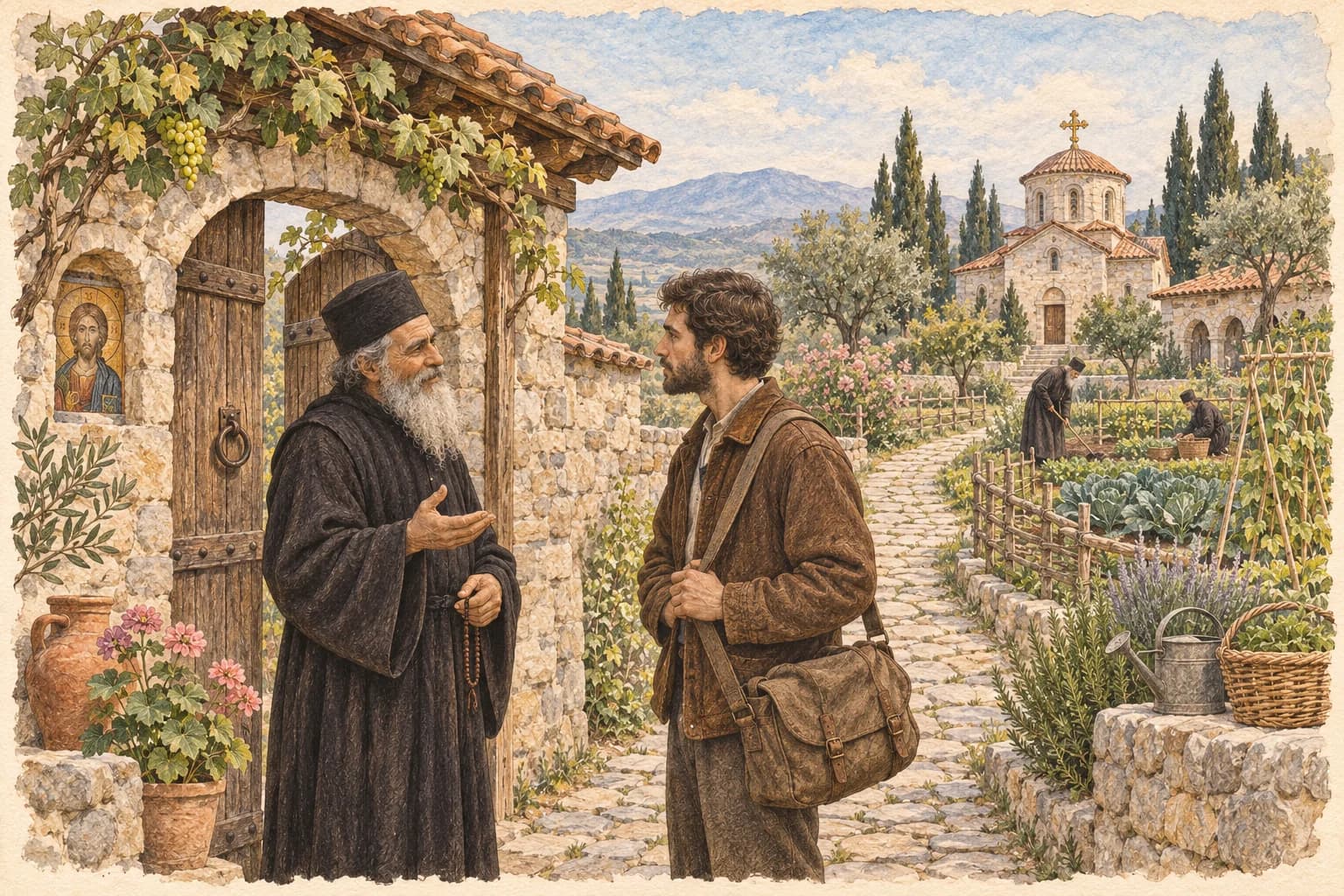
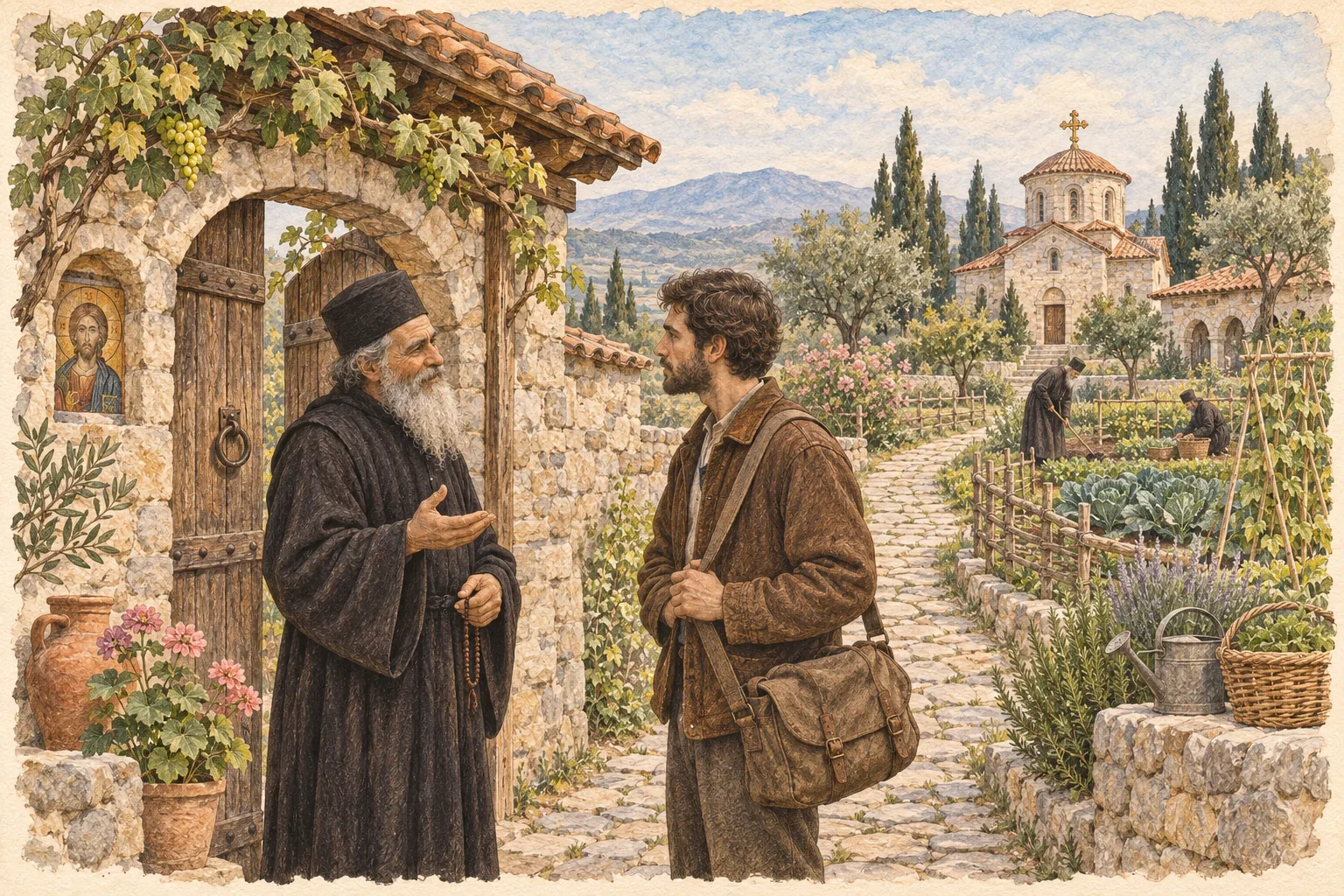
Monastic life does not begin with buying clothing or a sudden move, but with discernment within the Church. Usually a person becomes acquainted with a community gradually. Stages, timescales and conditions depend on the monastery rather than a universal online procedure.
Distinguish pilgrimage, a working visit, novitiate and tonsure. They involve different commitments. A first visit is not a promise to remain forever, and a monastery is not obliged to accept every applicant without getting to know them.
Family responsibilities, debts, health and dependants cannot simply be abandoned under a spiritual label. A monastery does not replace emergency medical care or a refuge when protection from abuse is needed. Speak openly about these circumstances.
Begin with a parish conversation and an arranged monastery visit. Learn the actual routine and visitor requirements. Discern gradually, retaining the freedom to acknowledge honestly that this vocation may not be yours.
A vocation is discerned through everyday life
Monasticism concerns a particular way of following Christ, not simply a desire for quiet or escape from everyday difficulties. A monastery has a routine, relationships with different people, work, tiredness and the need to consider more than personal preferences. Enjoying beautiful services or a monastery’s landscape does not therefore settle the question of vocation. It matters to see an ordinary day when there is no major feast and no special experience has been arranged for visitors.
Discernment begins with stable church life where a person already lives. Worship, prayer, keeping commitments and honest discussion of motives help clarify the direction of the desire. An impeccable spiritual biography is not a prerequisite for enquiry. Yet it is useful to distinguish attraction to a particular vocation from the hope that changing address will automatically resolve an inner conflict, addiction or serious emotional distress.
Pilgrim, working visitor, novice and monk
A pilgrim visits a holy place and participates in worship. A working visitor helps with agreed tasks; this can provide closer acquaintance with community life, but is not itself monastic tonsure. Novitiate involves a more sustained testing of intention and life within the monastery’s order. Specific names for stages and requirements should be clarified with the community rather than treating one local custom as universal.
Tonsure involves an ecclesiastical decision and the free acceptance of commitments. It is not a formality automatically earned after a fixed number of months of work. The length of preparation varies. The freedom honestly to recognise that monastic life is not one’s vocation is especially important during initial discernment. Returning to ordinary life before taking the relevant commitments should not automatically be portrayed as a moral catastrophe.
Responsibilities that must be discussed beforehand
A spouse, minor children, dependent relatives, financial commitments or unresolved legal matters cannot simply be left outside the monastery gate. Different obstacles require different responses, but they must be disclosed. A desire for spiritual life does not remove responsibility towards people who rely on your care. A serious conversation about vocation includes those circumstances instead of concealing them to make a more persuasive account.
Health also needs honest discussion. Communities differ in their facilities, access to medical care and the work involved. Do not stop prescribed treatment independently in order to appear more ready for ascetic life. During a crisis, appropriate support comes first; decisions about an entire future can be considered after stabilisation. A monastery may assess whether it can provide the necessary conditions, and rejection by one community is not a verdict on a person’s worth.
Arranging a first visit and what to observe
Find official contact details and explain that you would like to become acquainted with monastic life. Ask about admission, duration, documents, accommodation, meals and work limitations. Do not buy monastic clothing in advance or present yourself as a novice before being received into the relevant arrangement. Initially, attention to reality is more useful than outward imitation of an imagined monk.
During the stay, notice your response to the shared timetable, ordinary duties, listening to others and the loss of familiar private space. Discuss difficulties with the person appointed to guide you rather than continually comparing yourself with the most austere residents. Allow impressions to settle after the visit. The issue is not whether you felt exceptional exhilaration, but whether you can freely, responsibly and steadily live this vocation. Discernment grows through truth about yourself and the community, not a hurried promise never to return.
Is there a universal age or compulsory property payment?
Practical admission requirements should be checked with the particular monastery and diocese. A general article should not promise acceptance at a specified age or prescribe one universal probationary period. The community’s capacities and the applicant’s circumstances need individual consideration. The same applies to education, health and required documents.
Transferring property must not become a way to buy tonsure or prove a vocation. Major financial decisions require a clear understanding of consequences and freedom from pressure. If an initial visit brings a demand immediately to surrender every resource, pause and obtain independent clarification. Freely embracing monastic life is not founded on a financial trap.
A question for reflection
Are you discerning monastic ministry, or primarily seeking escape from an immediate crisis?