
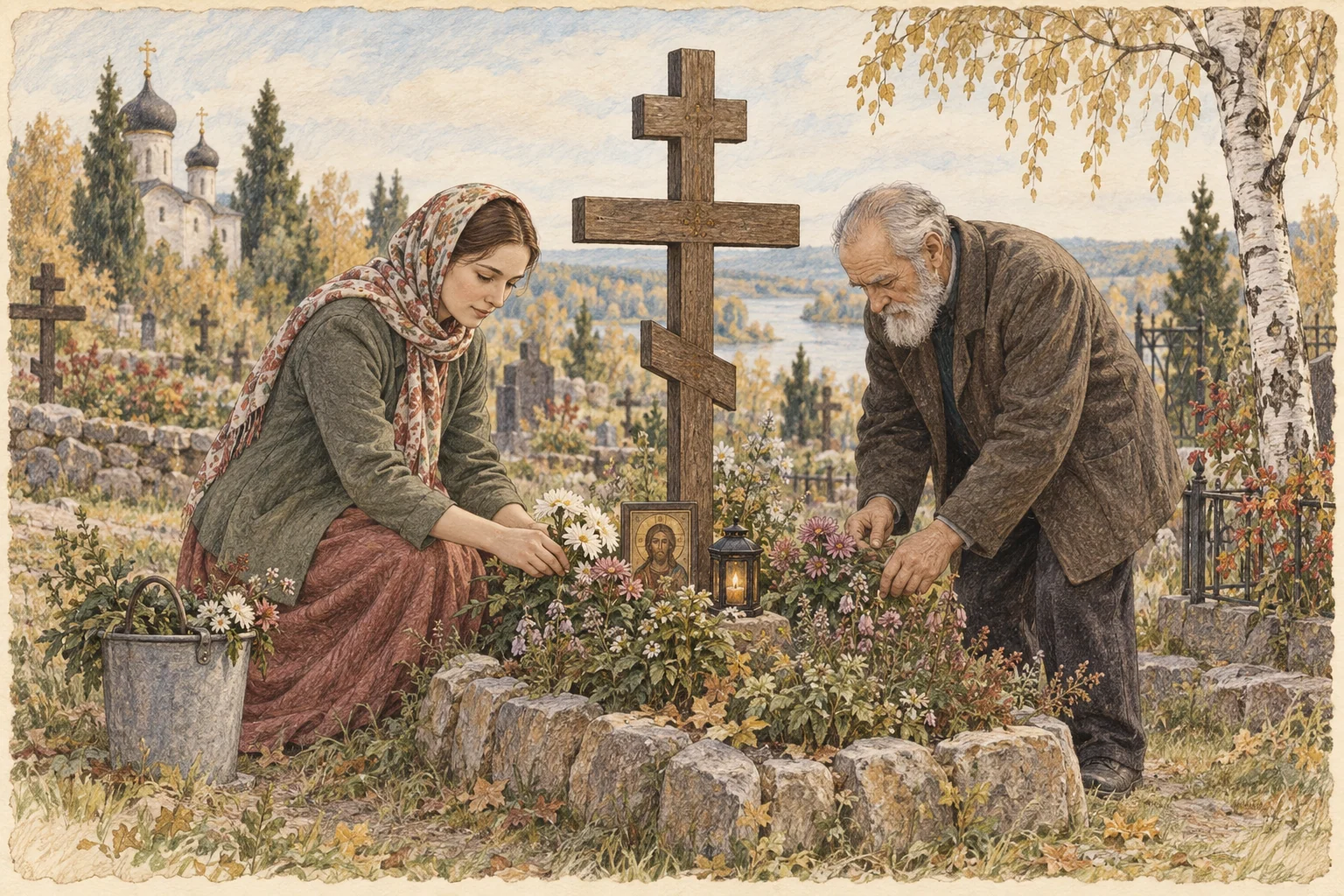
A cemetery visit is an opportunity to remember someone, pray for them, and care for their burial place. It does not require secret rules or an elaborate sequence of gestures. Start with practical arrangements: check opening hours, locate the plot, bring what you need, and allow some unhurried time for prayer.
Preparing for the visit
Check the route and the condition of the paths, especially when accompanying an older person. Bring water, gloves, a rubbish bag, and suitable cleaning tools. If the grave is far from the entrance, consider where someone could rest. A visit should not become a test of endurance. A short, manageable visit can be more helpful than an exhausting day.
Agree with relatives about transport, flowers, and cleaning. An expensive wreath is unnecessary. When you live far away, you can ask someone nearby to check the plot. Being unable to travel does not mean that you have forgotten the person.
Prayer beside the grave
Prayer is addressed to God, not to the soil or the monument. The Church's prayers for the departed ask for forgiveness and rest. Use an Orthodox prayer book with prayers intended for lay readers, or make a brief personal request for God's mercy. Do not assume that every priestly proclamation in an unfamiliar service is intended for private use.
If you would like a priest to offer memorial prayers at the grave, arrange this beforehand and provide the location and relevant information about the deceased. Purchasing religious objects is not a substitute for that conversation. When grief makes concentration difficult, allow yourself a little silence rather than forcing an appearance of composure.
Caring for the burial place
Remove litter, arrange flowers, and gently clean the inscription. Consult the cemetery administration and a qualified worker about a damaged cross, fence, or leaning monument. Do not try to lift a heavy stone yourself. Avoid changing neighbouring plots or removing another family's belongings without permission.
A candle is not necessary for God to hear your prayer. If you light one, observe cemetery restrictions and consider wind and dry vegetation. Never leave an open flame unattended. Take rubbish to the designated collection point rather than putting it beyond someone else's fence.
Leaving superstition aside
A dropped object, an unexpected passer-by, or rain during your visit cannot tell you the condition of the departed person's soul. There is no need to treat these events as messages. Food and alcohol left at a grave neither feed the deceased nor replace prayer. Sharing food with living people in someone's memory can take place separately and with attention to their actual needs.
When relatives disagree about customs, explain your own intention without ridicule: you have come to pray and tend the grave. Arguments beside a burial place rarely help grieving people understand one another. Agree on the simple actions you can undertake together.
Bringing a child
Explain whom you will remember and what the visit involves. Offer a small task, such as placing flowers or reading a name. Children need not imitate adult grief or stand still for a long time. Answer questions plainly, do not use the cemetery to frighten them, and do not force physical gestures of affection toward the monument. You can finish with a warm memory of the person before returning to ordinary family activities.
When the Burial Place Is Difficult to Find
Before travelling, collect what you know: the cemetery name, plot number, a photograph of the monument, and the person's name and dates. Ask the administration for directions rather than relying on a path remembered from years ago. Keep clear directions for other relatives. If the grave needs considerable attention, first establish the work involved. You do not have to put everything right in a single visit, especially without suitable tools or another person to help.
If the monument is damaged, photograph its condition for discussion with those responsible without immediately assuming a cause. An unstable fence or sunken ground needs a practical response, not interpretation as an omen. Limit your own cleaning to accessible, safe tasks. If engaging someone to help, agree beforehand which items may be removed and which must remain. Old flowers and a meaningful family keepsake may look equally dispensable to someone unfamiliar with the plot.
Consideration for Other Visitors
A path may be used by a funeral procession, someone with a walking aid, or a family who cannot face conversation. Leave access clear, silence your phone, and do not photograph another person's grief. Even a picture of your own family grave can be framed to exclude strangers. Ask relatives before publishing a group photograph: not everyone wants their cemetery visit to become a public event.
If someone close to you wants time alone at the grave, agree where to meet afterwards and how long you can wait. Avoid commenting aloud on every reaction. One person wants to tell a story, another remains quiet, and someone else tires quickly and needs to leave. Separate the visit from a later gathering at home so that everyone need not maintain the same pace. Before leaving, check for tools and rubbish. Care for a place of remembrance includes ordinary responsibility for what you leave behind, without making the visit longer than those attending can manage.
Sources
- Orthodox Church in America: Prayers for the Departed
- OCA: parish activities, including tending graves