
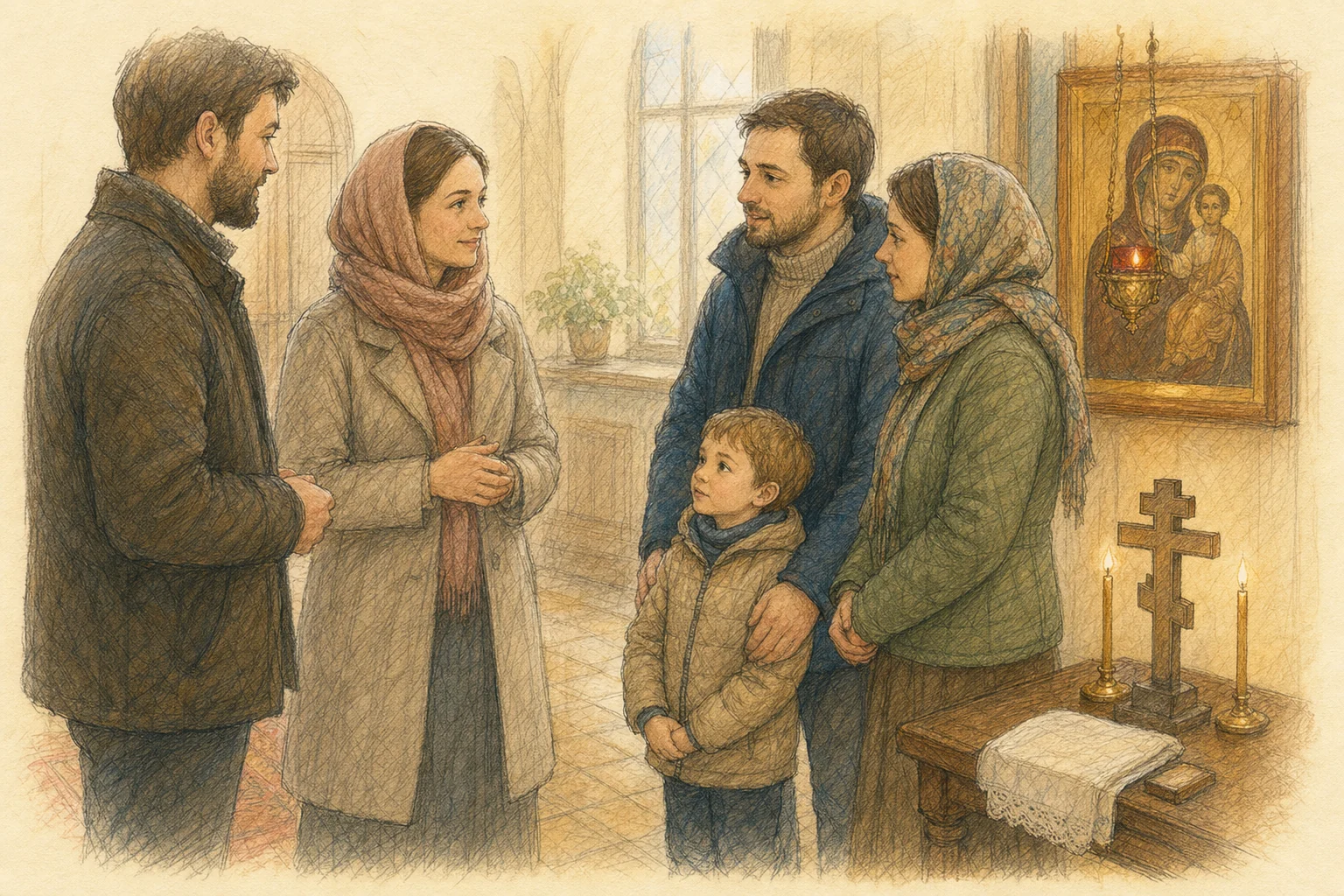
When parents prepare for a child’s Baptism, choosing godparents can feel awkward. Whom should we ask? What if a close person rarely comes to church? What if no suitable person is obvious yet? It helps to begin with what the role actually means: godparents are not chosen for a photograph or a family custom. They pray for the child and help the child discover the life of faith.
This does not require flawless people or ready answers to every question. It calls for honesty, care and a willingness to remain close to the child after the day of Baptism.
What it means to be a godparent
A godparent is not a ceremonial guest. The relationship continues in simple, lasting ways: remembering the child in prayer, marking the baptismal day, visiting church together and answering questions as the child grows.
Where to begin
Ask not “who is convenient to invite?” but “who can truly remain near this child in faith?” Think about trust, a real relationship with the family and willingness to learn.
Do not look for a perfect person
Church life is not built on outward perfection. A person who says, “I still have much to learn, but I want to be responsible and present,” may be more ready than someone who agrees formally and then disappears.
How to ask honestly
Do not place a friend or relative before a fait accompli. Explain why you are asking them and give them time to think. A respectful refusal is better than an agreement made from embarrassment.
When a prospective godparent is only beginning church life
Do not judge too quickly by one outward sign. Speak about how the person understands Baptism and whether they are willing to prepare. Preparation may become a meaningful step for the godparent too.
Parents and godparents
Godparents do not replace parents. Parents remain the child’s principal carers. Godparents support the family through prayer, attention and an honest example of faith.
Prepare together
Parents and future godparents can attend a parish conversation together, write down questions and read about a child’s Baptism. This keeps preparation from becoming one person’s anxious task.
Church readiness matters
A godparent is normally a baptised Orthodox Christian who can take part consciously in the Sacrament and help the child enter church life.
This does not mean knowing every prayer by heart. It means willingness to learn, pray, attend preparation and speak honestly about one's present relationship with the Church.
If the person belongs to another Christian confession or does not share the faith, ask the priest before making promises. Someone may remain a loving family friend without formally becoming a godparent.
One godparent or two?
Families often expect both a godmother and a godfather, but the required arrangement should be confirmed with the parish. Do not add a second person merely to complete a social picture.
Questions about gender, age, family relationships and whether two proposed godparents may be spouses require a direct pastoral answer. Local practice should not be replaced by rumours.
Healthy boundaries with parents
Important decisions about health, education and everyday life remain with the parents or legal guardians. Spiritual care should not become interference in family boundaries.
Parents in turn should not treat a godparent as a source of gifts, money or automatic childcare. The relationship grows through trust, prayer and respectful communication.
What godparents do during Baptism
During the rite, godparents answer on behalf of the child, confess the faith and assist as the priest directs. The Creed and other preparation may therefore be discussed in advance.
The exact practical role depends on the child's age and parish order. Listen to the preparation rather than learning movements from an unrelated video.
Confession, Communion and preparation
A parish may recommend Confession, Communion, prayer or particular reading before the Baptism. Ask about the local order early enough to prepare without panic.
Health and personal circumstances matter. A priest can help adapt preparation without turning it into a public examination.
Gifts, cross and expenses
Buying a cross, clothing or another item does not define a godparent. Ask what is genuinely needed and decide expenses without pressure or competition.
A modest gift with continuing attention is more faithful to the role than an expensive purchase followed by absence.
Financial hardship should be discussed honestly. The Sacrament is not a test of how much a family or godparent can spend.
If the godparent lives far away
Distance does not make a relationship impossible, but it requires intention. Calls, messages, prayer and visits can help the child know the godparent as a real person.
Before choosing, ask whether the person can remain present over years rather than only travel for the ceremony.
After the Baptism
Remember the child by name in prayer. Keep in touch with the parents, mark the baptismal day and, when possible, come to church together.
As the child grows, the role changes. A young child may need simple stories and presence; an adolescent may need a trustworthy adult who can listen without lecturing.
A godparent's example includes the ability to apologise, learn and return after a period of distance.
If relationships later become difficult
Families sometimes move, quarrel or lose contact. Do not use the spiritual relationship as a weapon in an adult conflict.
Where safe and appropriate, seek reconciliation and preserve the child's peace. If contact is impossible, the godparent can continue to pray and ask a priest for guidance.
Additional questions
Can someone become a godparent only as an honour?
The role is a real church responsibility, not an honorary family title. A close friend can remain important without making a promise they cannot honestly carry.
What if the chosen person later refuses?
Respect the refusal and speak with the parish. Do not pressure the person or rush immediately into another formal choice.
What if the child has special needs?
Tell the parish in advance. Preparation and participation can be explained in a way that respects the child's health, communication and sensory needs.
Questions for the parish
Ask the parish directly about current preparation, the number of godparents and any personal circumstances. Local practice can differ, and a living conversation is safer than contradictory online advice.
If no suitable person is clear yet
Do not choose someone merely because a date is approaching or relatives expect an answer. Speak openly with a priest. Baptism does not need a rushed formal solution.
Common questions
Can there be one godparent?
Confirm the practical order with the parish where Baptism will take place.
Can a relative be a godparent?
Discuss your particular situation with a priest rather than relying on general rumours.
Must a godparent know everything beforehand?
No. Readiness to learn, pray and remain close to the child matters more.
Next step
Begin with a calm conversation with the person you have in mind, then contact the parish to arrange preparation. That simple sequence removes much of the anxiety around this decision.