
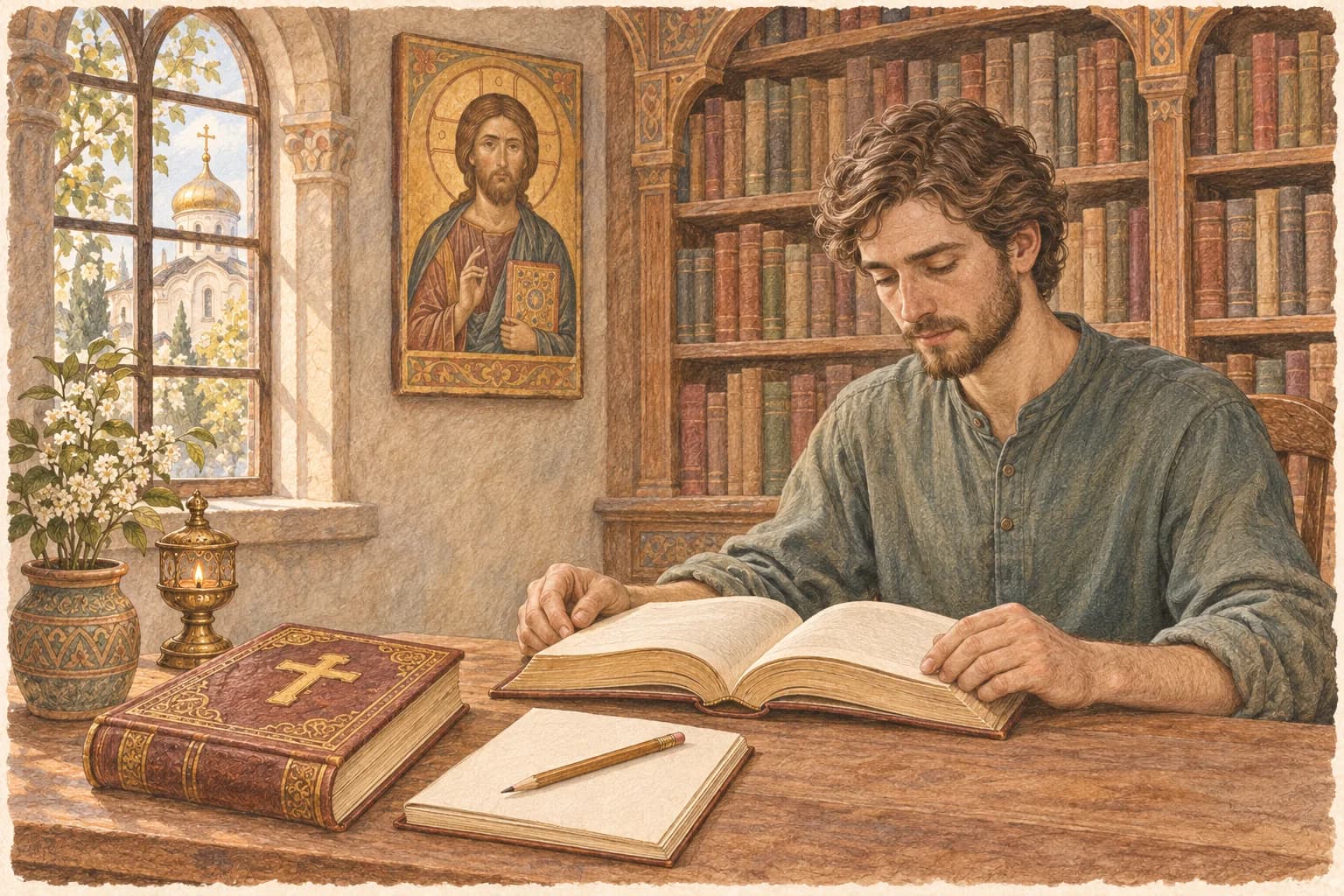
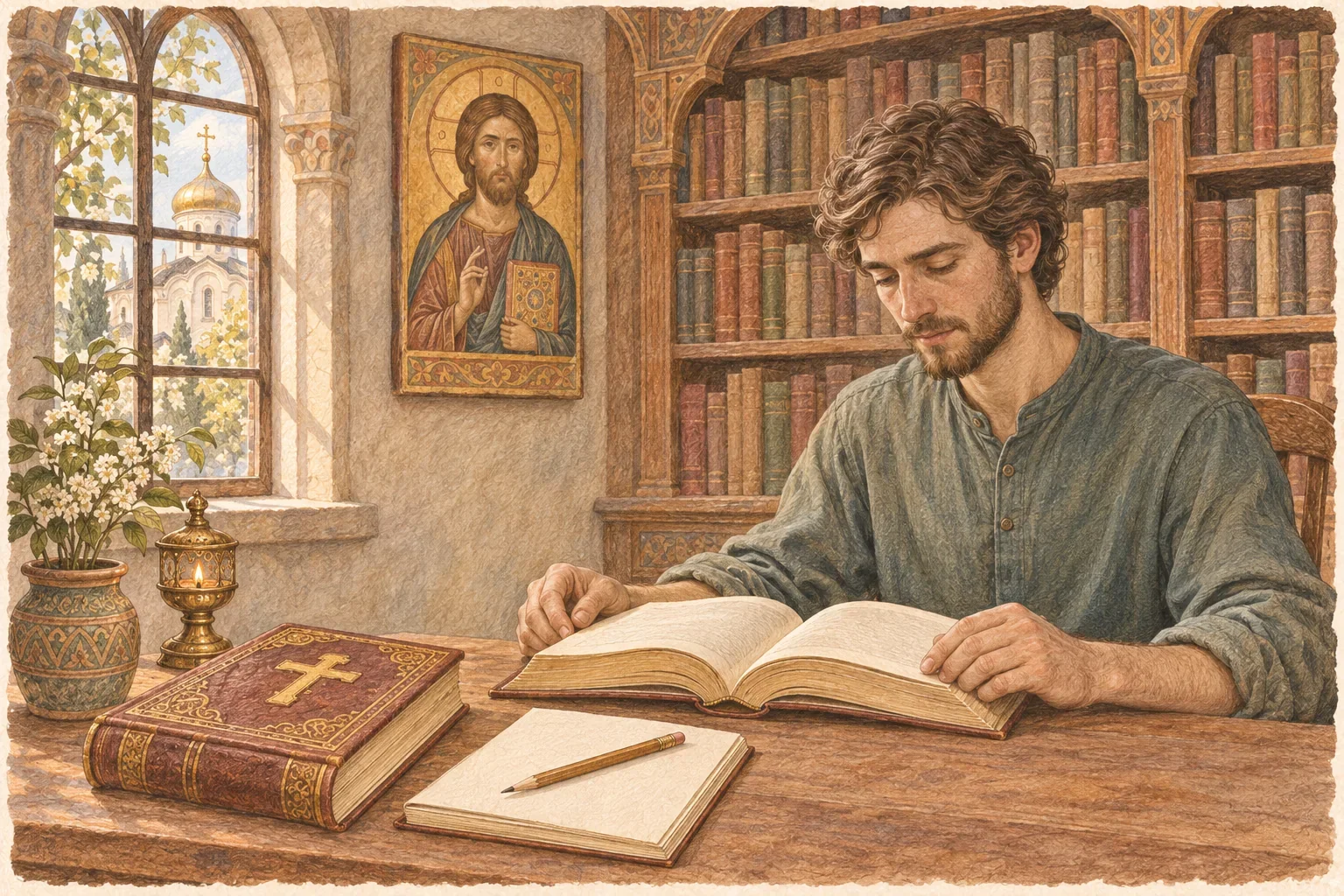
A catechism is a systematic explanation of the foundations of Christian faith for teaching. It often uses questions and answers. It helps understanding of doctrine rather than replacing the Gospel, worship or conversation about personal difficulties.
Catechisms were written in different periods for different audiences. An older edition may need language notes; a modern one needs its ecclesiastical provenance checked. A cover promising to explain everything does not establish the book’s quality.
Memorised definitions do not automatically produce understanding. Questions arising after a chapter are a normal part of learning. Reading a catechism should not become an examination that makes someone afraid to visit church.
Read short sections, follow biblical references and note uncertainties. Ask your parish which edition is suitable for catechetical conversations. One question understood is more useful than several pages completed merely for speed.
What a catechism is for
A catechism systematically explains the foundations of Christian faith. It connects questions about God, the Church, sacraments, prayer and moral life into a coherent understanding. This is especially useful for someone who has heard individual terms in worship but does not yet know how they relate. A sequence of topics and basic concepts replaces an assortment of disconnected advice.
A catechism does not replace Holy Scripture and is not a new Gospel. Its purpose is to explain faith, drawing on biblical texts, the Creed and the Church’s teaching. As an educational book, it may take the form of questions and answers, continuous exposition or lessons. The title identifies its purpose but does not by itself guarantee the quality of a particular edition.
Choosing a first edition
Begin with a clear Orthodox edition that identifies its author, publisher and ecclesial context. Accurate concepts and accessible explanation matter. An older catechism may be valuable while requiring help with its language; a modern work can be easier to read, but should retain the content of faith rather than substitute everyday psychology for it.
If a book is recommended in your parish’s introductory classes, reading it alongside those meetings makes questions easier to discuss. Do not choose solely on a promise to explain everything in one evening. Brevity can help an introduction, but some subjects need time. Also distinguish an Orthodox catechism from one belonging to another denomination: sharing the same educational genre does not mean all doctrinal positions are identical.
Reading the explanation of the Creed
The Creed provides an organising sequence: confession of God, Christ’s Incarnation and saving work, the Holy Spirit, the Church and the life to come. When reading a catechism, connect its explanation with the particular clause under discussion. First express the central meaning in plain language, then return to technical terms. There is no need to memorise every historical controversy at once.
For example, confessing the Son as of one essence with the Father cannot be replaced by saying that they are approximately alike. A catechism explains why the Church uses a precise expression and which error it excludes. Understanding a term does not mean comprehending the divine mystery exhaustively. A sound textbook helps readers speak more accurately without presenting a human explanation as a complete description of God.
Why prayer and conduct belong with doctrine
Teaching about faith is not separate from life. When a catechism moves from the Creed to prayer, commandments and sacraments, these are not unrelated appendices. Confession of God shapes the understanding of persons, forgiveness, responsibility and freedom. Prayer becomes an address to the God described in doctrine, while moral effort responds to the Christian calling.
Ask not only what a doctrine is called but also what it changes in your understanding of an action. A neighbour’s dignity, for instance, is not measured by their usefulness to you, and repentance is more than an attractive account of emotions. Application still requires care. A catechism provides foundations; it does not become an automatic decision manual for every complicated family or medical situation.
Organising reading and questions
Choose a small, complete topic and read it with pauses. Record unfamiliar words separately from objections: sometimes difficulty comes from vocabulary, and sometimes from an unclear connection between claims. Afterwards, try to summarise the argument briefly without quoting it. If an apparent contradiction remains, turn it into one clear question for discussion.
Do not make study an examination in which a mistake means being unworthy of faith. A person can learn, pray and acknowledge uncertainty at the same time. Yet assuming that everything is already familiar can also obstruct learning: a well-known church word may have a more precise meaning than its everyday use. The value of early study lies less in the number of marked pages than in understanding the main themes and honestly identifying what needs further explanation.
A question for reflection
Can you explain the answer in your own words rather than repeat its definition?