
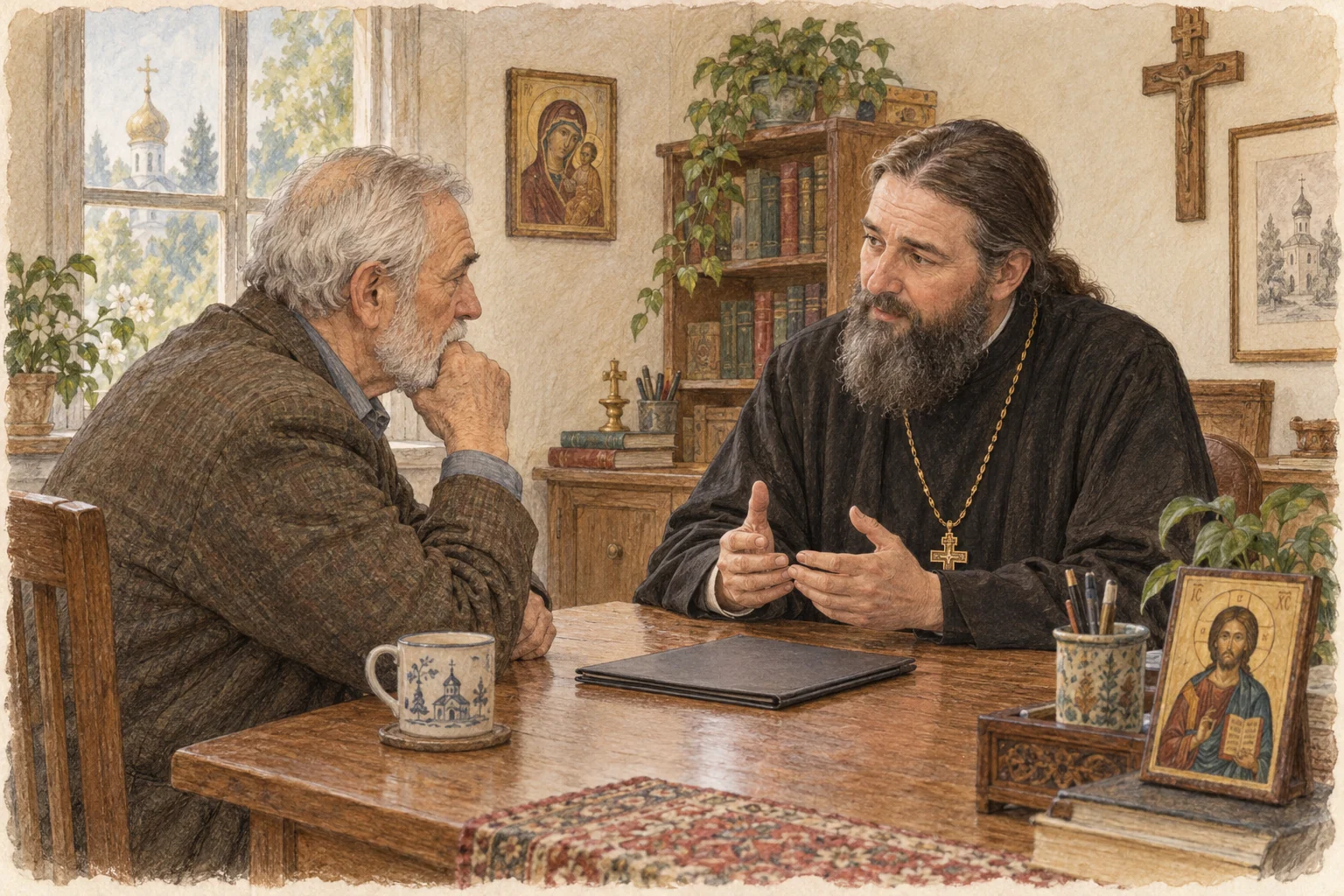
Questions about cremation often arise amid urgent calls, expenses, and family disagreements. It helps to separate the Church's teaching from the practical arrangements that must be made. This article describes the Russian Orthodox Church's position. Discuss an individual funeral with a priest rather than relying on online comments or assuming that every Orthodox jurisdiction applies identical procedures.
The Church's stated position
The Holy Synod's 2015 document identifies burial in the earth as the norm. It does not approve cremation, but allows pastoral leniency where objective obstacles exist and directs that ashes be buried. Destruction of the body does not limit God's power to raise the dead. A departure from traditional burial does not, by itself, deprive an Orthodox Christian of prayerful commemoration.
This neither makes every funeral choice equivalent nor authorizes anyone to pronounce judgment on an individual's eternal destiny. Teaching about an action must not become a threat directed at a grieving family.
Questions before arrangements are finalized
Where possible, call the parish before signing a funeral contract. Explain whether the deceased was Orthodox, where the body is, what dates are proposed, and what obstacles have arisen. Distinguish decisions that have already been carried out from suggestions still under discussion. Otherwise, an assumption can easily be mistaken for an irreversible fact.
Ask when and where a funeral service could take place, what information the parish needs, and who should remain in contact. Request plain explanations of unfamiliar terms. A priest may not know transport costs or municipal procedures; check those separately with the responsible provider or authority.
If cremation has already happened
There is no need to conceal this when approaching the parish. You can simply explain that cremation has taken place and that you want guidance about burial and prayer. Gather the information you know about the deceased, including whether a funeral service was already celebrated. Do not arrange repeated ceremonies merely because someone has described the earlier farewell as inadequate.
Discuss the next steps with the priest and check available arrangements for burial of the ashes with the relevant cemetery administration. Documents, availability, and timescales differ by location. Avoid purchasing an additional package under pressure from a promise to put everything right. First establish what is needed, who provides it, and what the agreement actually covers.
Handling disagreement within the family
When several people share responsibility, appoint one contact for the parish and another for practical arrangements. Write down the agreed actions and actual deadlines. This can prevent alarming second-hand accounts of what the Church supposedly refused when the conversation concerned one specific issue.
State your beliefs without accusing relatives of having deprived the deceased of salvation. Offer a conversation with the priest if others are willing. Tell him about any wishes the person expressed during life. An article cannot settle every moral or legal aspect of a disagreement, especially when family members have different convictions or responsibilities.
Planning your own funeral
It is reasonable to discuss these matters in advance. Tell trusted relatives that you want an Orthodox funeral and traditional burial, leave parish contact details, and keep relevant information accessible. This is practical preparation, not a prediction of when you will die. Clearly expressed wishes spare a family the burden of guessing at a time of loss and leave more room for mutual support.
Compare Actual Options, Not Alarming Assurances
When an organiser says there is no alternative, ask what the obstacle is: no space at a particular cemetery, difficulty with transport, or an unavailable date? These are different problems. Record which information has been confirmed by the responsible provider and which remains a second-hand report. Bring those specific facts to the priest. This cannot guarantee the outcome you want, but it helps prevent a commercial offer from being mistaken for a church requirement or an unavoidable necessity.
Separate essential arrangements from additional decorations and services in the cost estimate. Establish what the family has agreed and what can still be changed without disregarding existing commitments. The cost of a farewell does not measure love for the deceased. If money is limited, tell those helping with arrangements plainly and ask for an explanation of available options rather than making promises the family cannot fulfil.
After the Funeral: Complete What Remains Without Self-Accusation
When decisions were made hurriedly, relatives may want to replay every phone call. Distinguish what can still be done from what cannot now be changed. Clarifying burial of the ashes, keeping documents, arranging prayer, and supporting someone close to you are concrete tasks. Repeatedly imagining a perfect alternative sequence is not required to demonstrate faithfulness to the person who died.
Relatives who were not involved in arrangements should learn the circumstances before making accusations. You can disagree with the chosen form of burial while recognising that a family acted under difficult conditions. If discussion continually returns to mutual blame, propose addressing one remaining question with the person responsible. Memory of the departed should not become entirely a dispute about the final practical decisions. Preserve room to remember the person's life, relationships, and good actions as well as the circumstances of the farewell. None of this requires pretending that differing convictions have disappeared.