
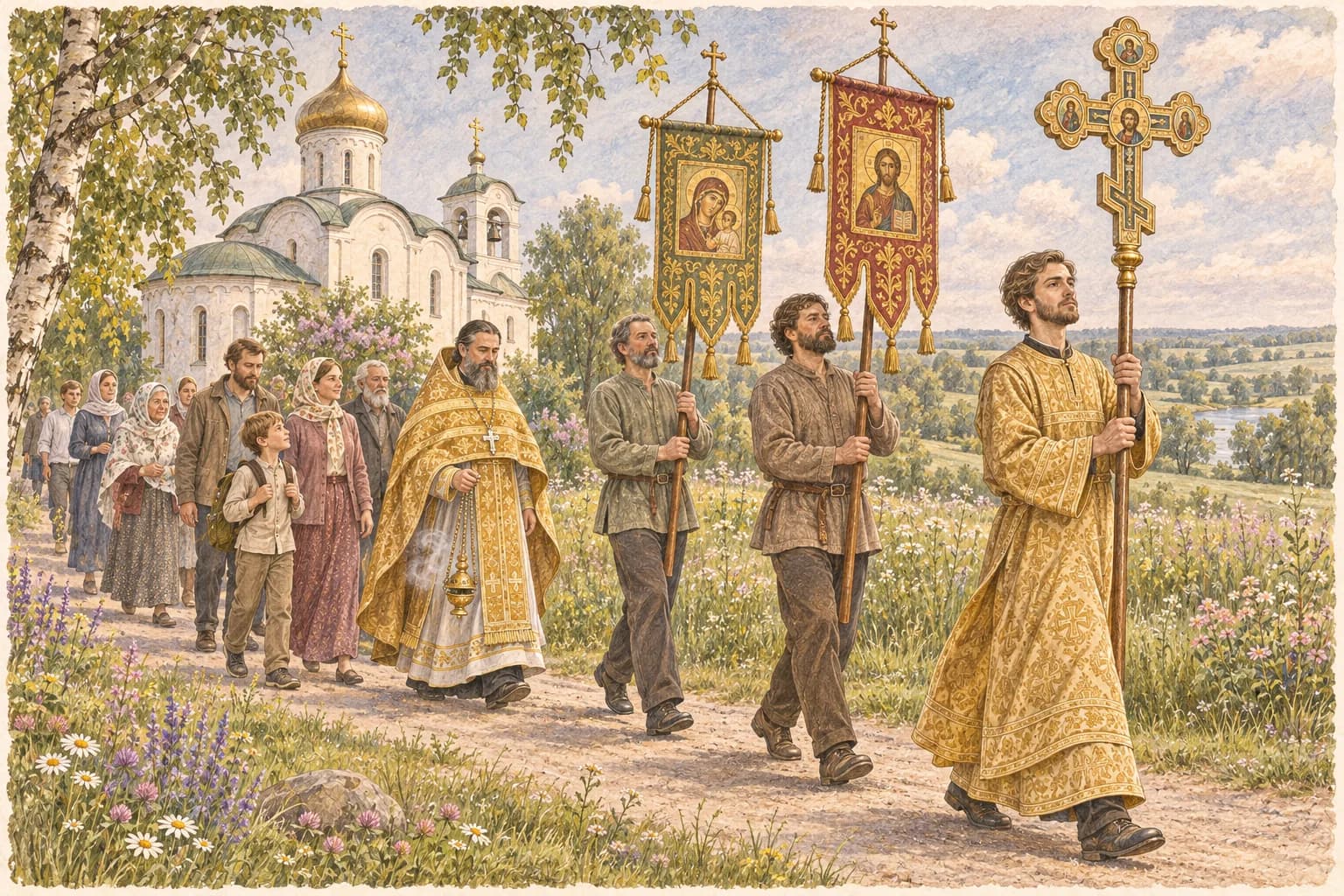
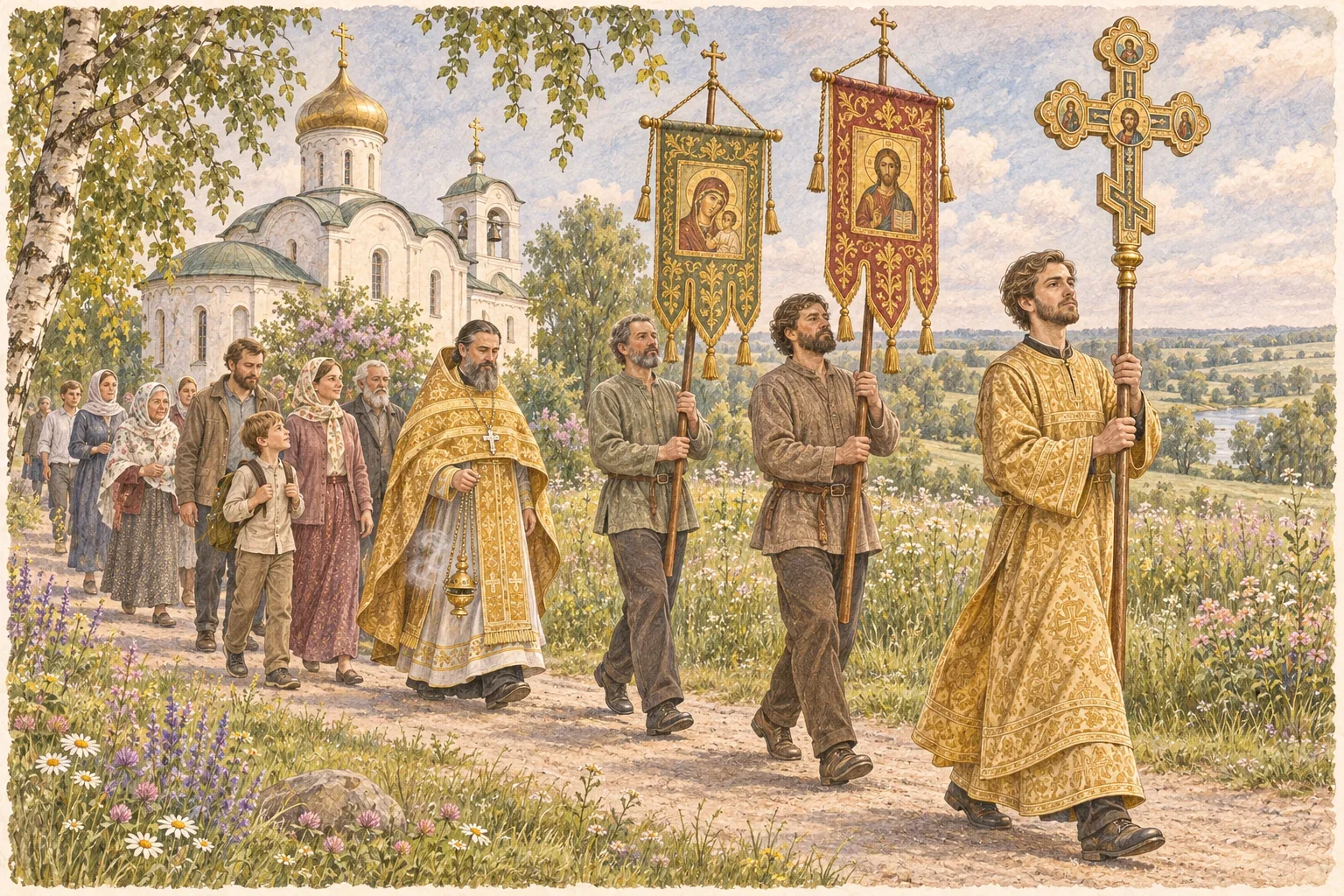
A cross procession is a prayerful procession carrying the cross and other sacred objects. It may circle a church briefly or follow a long route. Plan from the actual announcement: processions do not all have the same duration or physical demands.
Check the route, stopping places, transport and return arrangements. Choose suitable shoes and clothing and bring necessary water and medication. Caring for health makes sensible participation possible and is not evidence of deficient faith.
Distance walked is not a measure of holiness. Do not shame someone who joins only part of the route or remains at church. Check conditions before bringing a child or someone with limited mobility on an unfamiliar route.
Follow organisers’ directions and traffic-safety requirements. Do not move ahead of the procession merely to photograph sacred objects. If you feel unwell, tell the stewards: timely help matters more than finishing the route at any cost.
A short procession and a long pilgrimage route
A festive procession around a church and a walk covering many kilometres require different preparation. The first is generally connected directly with the service taking place; the second introduces questions of travel, accommodation, food, support and the return journey. The same name covers substantially different experiences. Begin with the actual route and organisers’ arrangements rather than an account of another procession.
Ask where people may join, whether walking only part of the route is possible and whether transport is provided. The finishing point is especially important because it may not be the starting point. Read an announcement about an outward bus alongside information on return travel, booking and any charges. When details are missing, a short call to the responsible organiser is more useful than assumptions based on last year’s photographs.
Why the cross and icons are carried
A procession expresses the Church’s shared prayer beyond its usual place of assembly. The cross points to Christ, while icons and other sacred objects belong within the order of prayer rather than functioning as decorations for a parade. Hymns and prayers help participants remember why they are walking. The particular objects carried and sequence of actions depend on the occasion and local liturgical arrangements.
Participating does not require securing a place beside the principal sacred object. Carrying the cross, banners or icons is assigned to particular people with order and safety in mind. Offer assistance to an organiser beforehand if you would like to help. Taking hold of a heavy object without agreement, or approaching its bearers for a photograph, can obstruct movement and put others at risk.
Clothing, water and realistic physical demands
For a long route, comfortable shoes you have already worn matter more than a festive appearance. Check the forecast, prepare for sun or rain and remember that a group’s pace may differ from your normal walking speed. Drinking water and necessary medication should remain accessible rather than being left on a bus that has gone ahead. Choose what to carry according to the duration and arrangements actually confirmed by organisers.
If you have a chronic condition, discuss the exertion with your clinician, especially in hot weather or where vehicle access is limited. Do not omit food or medication because another participant suggests it without reliable grounds. Ascetic effort is not the same as disregarding medical limitations. When the whole route is unsuitable, a manageable form of prayerful participation remains possible without competing with fitter walkers.
Coming with a child or an older relative
Agree who will stay with the child and what to do if you become separated. A charged phone, an understandable meeting point and an organiser’s contact are more useful than assuming everything will resolve itself because it is a church group. Do not entrust supervision to an unknown person solely because they carry an icon or look like a pilgrim. In a large crowd, choose a calmer position and identify a possible exit in advance.
For an older relative, check rest stops, toilets, places to sit and a way to leave early. Verify a vague assurance that the distance is short by asking about the actual length and surface. Steps, rough ground and slopes can make a short section harder than a longer flat walk. Offer necessary assistance without shaming or reproach: shared prayer includes attentiveness to one another.
Conduct along the route
Keep to the agreed movement and follow stewards’ instructions, particularly at road crossings. Do not stretch the group through unannounced stops or overtake along the carriageway. If you need to stop, inform the responsible person. Singing does not remove the need to hear safety directions, and the prayerful nature of the event does not suspend traffic rules.
Photography is appropriate only where it does not obstruct participation or breach stated restrictions. Do not point a camera at someone exhausted or distressed without consent. If a nearby participant becomes unwell, summoning help matters more than continuing a livestream. At the end, check that your companions know how they are getting home. Care for participants does not end with the final prayer.
A question for reflection
Is this route appropriate for your actual physical capacity today?