
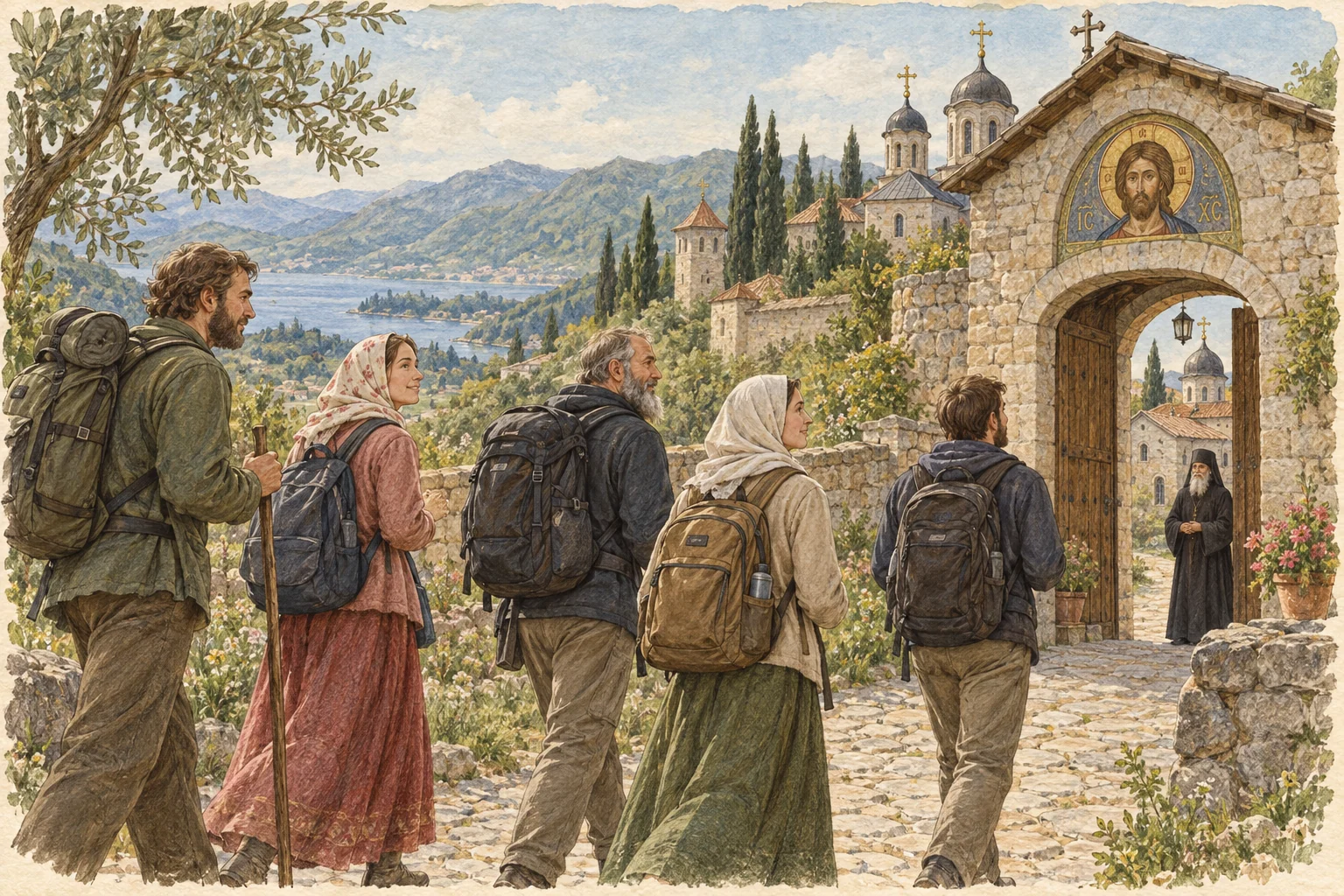
A pilgrimage differs from an ordinary journey primarily through its purpose: travelling to a holy place for prayer and an encounter with the Church's life. Interest in history and architecture is compatible with that purpose. Distance, unusual destinations, and the number of places visited do not by themselves make a journey spiritually fruitful.
Choosing a clear purpose
Ask why you want to travel: to attend worship, pray at a particular shrine, or encounter a monastery's life? One clear intention is enough. A long list of stops is unnecessary. Unhurried participation in a service may matter more than hours of travelling from one church to another.
An Orthodox explanation of monastic life connects visits to monasteries with prayer and spiritual refreshment. This does not promise a dramatic experience. Poor weather, tiredness, or being unable to meet a well-known priest does not make a pilgrimage meaningless.
Checking arrangements before booking
Find an official contact for the receiving church, monastery, or organizer. Confirm dates, the meeting point, accommodation, meals, physical demands, and cancellation arrangements. Compare the proposed programme with the published service schedule. An assurance that everything is included means little if you do not know how to reach your accommodation from the arrival point.
The Valaam Monastery pilgrimage service's recommendations illustrate the importance of weather and transport conditions. Check the arrangements for your own journey rather than applying information about one destination to another. This article does not announce a parish trip or confirm that places are available.
Leave the route and organizer's contact details with someone you trust. Agree on how to report a delayed return. Keep essential addresses and numbers available separately from your ticket app in case your phone runs out of power.
Preparing for worship
If you intend to confess and receive Communion, discuss preparation with your priest and ask about arrangements at the destination. Do not assume that a short sightseeing stop will allow time for a lengthy confession. The clergy may have other duties or designated times for meeting visitors.
Bring necessary medication, documents, comfortable footwear, and clothing suitable for the community's requirements. If mobility is limited, ask specifically about steps, walking distances, and seating. You need not prove devotion by rejecting reasonable assistance. When travelling with a child, allow for sleep, meals, and the possibility of leaving a crowded room.
Respecting the community you visit
A monastery or parish is a living community, not a backdrop. Do not enter private areas, photograph worshippers without permission, or demand a personal conversation because you have travelled far. Ask about clothing and photography before arriving to prevent unnecessary discomfort at the entrance.
Respect queues at a shrine and people who need longer to move. If you are invited to help with practical work, clarify the task, its duration, and who is responsible. Unrequested cleaning or rearrangement can interrupt a community's work even when the intention is generous. Follow the arrangements you have actually agreed.
Returning to ordinary life
Choose one manageable way to continue after the journey: more attentive Gospel reading, regular parish prayer, or reconciliation where possible. You do not need to change everything immediately or impose a monastery's schedule on your household. Distinguish personal impressions from Church teaching when describing the visit. If travel is not currently possible, prayer at a nearby church is not less real. Distance is not a measure of closeness to God.
When the Programme Changes En Route
Before departure, establish who communicates changes and what happens if transport is delayed. Know where the group will wait and how to contact the organiser if you become separated. Spare time is not merely a convenience: an overfilled itinerary turns every stop into a rush towards the next bus. Omitting some visits beforehand may be better than repeated late arrivals that interrupt worship with the hurried entrance of a large group.
If access to a shrine is restricted or a meeting with a priest does not happen, calmly ask what alternatives exist. Do not demand an exception on the grounds of the trip's cost. Participation in prayer is not a purchased private audience. Address organisational complaints to the organiser separately from those conducting services or welcoming visitors. This leaves room to seek clarity about agreed arrangements without turning disappointment into conflict with the entire host community.
A Group Journey and Individual Participation
Discuss whether everyone must complete the whole walking route and what someone should do if tired. When accompanying an older relative, do not commit them to exertion they have not assessed themselves. With a child, select realistically manageable parts of the programme and explain your plans to the group leader. The group should not have to guess your needs, but asking about distances or rest periods is nothing to be ashamed of.
Keep brief notes about what you saw, questions that arose, and stories you want to check. If a guide recounts a local tradition, preserve that description instead of retelling it at home as an undisputed historical fact. Do not publish another person's private conversation or prayer request as an interesting travel episode. A clear question and a modest intention are worth bringing home. You do not need to prove that the journey was spiritually more important than your relatives' ordinary parish life, or measure its value by how impressive your account sounds to an audience.
Sources
- OCA: monastic hospitality and pilgrimage
- Valaam Monastery pilgrimage service: preparing for a visit (Russian)