
The Bible was not written by one person at one time. It is a collection of books from different periods and genres, written by many authors. Christian belief in inspiration does not erase human language, historical circumstances or each book’s distinctive character.
Traditional book names and questions about historical composition need to be distinguished. Some texts name an author; others are received under a traditional attribution. Where scholarship discusses the evidence, acknowledging that discussion is more honest than claiming certainty about every detail.
Inspiration need not mean every book was dictated in the same voice and literary style. A psalm, parable, letter and historical narrative should each be read attentively to genre. Their differences do not require setting spiritual meaning against historical study.
Begin with the introduction to a particular book in a reliable edition. Distinguish what the text itself states, what church tradition says and what is a scholarly hypothesis. This supports attentive reading and more useful questions.
Why the Bible has no single human author
The Bible is a collection of books arising in different periods and circumstances. It contains historical narratives, legal texts, prophetic speech, prayerful poetry, wisdom literature, Gospels and apostolic letters. Asking who wrote the Bible therefore involves several questions: its human authors, the transmission of its texts and why the Church receives them as Holy Scripture.
Calling it simply a book can obscure this diversity. The Psalter and the Letter to Philemon differ in genre, audience, length and immediate purpose. Recognising those differences encourages attentive reading. A poetic image should not automatically be treated as a report of an observation, nor should a particular instruction to a community be detached from its setting and made to answer every contemporary question.
What inspiration means
Christian faith confesses God’s action in Scripture, but this need not mean mechanical dictation that erases each writer’s personality. The texts retain languages, distinctive expression, historical settings and varied literary forms. Luke, for example, opens his Gospel by speaking about an orderly account and earlier testimony. Recognising human work is not opposed to belief in divine guidance.
Inspiration does not authorise readers to give absolute authority to whatever association occurs to them. Distinguish the text from a personal inference, and a verse from its setting within a book. Reading within the Church combines reverence for Scripture with careful interpretation. The more serious a conclusion affecting another person’s life, the less appropriate it is to base it on a phrase chosen without understanding its context.
Named authors and questions of authorship
Many books are associated with Moses, David, Solomon, the prophets and the apostles. The nature of that association is not identical in every case. A title may indicate traditional authorship, a central figure, subject matter or a particular stream of tradition. Studying one book requires considering its heading, internal evidence and history of reception separately.
In the New Testament, the Gospels bear the names Matthew, Mark, Luke and John, while the letters belong to apostolic witness and the life of early communities. Some authorship questions are debated in biblical scholarship, and a one-sentence popular chart cannot convey every complexity. An honest introduction can acknowledge the limits of knowledge without treating every scholarly discussion as proof that faith is meaningless, or alternatively as a forbidden question.
How the texts reached modern readers
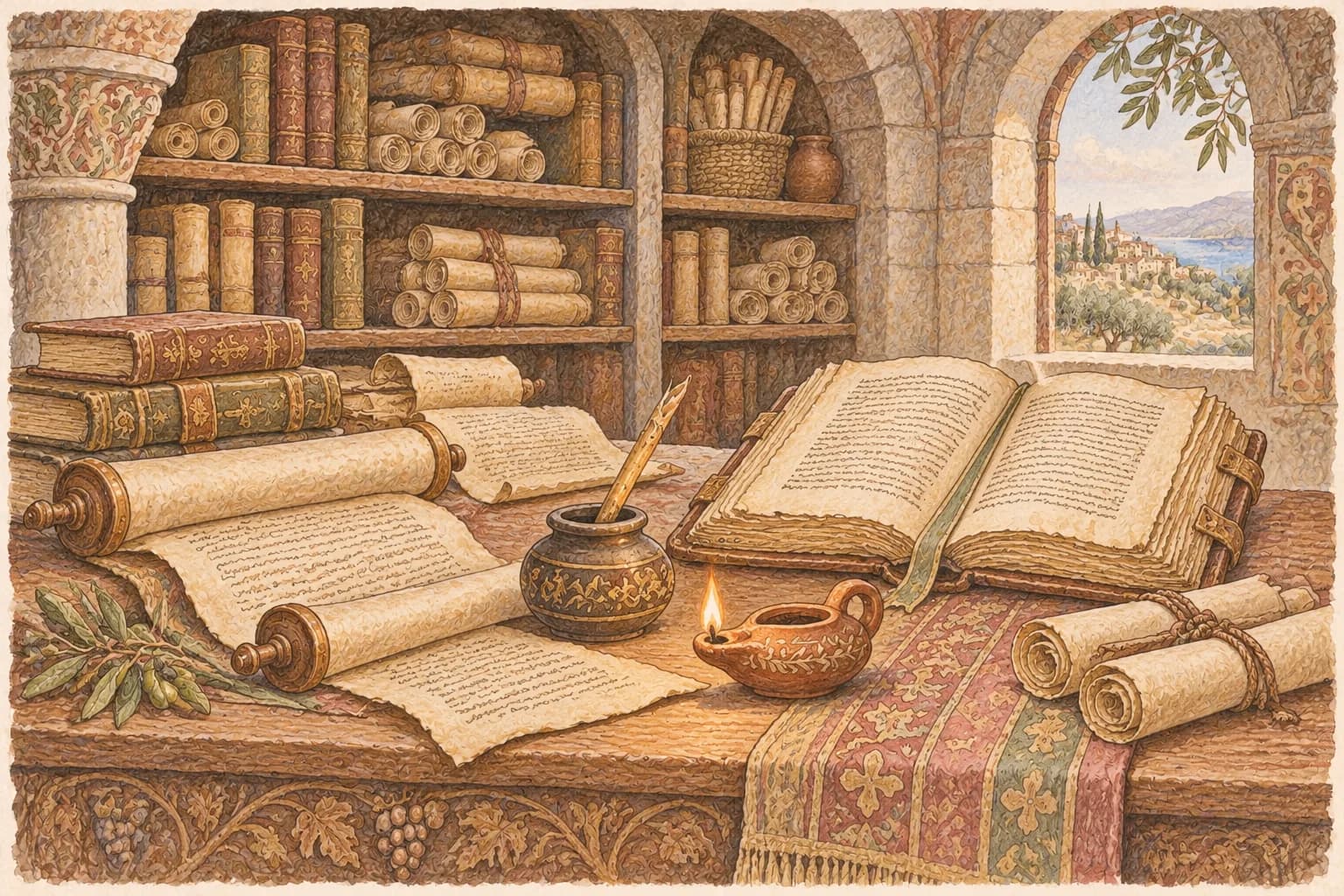
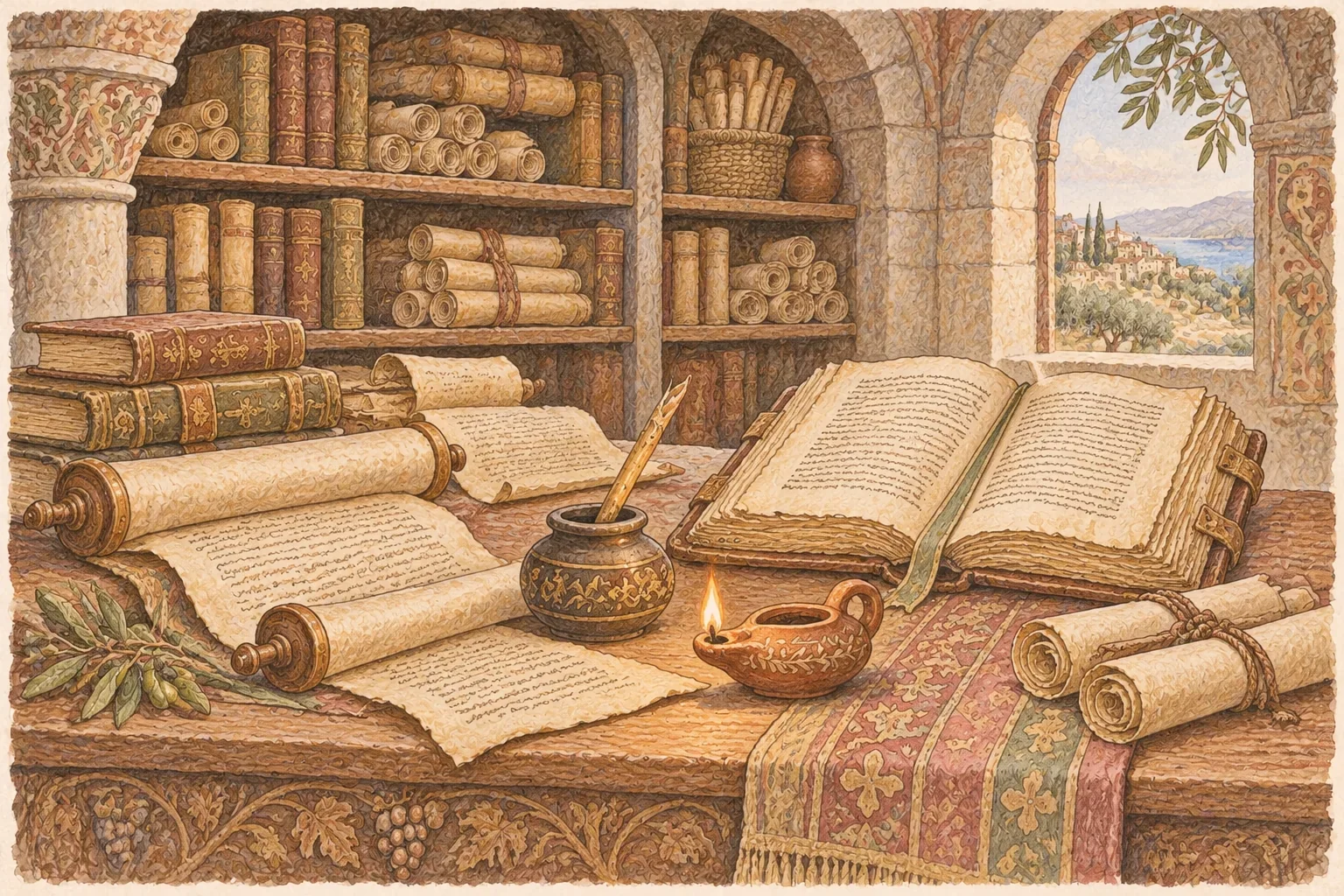
Biblical books were transmitted in manuscripts, copied and translated. A modern printed edition is not the same physical sheet on which a text was first written. Work with ancient manuscripts and variant readings helps trace that transmission. Notes describing textual variants do not mean an editor has exposed something previously concealed from believers; they are a normal feature of responsible editions of ancient writings.
A modern translation must also be distinguished from a book’s original language. Old Testament texts are associated chiefly with Hebrew and Aramaic, alongside ancient translations, while the New Testament books have been transmitted in Greek. Translators choose corresponding expressions and sometimes provide explanations. Comparing reliable translations can illuminate a difficult passage, but does not replace attention to context and interpretation.
Beginning without becoming overwhelmed
For an introduction to Christian faith, begin with one Gospel and read small, complete passages. Ask who is acting, to whom the words are addressed and what happens before and afterwards. Then consult a church commentary. This is more useful than opening pages at random to discover a concealed instruction for that particular day.
If your main interest is the Bible’s formation, choose an introductory work on the Old and New Testaments and study individual books. You need not solve every question about textual origins before first praying or encountering the Gospel. Equally, faith does not require presenting a guess as historical fact. It is reasonable to note uncertainties, seek responsible explanations and distinguish the Church’s confession from particular scholarly hypotheses.
A question for reflection
Which particular biblical book are you asking about, rather than the Bible in general?