
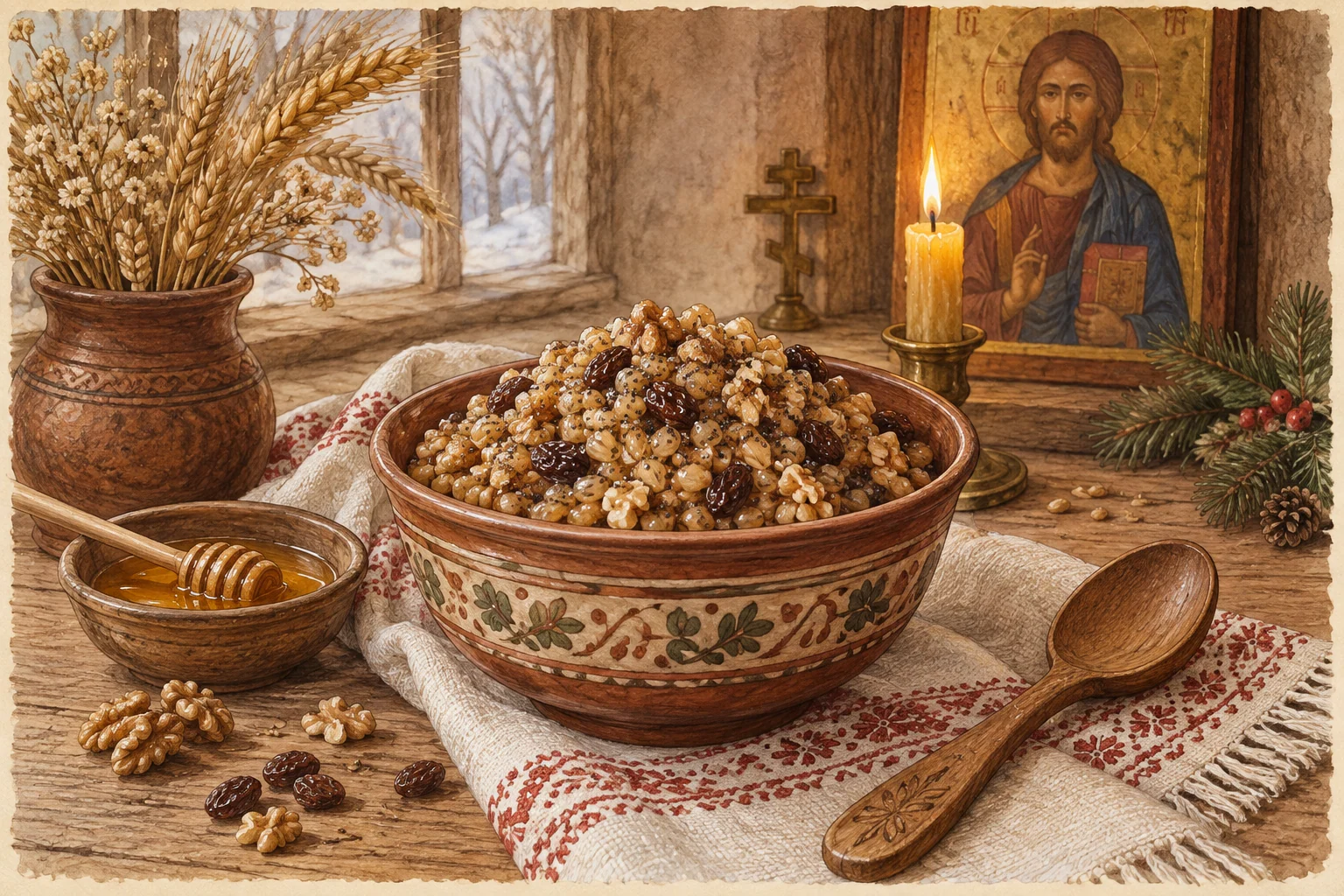
Kutia at a memorial meal recalls the Christian hope of resurrection and brings living people together for prayer and remembrance. It is a traditional dish, not a separate sacrament or a method of changing someone's destiny through a precise list of ingredients. Understanding its meaning helps preserve the custom without fear of breaking an unknown rule.
Why grain is used
Memorial koliva is commonly made from boiled wheat with sweet additions. A parish explanation of koliva connects the grain with death and new life. The image appears in John 12:24 and in Saint Paul's discussion of resurrection in 1 Corinthians 15:35–44. These are references to Scripture rather than quotations from a modern translation.
The image does not explain every mystery of death or abolish grief. It gives remembrance a direction: Christians do not regard the earthly farewell as the final word about a person. A recipe nevertheless remains a recipe, not a formula for resurrection.
Making arrangements with the parish
If you want to bring kutia to church, ask about local arrangements first: when to bring it, who prepares the table, and what container is suitable. Do not leave a dish on an arbitrary surface during a service. Arrive a little early and ask the person responsible where it should go.
Give an approximate number of participants to avoid either shortages or excessive leftovers. If you have never prepared the dish, ask someone to show you a simple version used in the parish. Elaborate decoration is not a competition, and one family's custom should not automatically be treated as the only acceptable form.
Food does not replace prayer
A memorial meal is not the Eucharist. Holy Communion belongs to the Church's sacramental life; a dish served at a gathering must not be identified with the Holy Gifts. Shared food can help people meet, but it does not by itself turn a gathering into a church service.
Simplify preparations if they consume all your strength. Someone too exhausted to pray or speak calmly with relatives can ask for practical assistance. A family in difficult circumstances should not be criticized for having no special dish or made to prove its love for the deceased through cooking.
Caring for those attending
Ask whether guests have dietary restrictions. Make the ingredients clear, particularly when a dish contains nuts, honey, or other additions someone needs to avoid. Do not insist that a person take just one spoonful after they decline. Participation in remembrance is not measured by how much someone eats.
Prepare modest portions, clean utensils, and somewhere comfortable for an older guest to sit. Ask whether the family needs kitchen help or someone to welcome arrivals. These quiet tasks can support grieving people more effectively than an ambitious speech. Make space for guests who need to leave early.
Conversation at the table
You can begin with a short prayer and then recall particular good moments from the person's life. Do not require everyone to speak or recount other people's faults as though this were remembrance. Explain the arrangements gently to guests of different beliefs without pressuring them. The meal should leave people with an experience of mutual care rather than anxiety about a forgotten ritual action. Offer leftovers only with consent and ordinary attention to whether the food remains suitable to eat.
Choose a Manageable Way to Prepare It
Do not start with the most elaborate photograph of a decorated dish. Choose an understandable recipe, read it through beforehand, and check how much preparation the grain requires. If this is your first attempt, a small trial portion can help you understand the texture and quantity without anxiety on the day of commemoration. Discuss sweet additions with someone helping at the parish without making your preferred version a measure of everybody else's devotion.
Agree who will buy ingredients, cook, bring serving dishes, and collect them afterwards. Someone recently bereaved need not carry out that whole sequence alone. If a friend is preparing the food, give them the number of guests and relevant dietary restrictions instead of simply asking for it to be done correctly. Keeping an ingredient list beside the dish allows people to decide without explaining publicly why they are declining it.
Family Custom and Church Meaning
A family may remember kutia being served in a particular way or decorated in a familiar pattern. Preserve that recollection as part of family history. Remembering a grandmother's table does not oblige every guest to repeat each action. If an older relative is distressed by a changed recipe, first ask what matters most: the taste, memories of home, or fear of making an irreversible mistake. Those concerns need different responses rather than a single argument about correctness.
The image of the grain can be explained briefly without turning the meal into a lecture. In your own words, say that the dish recalls hope in the resurrection and helps people gather in remembrance. Do not invent a compulsory number of spoonfuls, ingredients, or participants. Someone who does not eat kutia can still join the conversation and prayer without having to defend their choice. Children also need a short, understandable explanation rather than a demand to finish a portion for the departed person's peace. That supposed dependence must not be created; eating is not a test of their love or a responsibility for another person's eternal welfare.