
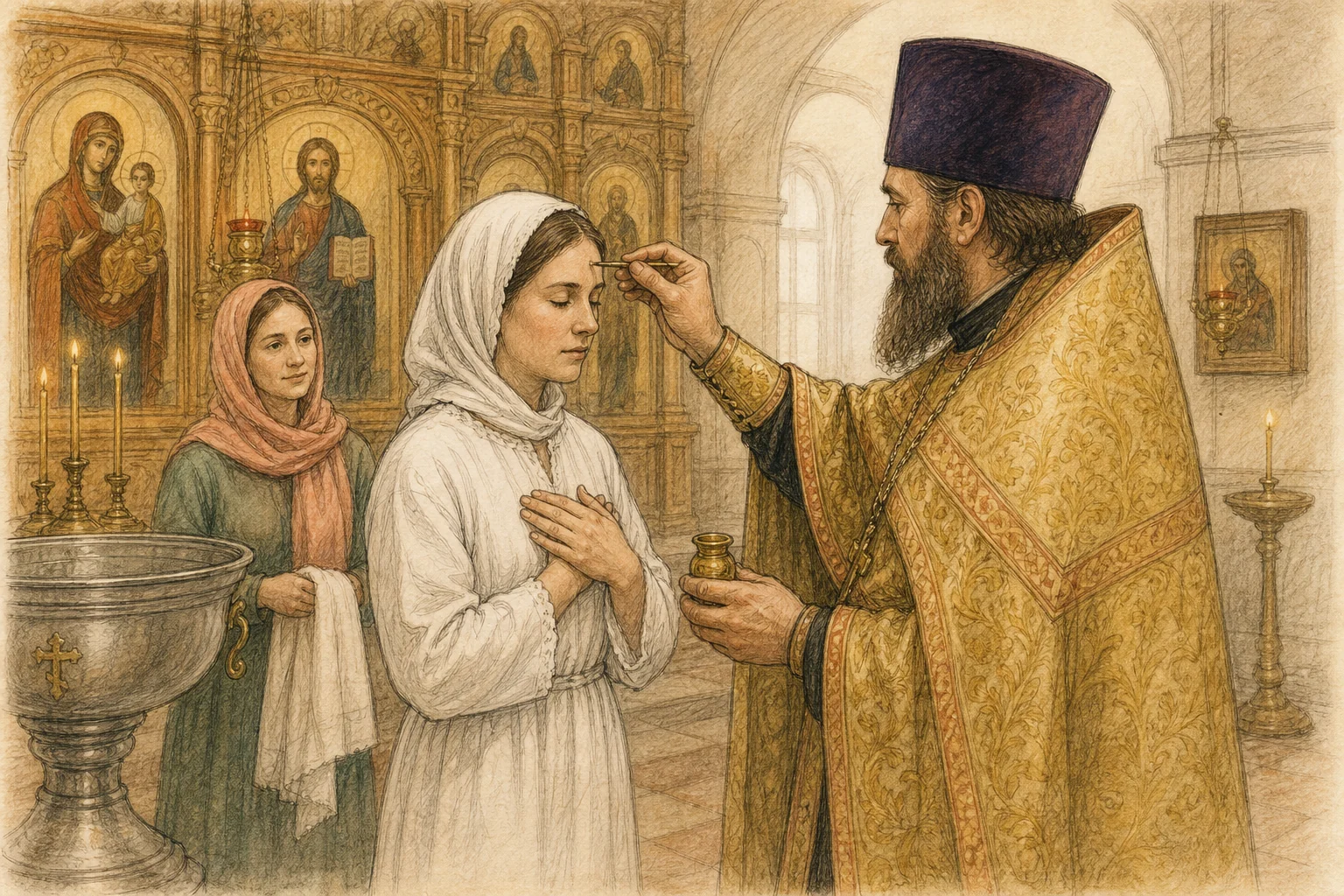
Chrismation is the Orthodox sacrament in which a baptized person receives the gift of the Holy Spirit through anointing with holy chrism. In Orthodox practice it is celebrated immediately after Baptism for both an adult and an infant. The priest anoints appointed parts of the body with the words, “The seal of the gift of the Holy Spirit. Amen.”
It is not an optional blessing for unusually devout people, nor is it the same as anointing with oil at a vigil or the sacrament of Holy Unction.
Why Baptism and Chrismation remain together
In Baptism, a person is united with Christ’s death and Resurrection, receives forgiveness of sins, and is born into the life of the Church. In Chrismation, the newly baptized receives the gift of the Holy Spirit for growth and service in that new life.
It is misleading to treat one as the essential action and the other as an optional extra. Orthodox tradition preserves their unity within a single rite of initiation.
The biblical meaning
In the Acts of the Apostles, the apostles laid hands on baptized believers, who then received the Holy Spirit. The Church recognizes in this apostolic laying on of hands the foundation of the gift later administered through anointing with holy chrism.
Chrismation is also connected with Pentecost. The gift of the Spirit belongs not only to the first disciples but to the whole Church. Every baptized person is called to live, pray, and bear witness by more than human strength alone.
What holy chrism is
Chrism is a special fragrant compound based on oil and aromatic substances, consecrated for ecclesial use by the episcopal leadership of the Church. It is distributed to parishes for Chrismation and certain other appointed consecrations.
Not every oil is chrism. Oil from a home lamp, blessed oil from a service, and the chrism of this sacrament are not interchangeable substances.
What the word “seal” means
In the ancient world a seal indicated belonging, confirmation, and protection. The sacramental words say that the person’s life is marked by the gift of the Holy Spirit and belonging to Christ.
This is not an invisible magical shield against every hardship. The gift calls for a free response through prayer, the sacraments, repentance, works of love, and faithfulness to the Gospel.
Which parts of the body are anointed?
According to the rite, the priest anoints the forehead, eyes, nostrils, lips, ears, breast, hands, and feet in the form of a cross, saying the words about the seal of the Spirit’s gift. Through these faculties the person perceives the world, speaks, acts, and walks.
The meaning embraces the whole of life: thought, senses, speech, and action are called to sanctification. The priest follows the appointed order; the participant does not need to memorize the movements in advance.
What Chrismation of an adult looks like
After immersion or baptism with water, an adult is clothed in a clean white baptismal garment or remains in prepared modest clothing that gives access to the appointed places without indecent exposure. The priest then performs the anointings.
The parish explains in advance what shirt, towel, and change of clothing to bring. Images and arrangements of the rite should preserve human dignity and never require humiliating nudity.
How it is celebrated for an infant
After Baptism, the infant is dried, dressed in the baptismal garment, and held so that the priest can anoint safely. Godparents assist and ensure that the child stays warm.
Crying does not invalidate the sacrament and is not a bad sign. Adults should remain calm, follow the priest’s requests, and avoid delaying the child for photographs.
What follows the anointing?
The rite continues with a threefold procession around the font while singing that those baptized into Christ have put on Christ. Appointed readings from the Epistle and Gospel follow, along with other prayers and the tonsuring of hair.
Individual parts may be explained before the service. Attending catechesis is more useful than attempting to track every action on a phone during the sacrament.
Why Orthodox infants do not wait until adolescence
In some Western traditions, confirmation is separated from infant Baptism by years. Orthodoxy chrismates an infant immediately because the child is received fully into the Church’s life and is not treated as an incomplete Christian.
Conscious learning of the faith must still unfold with maturity. The gift does not release parents and godparents from teaching and personal example.
Can Chrismation be repeated?
Ordinary Chrismation after Baptism is not repeated to renew feelings or repair each sin. Repentance, confession, and continuing sacramental life are the ways of return after a fall.
Church history and canonical practice include particular ways of receiving people from other Christian communities or restoring those who formally left the Church. A bishop and priest apply the Church’s order; an individual cannot decide the rite from an online checklist.
How it differs from anointing at a vigil
At festive Matins, a priest may anoint worshippers with blessed oil. This is an ecclesial blessing but not the sacrament of Chrismation; the words, material, and purpose are different.
The statement “I was chrismated again at the vigil” is therefore normally inaccurate. The person received an anointing with blessed oil.
How it differs from Holy Unction
Holy Unction is a separate sacrament for the sick in which the Church prays for healing of soul and body and forgiveness of forgotten sins. It uses blessed oil, not the baptismal chrism.
Unction may be celebrated in different life circumstances according to Church order. Chrismation belongs to initiation into the Church and is ordinarily received once.
What godparents do
Sponsors do not perform Chrismation or direct the priest. They hold the child, help with clothing, participate in prayer, and afterward accept responsibility for Christian formation.
Our detailed guide explains what godparents should know. Their most important work begins not at the font but in the following years.
May the chrism be washed off?
The priest performs the appointed washing of the anointed places within the rite or explains what to do according to parish practice. Do not scrub the skin in advance with a wet wipe without need.
Tell the priest beforehand about an allergy, skin disorder, or urgent hygiene requirement. Health and safety can be discussed calmly without fear of “washing grace away.”
Photographs and attention during the sacrament
Ask about photography before the service. A photographer should not enter the altar, block the priest, lean over the font, or ask the rite to be repeated for a better frame. The sacrament is prayer, not a staged production.
Choose one discreet person to take a limited number of images. Parents and sponsors should remain present to the words and to the child rather than watching the entire event through screens.
How a family should prepare
Attend catechetical conversations and clarify documents, clothing, cross, towel, arrival time, and photography rules. Choose godparents for faith and willingness to participate in the child’s life, not for social status or gifts.
Check the schedule and contact the parish in advance. Avoid a densely planned celebration immediately afterward, especially with an infant.
Frequently asked questions
Are Baptism and Chrismation one sacrament?
They are two connected sacraments celebrated successively within the one Orthodox event of initiation into the Church.
Who may perform Chrismation?
It is ordinarily performed by an Orthodox priest using holy chrism consecrated through the episcopal ministry of the Church.
May someone accept Baptism but refuse Chrismation?
Orthodox initiation is not planned as a menu of independent services. Questions of belief should be discussed honestly before the rite.
Can chrism stain clothing?
The oil-based compound may leave a mark, so prepared baptismal clothing is used and the parish’s care instructions should be followed.
Should a child receive Communion after Baptism?
Yes, the child is brought into Eucharistic life. Ask the priest when to come for the first Communion and how to prepare.
The central point
Baptism brings a person into new life with Christ; Chrismation seals the gift of the Holy Spirit for that life. It follows immediately, is not repeated at will, and cannot be reduced to oil as a substance.
Practical preparation questions can be sent through the parish contact page. Understanding the meaning beforehand is better than treating the sacrament as a picturesque family ceremony.