
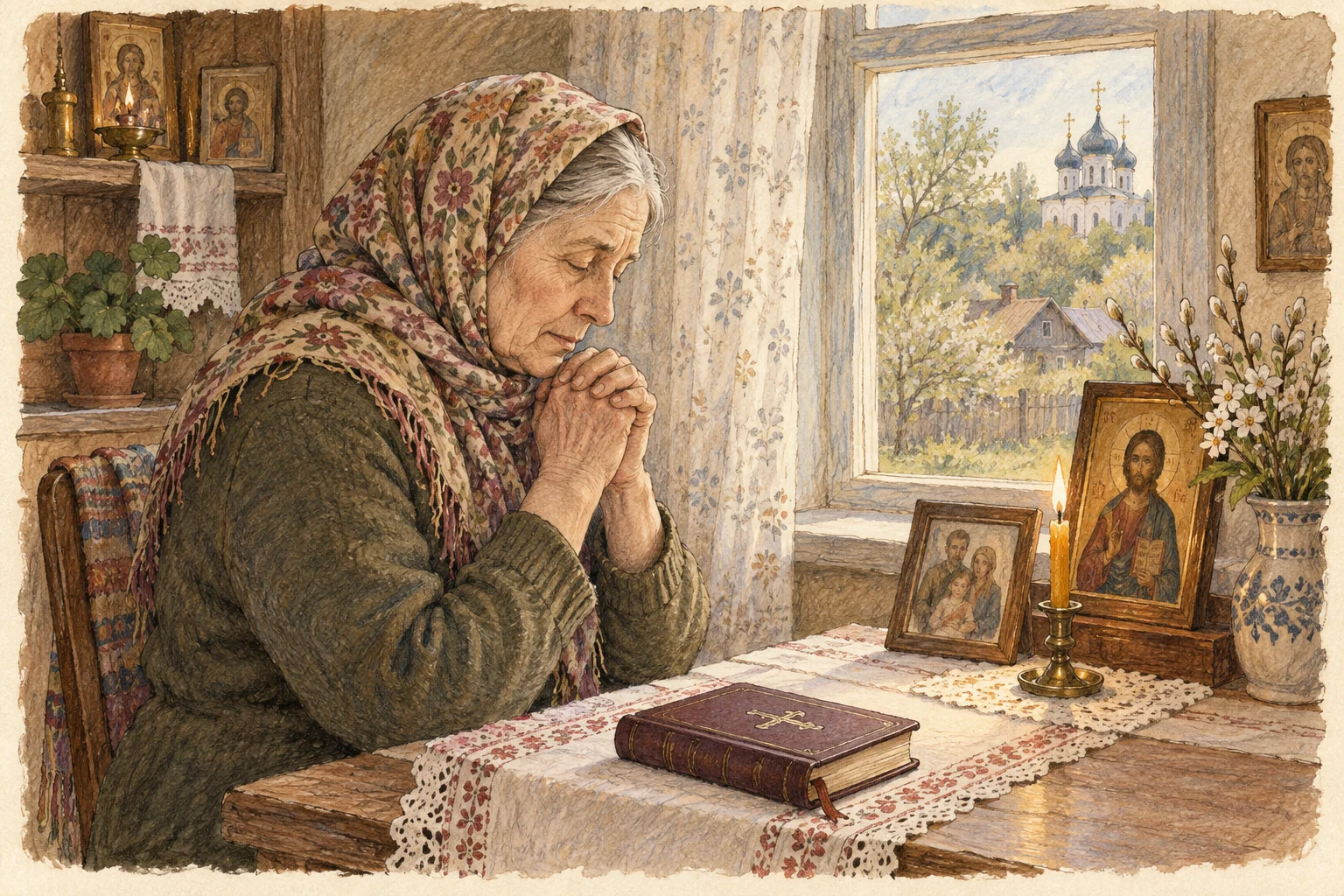
When an unbaptized relative dies, an Orthodox Christian may feel caught between love for that person and fear of doing something wrong. Begin with a conversation with a priest, not a search for an unusual ritual. Baptism cannot be supplied retrospectively. At the same time, the boundaries of church services do not authorize us to announce God's judgment on an individual.
Distinguishing different forms of prayer
Orthodox liturgical commemoration is connected with membership in the Church. It is not simply a list of everyone we love. An unbaptized person's name should therefore not be quietly added to an ordinary list for liturgical commemoration of the departed. If you do not know the circumstances, say so rather than choosing the answer that seems easiest.
Personal prayer and the Church's appointed services need to be distinguished, as the OCA's pastoral explanation indicates. Ask a priest to help you express sorrow and hope in personal prayer without treating that guidance as permission for liturgical commemoration.
What to discuss with the priest
Explain your relationship to the deceased and what you know about their baptism and beliefs. Not knowing is an honest answer. A family recollection, missing records, and a deliberate refusal of baptism are different circumstances. You do not have to resolve every uncertainty alone during the first difficult days.
Ask how you might pray at home, whether a prayer text you have found is appropriate, and how to support relatives who do not share your faith. If someone recommends an unusual practice as a secret exception, show the actual text to the priest. Fear of missing a final opportunity is not a sound reason to undertake a practice you do not understand.
Avoiding promises of guaranteed results
Candles, journeys, and payments do not turn prayer into a mechanism that we control. Be cautious about offers to remedy the absence of baptism through a paid ritual, a different name, or a commemoration submitted as though it concerned someone else. Such proposals replace trust in God with an attempt to bypass the Church's practice.
You can acknowledge that you do not possess every answer about eternity. You need not choose between despair and a confident guarantee of salvation. Bereaved relatives often need someone willing to listen more than a categorical formula that they must later defend or fear. Leave room for honest questions.
When an infant has died
The Russian Orthodox Church has a particular service concerning infants who died without Baptism. An official clarification explains that it is not the ordinary funeral and does not authorize commemoration at the Liturgy or a memorial service. Ask a priest about its use in the family's circumstances.
Parents need especially gentle treatment. Do not blame them for not arranging Baptism in time or describe the child's death as punishment. Ask whether they need practical help, want to talk, or would like someone particular to be present. Quiet company may be more appropriate than a long explanation.
Keeping a loving memory
Collect photographs, record family recollections, care for the grave, and support others affected by the loss. A good deed in someone's memory does not require disclosing their religious history to the person receiving help. Nor is it a payment to change their destiny. Choose something manageable and discuss it with relatives so that remembrance becomes a shared act of care rather than another source of accusation.
When Accounts of Baptism Conflict
One relative may remember a story about a baptism while another believes it never happened. Do not settle the question by a family vote or choose whichever account makes arranging a service easier. Record what each person actually witnessed or knows and what can reasonably be checked. Possession of a cross, icon, or church book does not itself establish the circumstances of a sacrament. Bring the matter to the priest as an uncertainty rather than presenting those objects as proof.
If relatives do not want to search for records, do not turn the first days of bereavement into an interrogation. Explain why the information matters for your enquiry and ask for what is already known. Do not promise that finding a paper will answer every question about the person. Records and personal history can clarify circumstances; they do not give relatives knowledge of God's judgement or remove the need to treat one another gently.
Speaking With Relatives Who Are Distant From Church
If some relatives hear the restrictions as rejection of the deceased, first listen to what hurts them. Explain personally that you want to pray and understand church practice, not declare your loved one undeserving of affection. Do not debate their convictions beside the coffin or disclose something told privately to win an argument. You can offer a meeting with a priest, but not impose it as a condition of participating in the family's farewell.
If an online prayer text promises an exceptional result, keep the link and ask about its author, origin, and intended use. Attractive presentation and attribution to a well-known name do not establish authenticity. Do not undertake an unmanageable rule because you feel the person's entire future depends on your flawless performance. You can ask for help in living with grief and continue caring for the living without first resolving every theological question on your own. The need for clarification and the need for present support can be acknowledged together.
Sources
- OCA: Commemorating Non-Orthodox at Memorial Services
- Patriarch Kirill: clarification concerning unbaptized infants (Russian)
- Service concerning departed infants who did not receive Baptism (Russian)