

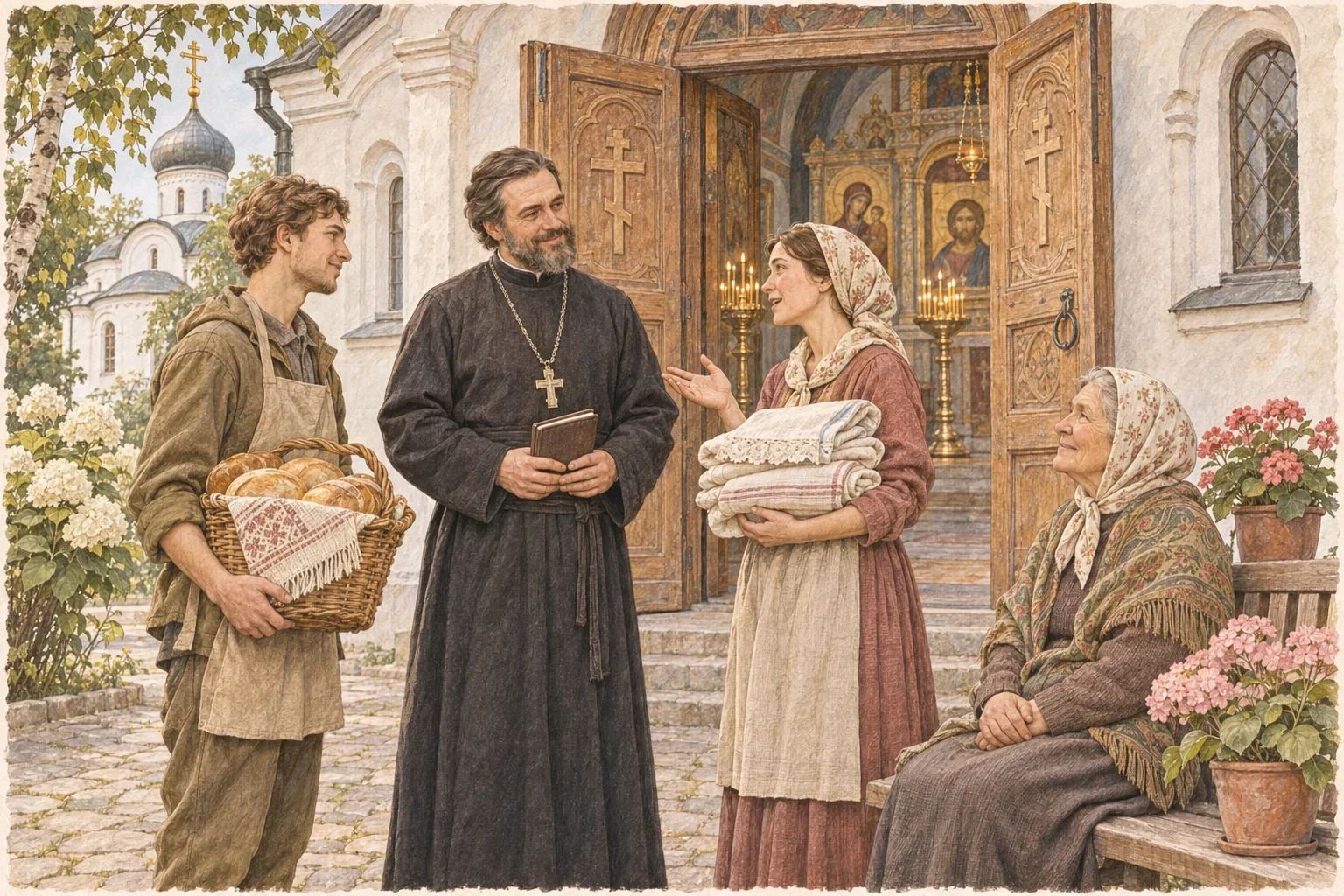
A rector is a clergyman entrusted with the leadership of a particular church or monastery. In a parish he is responsible for worship and pastoral life within church order. Other priests serving there can celebrate services and hear confessions without holding the office of rector.
The rector works with the diocese, parish staff and congregation. Practical tasks may be delegated to several people. It does not follow that every question about a prayer request, visit or class must be addressed personally to the rector.
Do not confuse the rector’s responsibility with ownership of parishioners’ faith or unlimited control over family life. Pastoral care involves accountability and respect for the person. Asking for advice is different from surrendering all responsibility for your own decisions.
Find the parish’s current contact details and explain why you are getting in touch. Arrange a time for a substantial personal conversation rather than beginning it during worship. If the rector is unavailable, ask which other priest can help with your concern.
The rector’s responsibility for a particular parish
A rector is the cleric entrusted with leadership of a church or parish within the Church’s established order. The word identifies an office. It tells you who coordinates worship and community life, but does not mean that one person personally performs every task, from preparing notices to repairing the roof. A large parish functions through the combined work of clergy, staff and parishioners.
Responsibilities can include arranging services, working with other priests, supporting preaching and catechesis, participating in practical decisions and maintaining contact with the diocese. The exact division of work depends on the parish. In a small rural church, one person may combine many responsibilities, whereas an urban parish may have an administrator, a catechist and people leading separate charitable activities.
How the rector differs from other parish priests
Several presbyters may serve at one church. One is the rector; the others carry out priestly ministry and their assigned responsibilities. Their celebration of the Liturgy or hearing of confession is not less significant because they do not hold the leadership office. For ordinary pastoral conversation or preparation for a sacrament, you can often approach any priest assigned to that work in the parish.
The rector is not necessarily the oldest priest or the person with the longest title. Ordination, honorary rank and administrative office answer different questions. Priest identifies the presbyterate, archpriest identifies an ecclesiastical title, and rector identifies responsibility for a particular church. Use the official clergy listing to establish who handles an organisational matter instead of relying on appearances.
Finding the right person for an everyday question
Start by identifying the task. Service times, building access, library opening hours and registration for catechetical meetings are usually handled by the person named in the relevant announcement. Questions about spiritual life belong with a priest. A proposal to organise parish assistance, use premises or change shared arrangements may require the rector’s decision.
Suppose you want to collect clothing for people in need. Explain who needs it, who will sort the items, where they will be stored and how they will reach recipients. Simply asking permission to do a good deed leaves the parish facing undefined costs and responsibilities. A thought-through proposal lets the rector assess the community’s capacity and, if necessary, explain a refusal or suggest another way to help.
Why an appointment helps
Immediately before the Liturgy, a priest is preparing for worship; afterwards many people may approach him at once. A long private conversation in that setting can easily become superficial. Arranging a time is not necessarily bureaucratic distance. It helps the priest listen properly and avoids discussing family circumstances in front of a queue of bystanders.
In a brief appointment request, name the topic and, if you can estimate it, the time needed. If a sick person needs urgent pastoral help, make that clear immediately and leave a working contact. Do not bury urgency in a long letter. If the rector is unavailable, another priest may be able to help sooner. In illness, an actual visit matters more than meeting the parish leader specifically.
Parish leadership and the contribution of parishioners
The rector is not the private owner of the church community. A parish exists within ecclesiastical and legal structures, and lay participation involves more than attending services and donating money. People may help with catechesis, care for those in need, cleaning, welcoming newcomers and other agreed activities. Sustainable assistance begins with a clear task, a realistic commitment and someone responsible who can be told when difficulties arise.
Disagreement with a decision is best discussed concretely: identify the issue, explain the consequences you see and suggest a possible solution. Disagreement does not justify circulating unverified accusations, while respect for ordination does not forbid questions. If local discussion proves impossible, deanery or diocesan contacts can explain the established procedure for raising the particular concern.
A question for reflection
How can you explain the purpose of your visit so that an appropriate appointment can be arranged?