
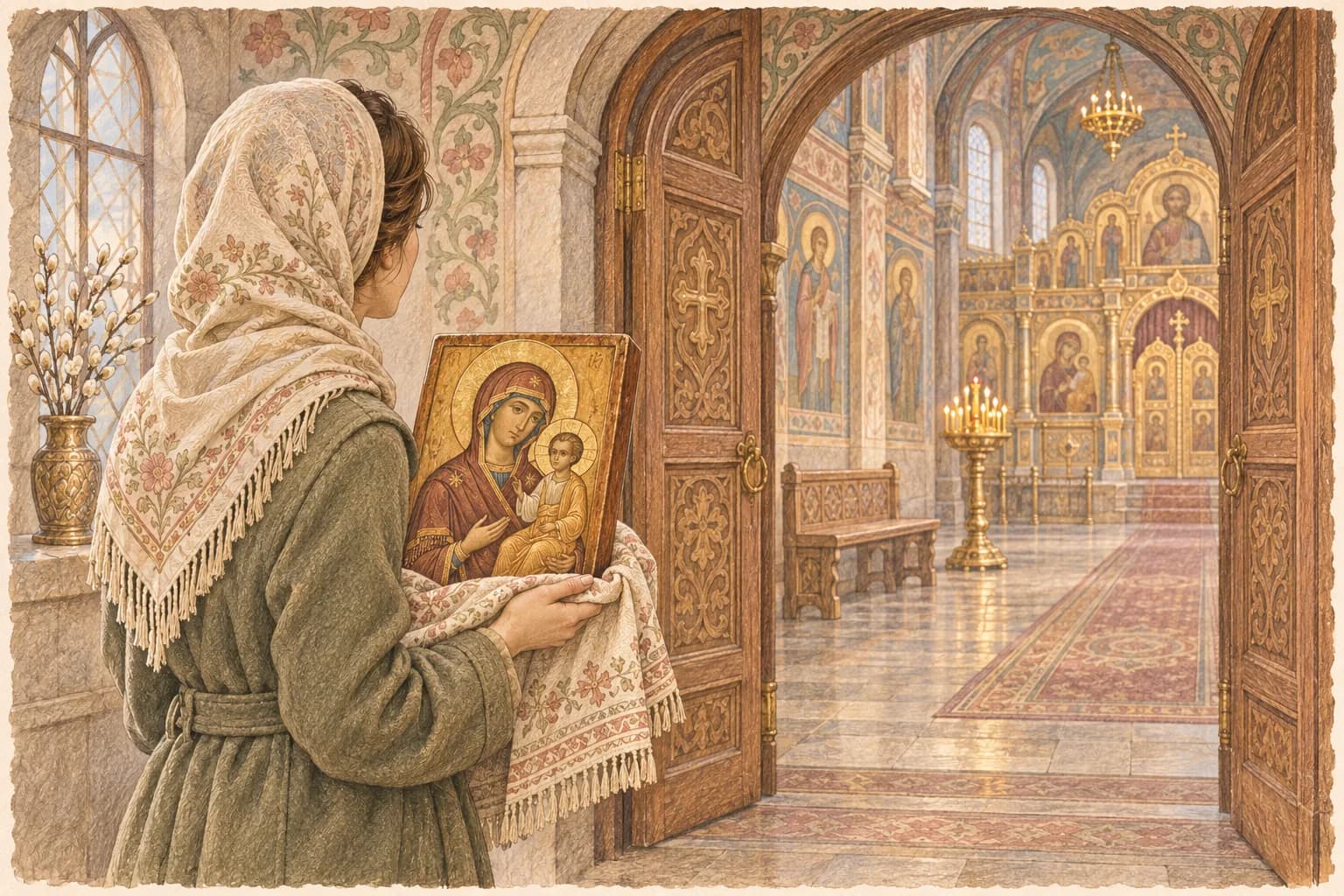
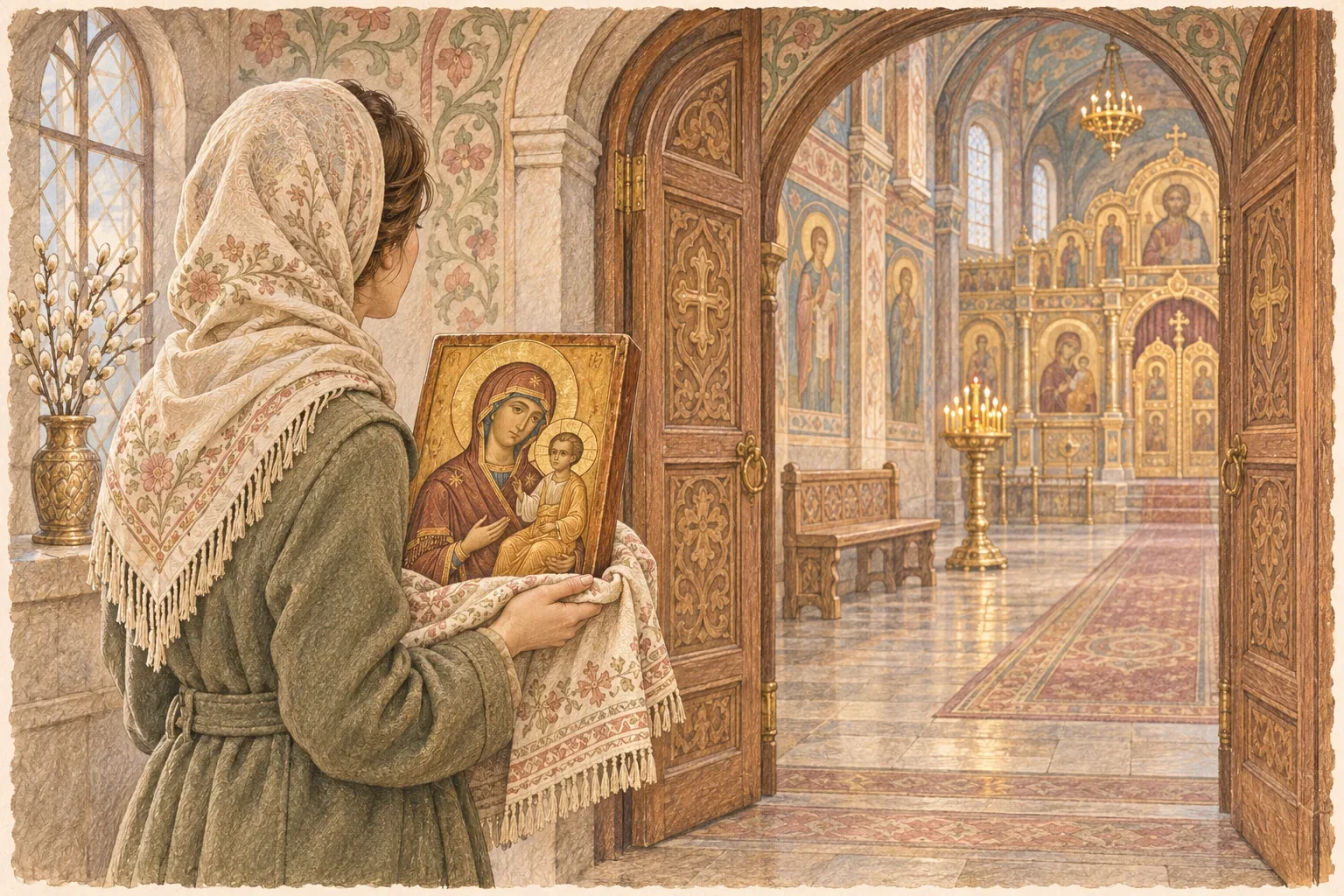
If you have acquired an icon and do not know whether it has been blessed, show it to a priest and ask about the church’s practice. Not every religious picture is an icon. Identify whom and what it depicts rather than relying only on a seller’s description.
Different church traditions have particular practices concerning a separate rite of blessing icons. Resolve the practical question in your parish. A shop label, present or absent, is not a substitute for understanding the image and its provenance.
A blessing does not automatically correct an inaccurate inscription or questionable depiction. Nor does an icon become a wish-fulfilment instrument. Veneration is directed to the person represented, rather than to wood, paint or purchase price.
Before visiting, ask about a suitable time and arrangements for a large or fragile icon. Do not place it among church icons without permission. At home, choose a respectful, secure location suitable for prayer and safe from damage.
Begin by identifying the image
An icon differs from any picture with a religious subject through its ecclesial content and purpose. An artistic portrait, imaginary composition or object with obscure symbols does not become an icon merely because a seller calls it one. If its origin is uncertain, show it to a priest and ask whether it is appropriate for Orthodox veneration. A photograph may help explain the question initially, though the object itself may sometimes need to be examined.
Check the inscription: who is represented, whether the name is correct and whether the main details are intelligible. This is particularly useful for an unfamiliar saint or a commissioned image. An unusual colour or painting style alone is not grounds for declaring an icon wrong. Several iconographic traditions exist, and a specific discussion is better than a sweeping judgement based on one visual feature.
What the blessing of an icon means
The church’s blessing concerns the image’s use for prayerful veneration. It does not turn wood, paper or pigment into a deity. Veneration relates to the person represented, so the image’s content matters more than an expectation of a special change in its material. Christians pray to God and ask the saints’ intercession rather than treating the physical object as an independent power.
The history of practices for blessing icons is more complex than the everyday claim that prayer before an image is impossible without a particular ceremony. Avoid judging someone else’s prayer without knowing the image’s provenance and the practice involved. If you want a new home icon blessed, ask your parish for a clear explanation of its arrangements rather than attempting to settle every historical tradition at once.
May a printed icon be brought for blessing?
Material and price do not measure spiritual value. A printed image can support prayer just as a hand-painted one can when its content is appropriate to its ecclesial purpose. There is no need to postpone prayer at home until you can afford an expensive panel or metal covering. Clarity, careful execution and the ability to place the image respectfully are useful considerations.
On the other hand, a blessing cannot correct any imaginable content. If an object mixes Christian and occult symbols, bears a false name or depicts someone other than the person identified in the inscription, the priest may suggest first resolving the problem with the image itself. This concerns what is being proposed for veneration, rather than a judgement about the item’s price or its owner’s background.
Bringing and collecting the icon
Ask about a suitable time and whether you should wait. Describe a large or heavy image beforehand so that safe placement does not have to be improvised at the doorway. Protect the surface during transport, particularly if the paint is fragile or the object has family significance. Do not leave an icon unattended in a random corner assuming every parish worker knows your request.
If it needs to remain at church, establish who is receiving it and when it can be collected. Ordinary care and clear communication with the responsible person are enough. Questions about an offering belong to the parish’s arrangements, not to a universal price for an image’s spiritual power. If money is lacking, explain that and ask what is possible rather than assuming that you cannot approach.
What matters after bringing it home
Choose a place where the icon will not be buried among unrelated objects and where prayer is practicable. Avoid positions where a candle could damage it or start a fire. A simple home arrangement is sufficient: the opportunity to turn quietly to God matters more than reproducing a complete church iconostasis in a small room.
Owning an icon does not require living in constant fear of ordinary mistakes. If it falls, first check the fastening and any damage rather than seeking a prediction. If keeping it is no longer possible, ask about passing it on or handling it respectfully. A sacred image at home finds its meaning in prayer and life, not in endless calculations about supposedly compulsory distances between frames.
A question for reflection
Do you know who is depicted and where the inscription comes from?