
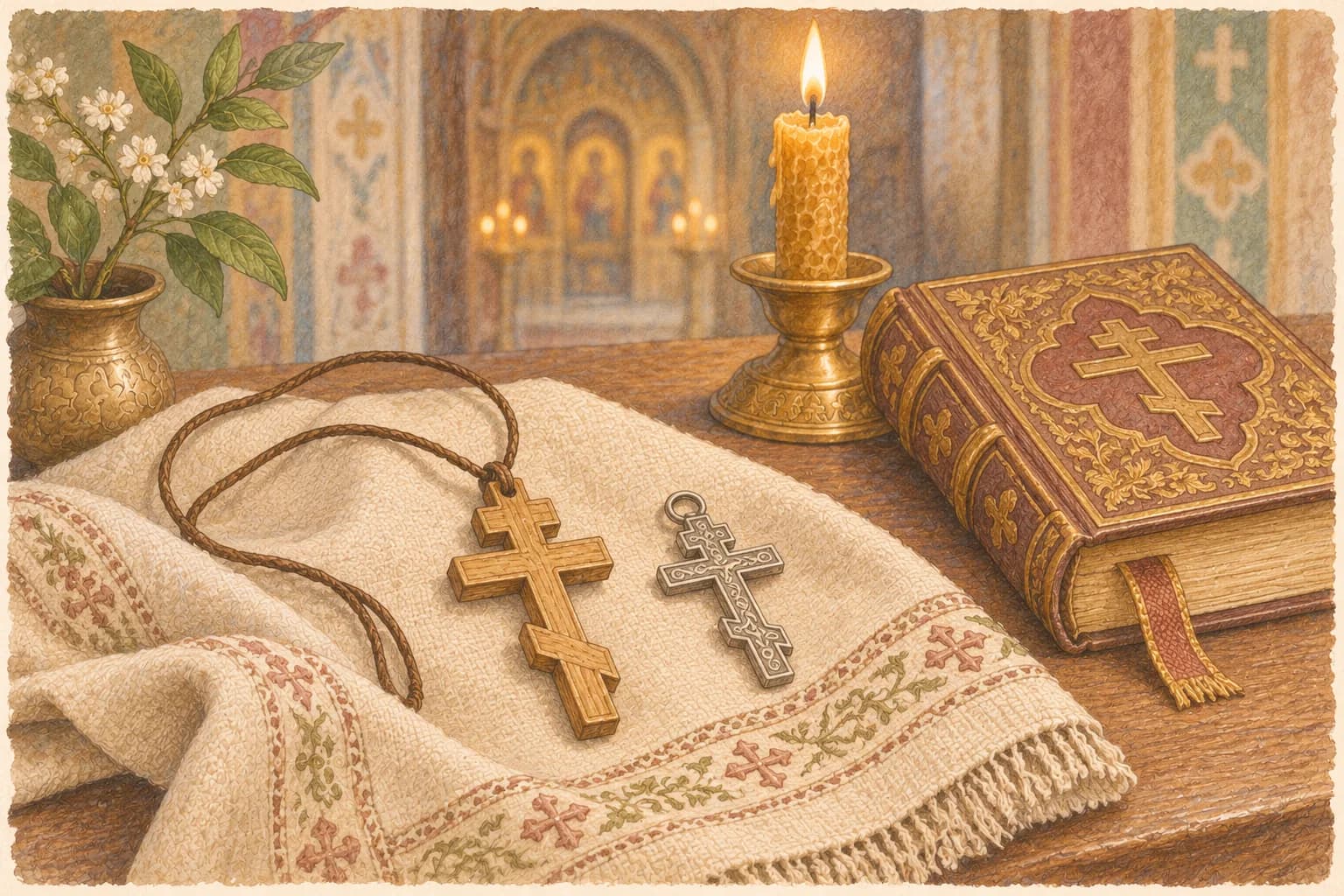
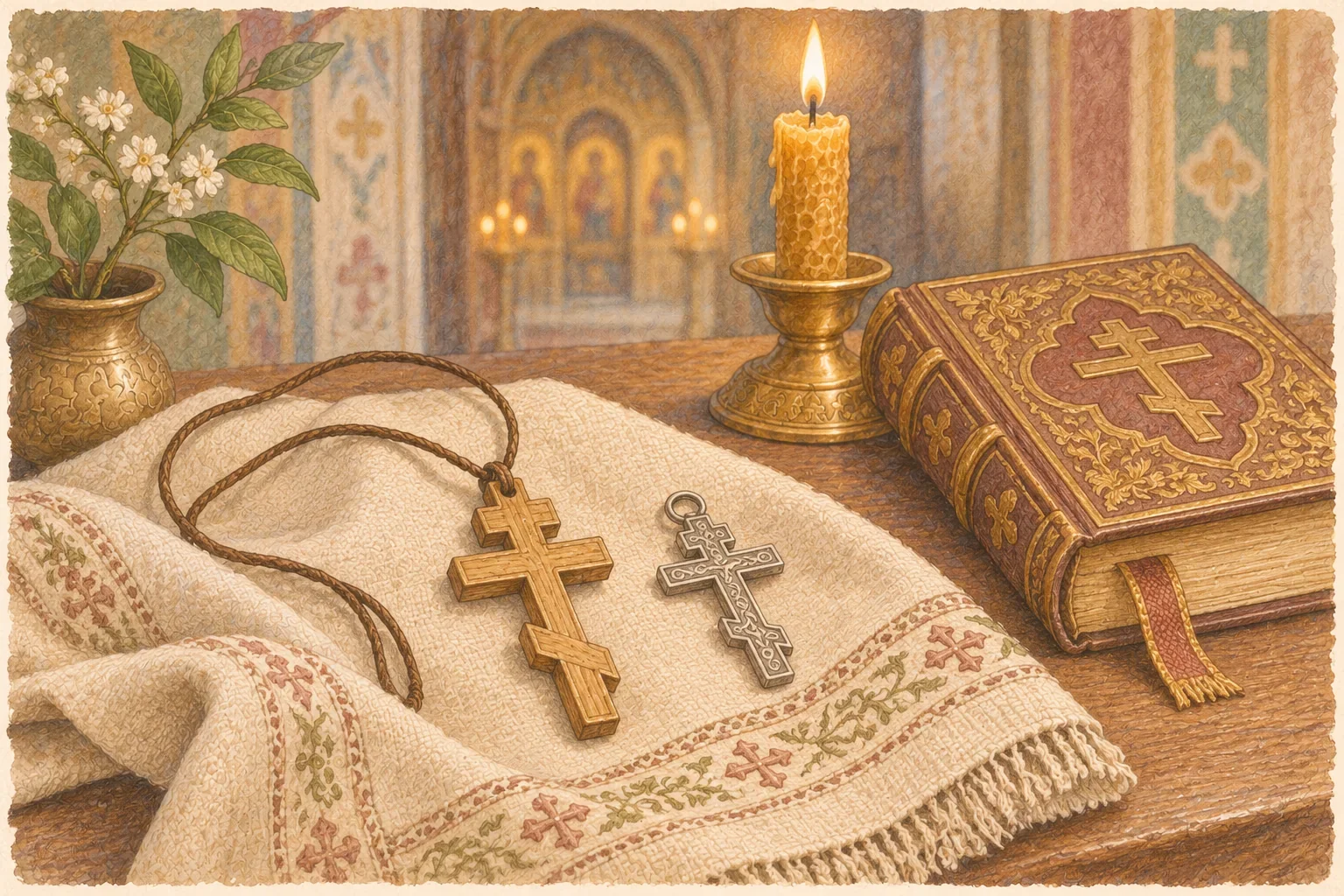
To have a personal cross blessed, contact an Orthodox parish and ask about a suitable time. Sprinkling a purchase yourself should not be treated as a substitute for the church rite. A change of chain does not normally require an already blessed cross to be blessed again.
A priest can examine the image and inscriptions if the object’s origin raises questions. Expensive metal does not make a cross more grace-filled. A recognisable Christian image, suitability for wearing and safety, especially for a child, matter more.
Wearing a cross witnesses to belonging to Christ; it does not guarantee freedom from illness or accidents. Blessing does not turn an object into a protective device. Avoid offers to enhance its power or fears that inexpensive material provides weaker protection.
Bring the cross respectfully and explain whether you know it has already been blessed. Ask the parish about offerings rather than treating another church’s price list as a universal rule. If money is a difficulty, say so directly when asking.
What is being blessed and why
When a personal cross is blessed, it is set apart for reverent wearing as a Christian sacred object. The wearer receives it in relation to faith and belonging to Christ. This differs from attempting to alter the metal’s physical properties or give a piece of jewellery guaranteed protective powers. An expensive object may have artistic or family value, but does not establish a greater measure of divine help for its owner.
A worn cross recalls baptism and the calling to live according to the Gospel. Treating it only as a lucky object replaces that meaning with an expectation that the object will act instead of the person. Asking for a blessing can therefore accompany questions about one’s own church life. You do not need to know every prayer and custom before approaching a parish; explain honestly that you are beginning to learn and want to understand what is being done.
Choosing a cross for an adult or a child
The object should present a recognisable Christian cross. Differences in shape and artistic treatment do not always identify another denomination, so show an uncertain object to a priest. This is particularly useful for items bearing obscure symbols, mixed inscriptions or advertising for magical protection. Counting crossbars alone is not a sufficient assessment.
For everyday use, consider size, weight and the absence of sharp edges. A child’s cross and its attachment should suit the child’s age and safety needs. Chains and cords can catch on objects and create strangulation hazards. Decisions about a very young child wearing a cross should take account of paediatric guidance and actual sleeping, play and activity conditions. Attending to safety is not a rejection of reverence for the Cross.
When the cross’s history is unknown
A cross may come from a relative, a jewellery shop or a collection of family belongings. If you do not know whether it has been blessed, explain that when approaching the parish. There is no need to perform tests with water, candles or interpretations of dreams. Such methods cannot establish an object’s ecclesiastical status and often increase anxiety instead.
Being purchased outside a church does not by itself make a cross unsuitable. Conversely, a seller’s religious branding does not prove that every item has already been blessed. Ask about provenance, but consult a priest if the answer remains unclear. If the cross was found, efforts to return it to its owner remain an ordinary moral responsibility: the object’s religious significance does not automatically make it yours.
Loss, damage and replacing a chain
A broken chain does not predict misfortune. Metal wears, clasps fail and objects are lost. First check the fastening, look for what is missing where possible and repair or replace the damaged item. There is no basis in the mishap itself for interpreting every household breakage as punishment or someone else’s malicious spiritual influence.
Changing the chain does not normally alter the fact that the cross has been blessed. If the cross itself is damaged and you are unsure whether it can be restored, show it to a priest. Do not throw an old cross away with ordinary rubbish in frustration; the parish can explain respectful handling of an unusable object. A replacement need not be made of a more expensive metal as though its price could compensate for the loss.
Arranging the parish visit
Call or ask at the parish when you can bring the cross. During the Liturgy the priest is occupied with worship, so expecting an immediate separate rite may be inappropriate. Packaging and a sales receipt are not ordinarily religious necessities for the blessing itself; a clear question about the object and its use is more helpful. Check any actual organisational requirements with the chosen parish.
If the cross is a gift, consider the intended wearer’s beliefs. A present should not become a means of forcing an adult into religious participation against their wishes. Explain its meaning and offer to visit church together while allowing an honest conversation. The cross witnesses to belonging to Christ; family pressure and fear of omens do not help communicate that meaning.
A question for reflection
Are you bringing a new cross, or concerned about the unknown history of one you already own?