
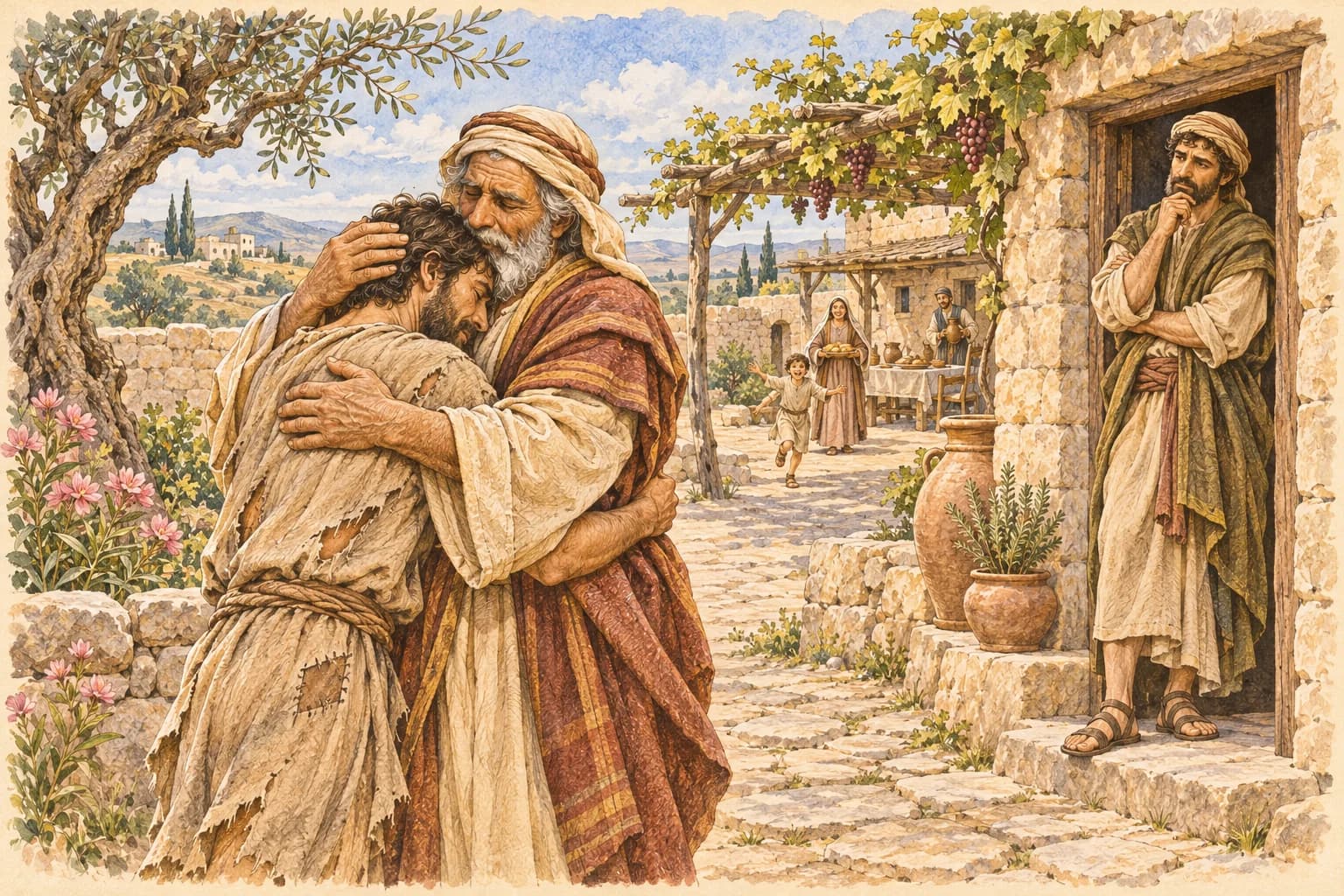
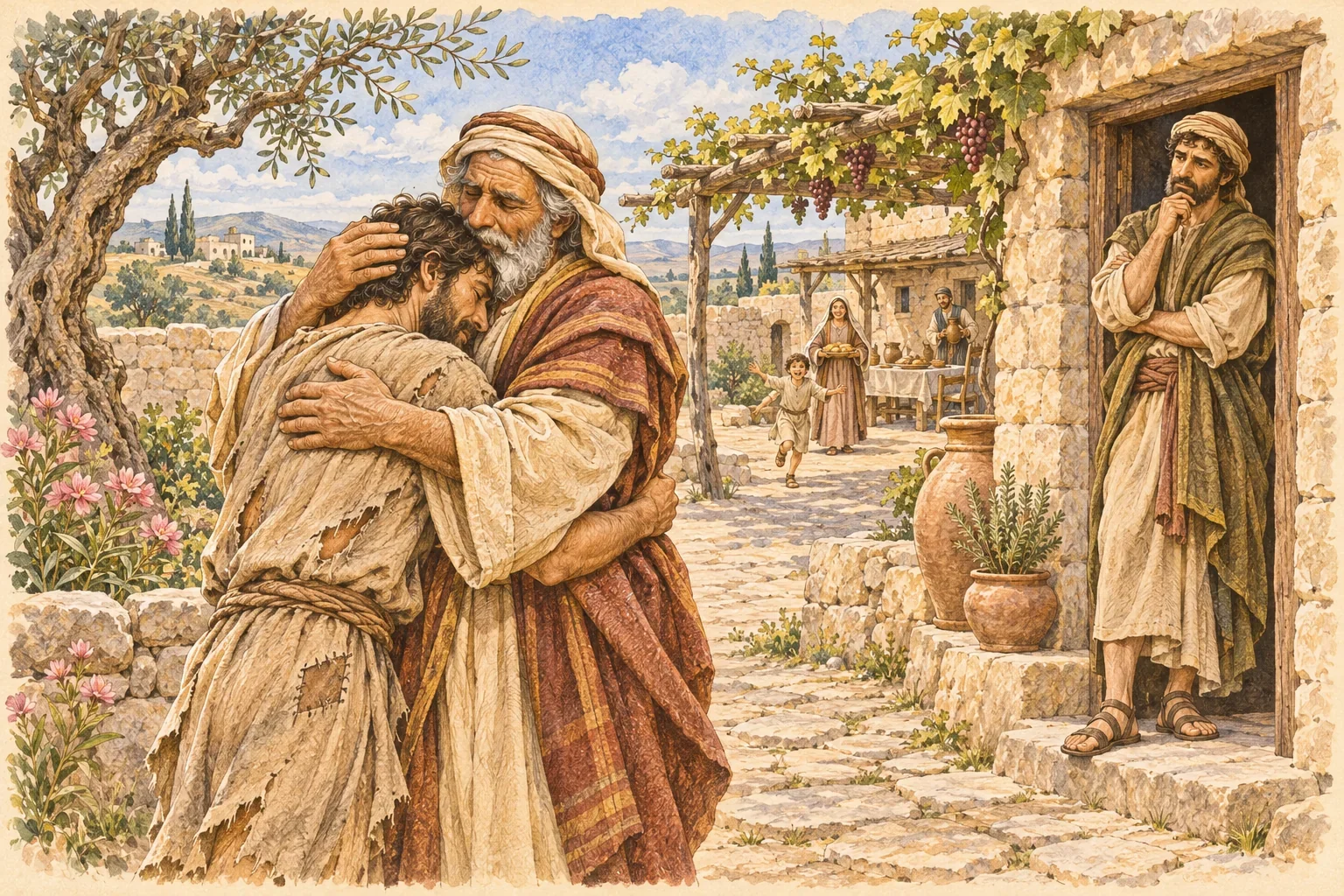
The Prodigal Son concerns both the younger son’s return and the father’s encounter with the elder. Mercy and the difficulty of sharing joy over someone’s return are central. Stopping at the welcome feast misses the question raised by the ending.
The younger son acknowledges his situation and the father goes out to meet him. He then goes out to the elder who refuses to enter. Both conversations show relationships exceeding calculations of lost property and deserved rewards.
The parable does not require returning to an unsafe household or instantly restoring trust after harm. The father reveals mercy rather than a universal procedure for family conflict. Responsibility for consequences does not disappear through reassuring words.
Read the whole passage and notice which response troubles you. It may reveal envy, fear or a desire to return. A difficult real-life reconciliation still needs discernment and safe boundaries.
Why the parable belongs beside two others
In Luke fifteen, the story of the two sons follows the lost sheep and the lost coin. The immediate setting is criticism that Jesus welcomes sinners and eats with them. That context matters: the listeners are being invited to understand joy over someone found and restored. Reading only the younger son’s adventures can reduce the account to a warning against wasting money and miss the question of welcoming another person.
In all three stories, loss gives way to joy that others are invited to share. The final parable makes the situation more demanding: beside the returned son stands a brother unwilling to enter the celebration. The reader faces a question about their own repentance and about their response to another person’s forgiveness. It is possible to remain outwardly near the father while regarding his mercy as an injustice towards oneself.
What changes in the younger son?
The younger son asks for his share, leaves and loses what he received. Famine and severe need follow. His return begins with recognising his actual condition: supposed independence has become dependency and humiliation. The narrative does not require his initial motives to be perfectly elevated. He remembers that his father has bread and is ready to acknowledge his sin. Repentance often begins with the painful discovery of where one’s own decisions have led.
Crucially, the son does not remain within an inward speech: he gets up and goes. That movement distinguishes returning from endless imagined self-condemnation. For the reader, there is a practical direction: name the action, stop defending it and take an available step towards repair. Particular consequences may still require time, restitution and new habits that endure. One powerful feeling does not make the subsequent work unnecessary.
Why the father welcomes rather than bargains
The father sees the son while he is still far away and goes out to meet him. Clothing, a ring and a feast express restored relationship rather than the negotiation of a new employment contract. The son is prepared to ask for a labourer’s position; the father receives him as a son. This reveals mercy beyond calculations of merit. The parable invites the reader to see God as more than an indifferent administrator responding only after a procedure has been completed perfectly.
Yet the father’s action should not mechanically become an instruction for every injured household. Forgiveness and restored trust have different aspects. If someone continues to deceive or threaten, relatives may need distance and protection. The parable reveals joy in a return to life, but it does not prescribe one universal response to addiction, violence or financial exploitation. Those circumstances need separate consideration that preserves the dignity of everyone involved.
The elder brother and the open ending
The elder brother emphasises his labour and compares rewards. To him, his brother has become chiefly the person who wasted property and now receives a celebration. The father goes out to him too: love for the younger does not cancel love for the elder. His reply recalls the closeness already available to the elder and invites him to share joy over his brother. The Gospel does not say whether he enters the house. The decision is left confronting the listener.
That unfinished ending discourages a complacent allocation of roles in which I am the generous father and everyone else is an ungrateful child. At different times, a person may recognise both sons within themselves. It can be particularly difficult to accept that good offered to another does not diminish one’s own dignity. Ask what provokes envy: attention, forgiveness or a return that unsettles familiar judgements. The answer can begin repentance without belittling conscientious work or excusing harm.
What does the familiar title Prodigal Son mean?
The familiar title highlights the younger son and his wasteful life, but does not encompass the entire story. Distinguish what the narrator reports from the elder brother’s accusatory speech. A detail used by a character during an argument should not automatically become a complete biography of another character.
Titles drawing attention to the two sons or the merciful father can therefore be useful. They do not replace the Gospel, but help recover what a familiar heading can conceal. On rereading, follow the father’s actions towards each son: he goes out to meet both of them, although their difficulties differ. This keeps the story’s final conversation in view rather than ending at the younger son’s welcome.
A question for reflection
Can you rejoice in another person’s change without measuring it against your own merit?