
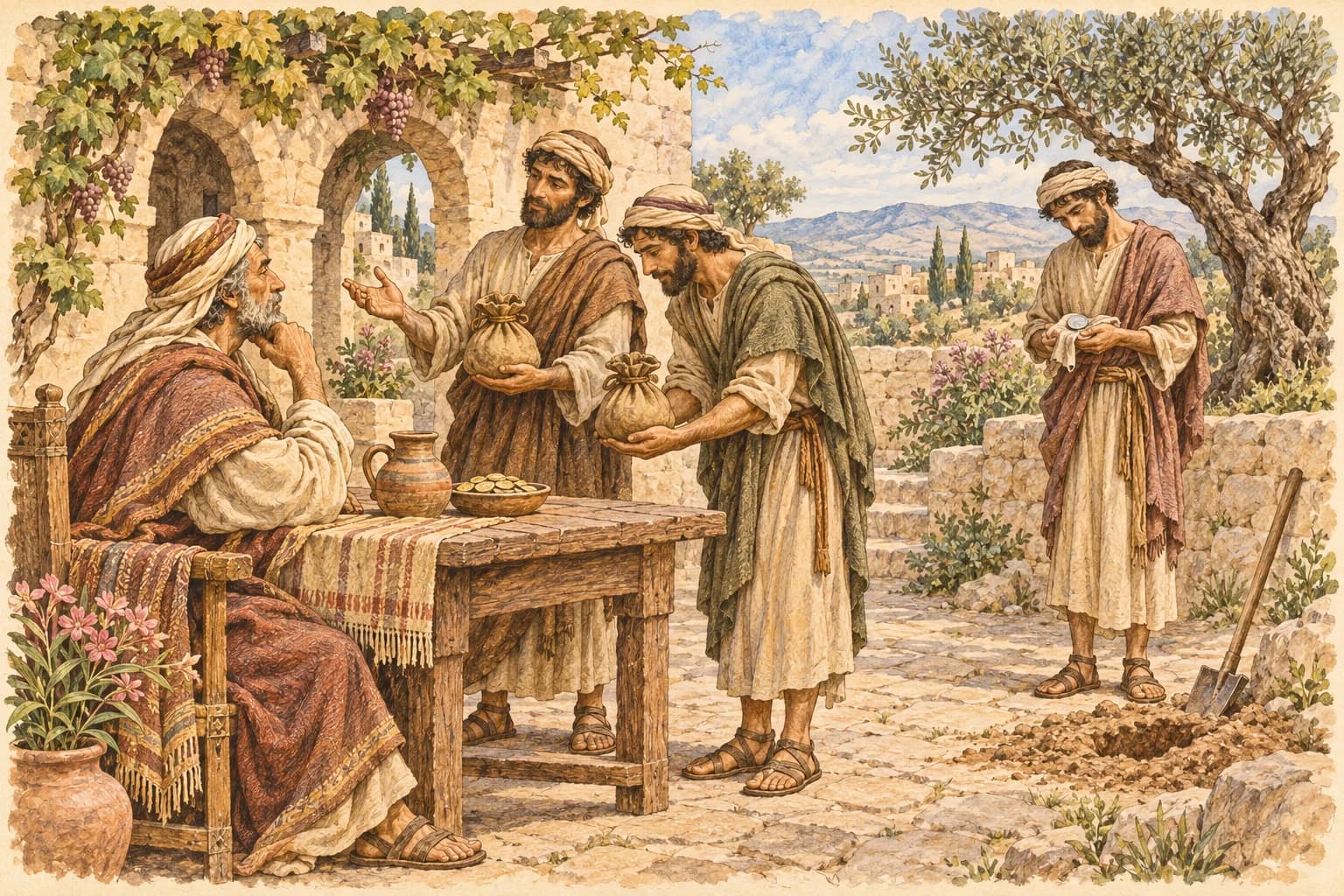
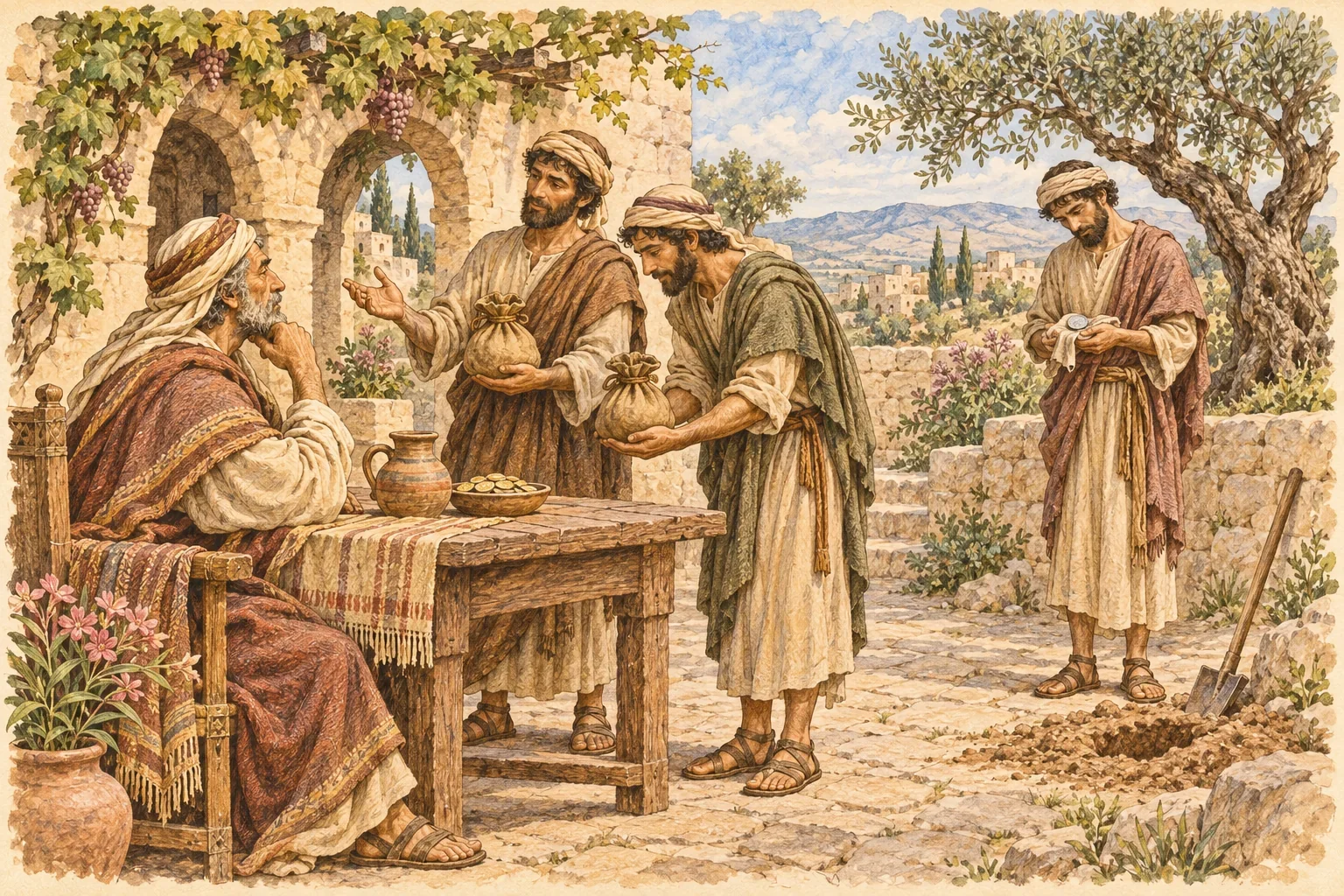
In the Gospel parable, a talent is a monetary amount rather than originally a creative ability. The modern meaning can suggest the theme of gifts, but should not replace the story. It concerns responsibility for what is entrusted and fear that leads to inaction.
The servants receive different amounts and account for their use of what was given. Equal starting conditions are not the focus. The reader faces faithfulness in their own situation rather than constant comparison of other people’s opportunities.
The parable does not command financial risk or promise that wealth proves divine approval. Illness and limitations do not make someone useless. The economic imagery serves a spiritual account rather than investment advice.
Name a responsibility already entrusted to you: work, care or a promise. Choose a manageable next step instead of waiting for perfect conditions. Do not take over everyone else’s duties merely to prove your worth.
What a talent meant in the Gospel story
In Matthew twenty-five, a master entrusts property to servants before leaving. A talent here is a substantial unit of weight and monetary value, not originally a word for musical ability or a gift for drawing. The modern meaning developed through the parable’s later cultural reception. Begin, therefore, with the story of entrusted wealth before reflecting on personal abilities.
The servants receive different amounts in accordance with their capacities. This does not describe identical starting conditions or promise that everyone’s outward results should match. What they share is trust and responsibility for what they have received. Beginning with competition over who was given more shifts attention away from the central question: how does a person respond to trust, and what do they do with what has actually been placed in their hands?
Why the first two servants receive the same commendation
The first and second servants act and produce a result corresponding to what they received. Both receive the same form of commendation: differing totals do not produce differing acceptance by the master. This challenges the habit of measuring oneself only against someone else’s scale of achievement. A small responsibility can demand genuine faithfulness, while a conspicuous success does not reveal everything about a person.
In ordinary life, what is entrusted may include time, knowledge, possessions, the opportunity to care for someone or responsibility for a shared undertaking. The parable need not become a direct financial explanation of every everyday success. It concerns life’s direction: using what is received for good rather than merely preserving a reputation. Someone with limited strength need not imitate another person’s workload; the task is honestly to distinguish a real limitation from a convenient defence of complete inaction.
The third servant’s fear and his view of the master
The third servant returns the amount he kept and explains his inactivity through fear of the master, whom he describes as harsh and demanding. Careful reading distinguishes a character’s speech from the parable’s final claim: not every statement made by a servant automatically becomes a definition of God. The story shows how this understanding of the master relates to the action chosen—hiding what was received and attempting nothing.
Such fear is familiar beyond money. A person may refuse every opportunity to help because freedom from error cannot be guaranteed. They wait for perfect conditions and retain the ability to say that they damaged nothing. The parable questions the cost of that safety. It does not require recklessness: financial actions within the plot are not investment advice for a household or proof that every profitable activity is blessed.
Reading without turning productivity into an idol
The parable stands among Gospel teachings about watchfulness and accountability when the master returns. This gives it a seriousness easily lost when it becomes a slogan for career development. Human worth is not equivalent to revenue, project totals or public recognition. Illness, caring for a baby or supporting an ageing relative can limit visible output without destroying faithfulness and love.
A useful application begins with a concrete question: what has actually been entrusted to me now? Then identify one sustainable way to serve those people or that responsibility. There is no need to invent a grand mission while an existing commitment remains neglected. Rest and recovery are not automatically the burial of a talent: a person is not an inexhaustible resource. The story calls for responsible life before God, not a continual demonstration of usefulness to everyone watching.
The talents and the minas
Luke contains a related story about minas, also concerning entrusted property and a master’s return. That does not justify combining every detail of the two narratives into one text. The assignments, circumstances of departure and other elements should be read in the appropriate chapter of each Gospel.
If a retelling contains an unfamiliar detail, check its reference: the author may have moved to the other account without saying so. This matters for personal reflection because meaning does not arise from a random collection of memorable episodes. Respecting the distinctions helps avoid both superficial confusion and an immediate claim that the text contradicts itself.
A question for reflection
Which entrusted task can you begin to fulfil faithfully even if it appears unremarkable?