
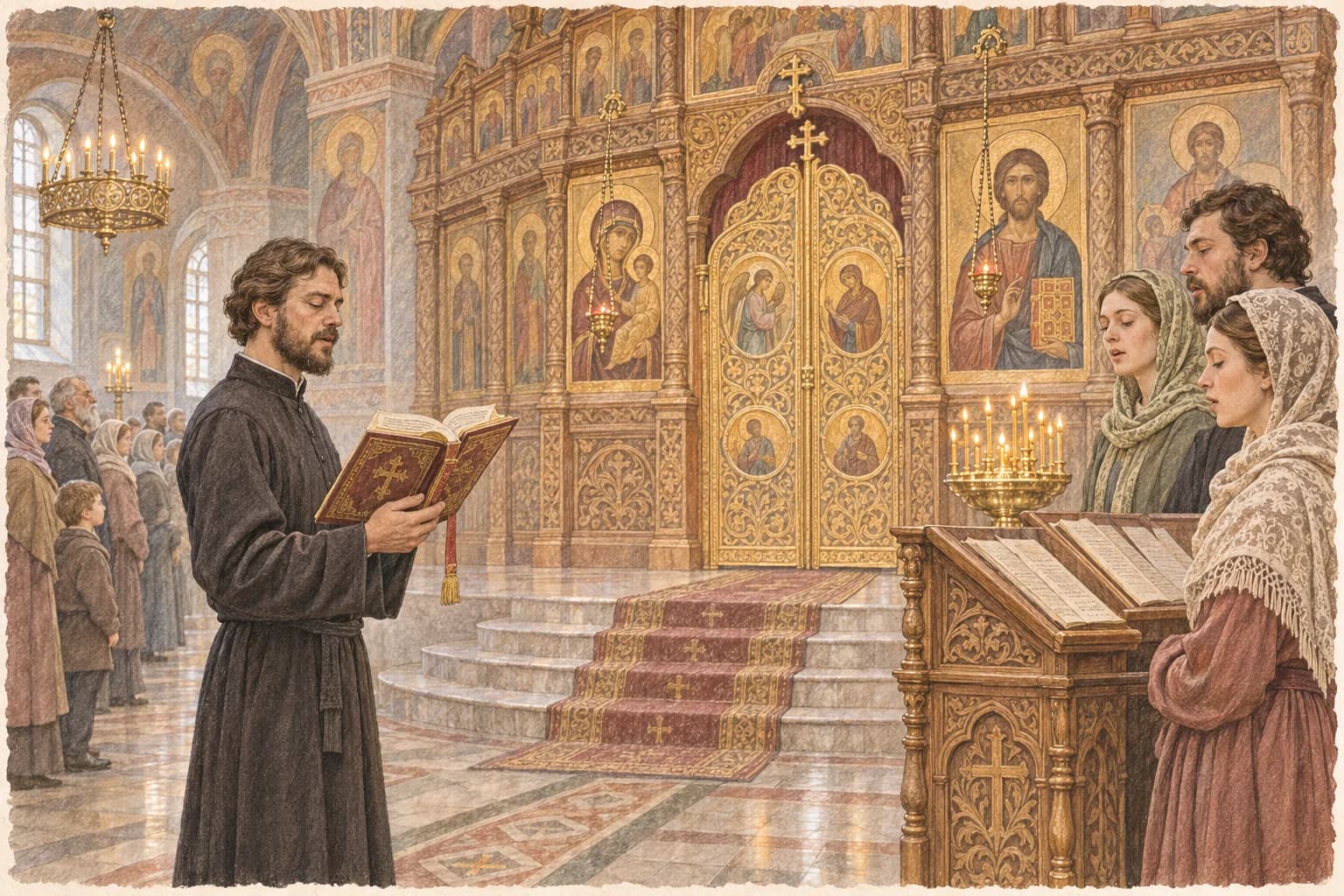
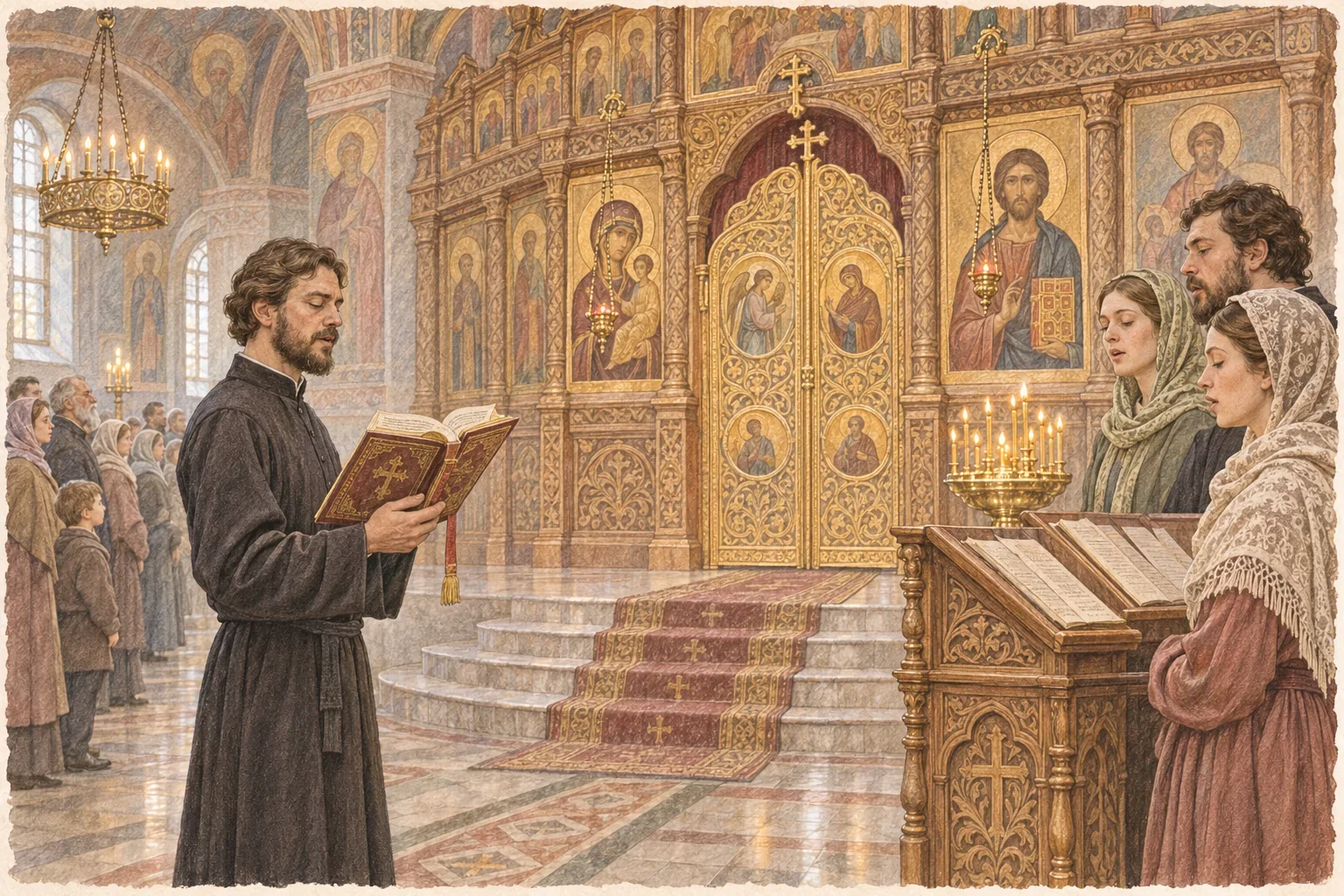
A prokeimenon is a short verse, usually from the Psalms, sung with accompanying verses at particular points in worship. At the Liturgy it precedes the Epistle reading. It is a liturgical element in its own right, not merely an announcement of a chapter number.
The choice relates to the liturgical day. A festal service may differ from the usual Sunday order. Searching for today’s prokeimenon requires a date and church calendar; preparing an actual reading also requires coordination with the responsible reader or choir director.
The repetition is not an unnecessary delay before the real reading: it belongs to the prayerful reception of Scripture. Equally, a person should not independently invent a prokeimenon from a favourite quotation for communal worship.
To understand the service more deeply, find the printed prokeimenon and read the psalm from which it comes. The broader context illuminates the brief verse. When preparing to read in church, use verified liturgical directions.
The prokeimenon before the Apostolic reading
At the Liturgy, the prokeimenon normally precedes the Apostolic reading, a passage from Acts or the apostolic epistles. The short chant helps the assembly prepare to hear Scripture. It belongs to the service’s sequence rather than being a musical interval that could be replaced without loss by any devotional song.
The name is associated with something set before a reading. Yet the prokeimenon is not confined to the Liturgy. It also occurs in other services, where its position and manner of performance follow liturgical tradition. Finding the word in an evening office does not mean an Apostolic reading must always follow. The term identifies a particular form, while the context explains its function at that point.
Why verses from the Psalter are used
Prokeimena usually take their texts from the Psalms. The Psalter expresses thanksgiving, petition, repentance, praise and hope, making its words a natural part of church prayer. A selected verse may relate to Sunday, a feast or a saint’s commemoration. Sometimes the connection is obvious; sometimes it becomes clearer through the whole psalm and the service’s subject.
After worship, try finding the source of the words you heard. A single line gains depth when you see who is addressing God in the psalm and what the surrounding passage concerns. Liturgical use is also more than historical commentary: the Church receives scriptural words into its prayer. Both aspects can be studied together without turning a brief verse into an isolated slogan detached from its source.
How the verse and response work
A prokeimenon is commonly performed as an exchange between reader and choir: the tone and text are announced, the choir sings the principal verse, the reader gives an additional verse and the response follows. The exact repetitions and conclusion depend on the appointed order and circumstances. A worshipper can first notice the overall structure: the words are repeated deliberately as part of one prayerful action.
Books may distinguish the principal text and additional verses typographically. If preparing to read the Apostolic passage, confirm the arrangement with the director or experienced reader beforehand. Do not independently change the response after one successful repetition. Confidence comes through preparation: locating the correct text, checking pronunciation and knowing when the choir enters.
The prokeimenon and Alleluia verses are distinct
After the Apostolic reading at the Liturgy, the Alleluia with its verses belongs to preparation for the Gospel. It can be confused with the prokeimenon because it too involves short verses and choral responses. Their placement and texts are nevertheless different. A useful initial sequence is the prokeimenon, the Apostolic reading and then the appointed preparation for the Gospel.
This outline is a learning aid, not a complete description of every detail. A festal service may combine readings or directions, and singers follow the prescribed order. A beginner can start by distinguishing the main parts rather than trying to correct ministers from memory. If the sequence differs from what you know, ask afterwards: the reason may be the calendar rather than a mistake.
Understanding the tone and finding the appointed text
The tone identifies the melodic framework, not a level of spiritual importance. To find the appointed prokeimenon, establish the day and service. A general webpage labelled Prokeimenon before the Epistle may offer several alternatives, from which the appropriate calendar entry must be selected. For a particular feast, consult its liturgical directions or a reliable edition of the service.
For personal study, the text may be read without singing. Reading in church calls for coordination with the choir director so that everyone understands the local chant and announcement. Do not alter Church Slavonic forms merely because they resemble modern Russian words. If pronunciation or accentuation is uncertain, use a checked edition and resolve the question before worship, when there is time to work through it calmly.
Listening with attention
Try retaining one thought from the principal verse and then listening to the Apostolic passage as a whole. You need not immediately find identical wording: the connection may be prayerful and thematic. Returning to both texts afterwards can reveal the day’s wider meaning. For a child, a simple explanation is enough: before the reading, the Church responds to God with scriptural words and prepares to listen further.
A question for reflection
How does reading the whole psalm change your understanding of its selected verse?