
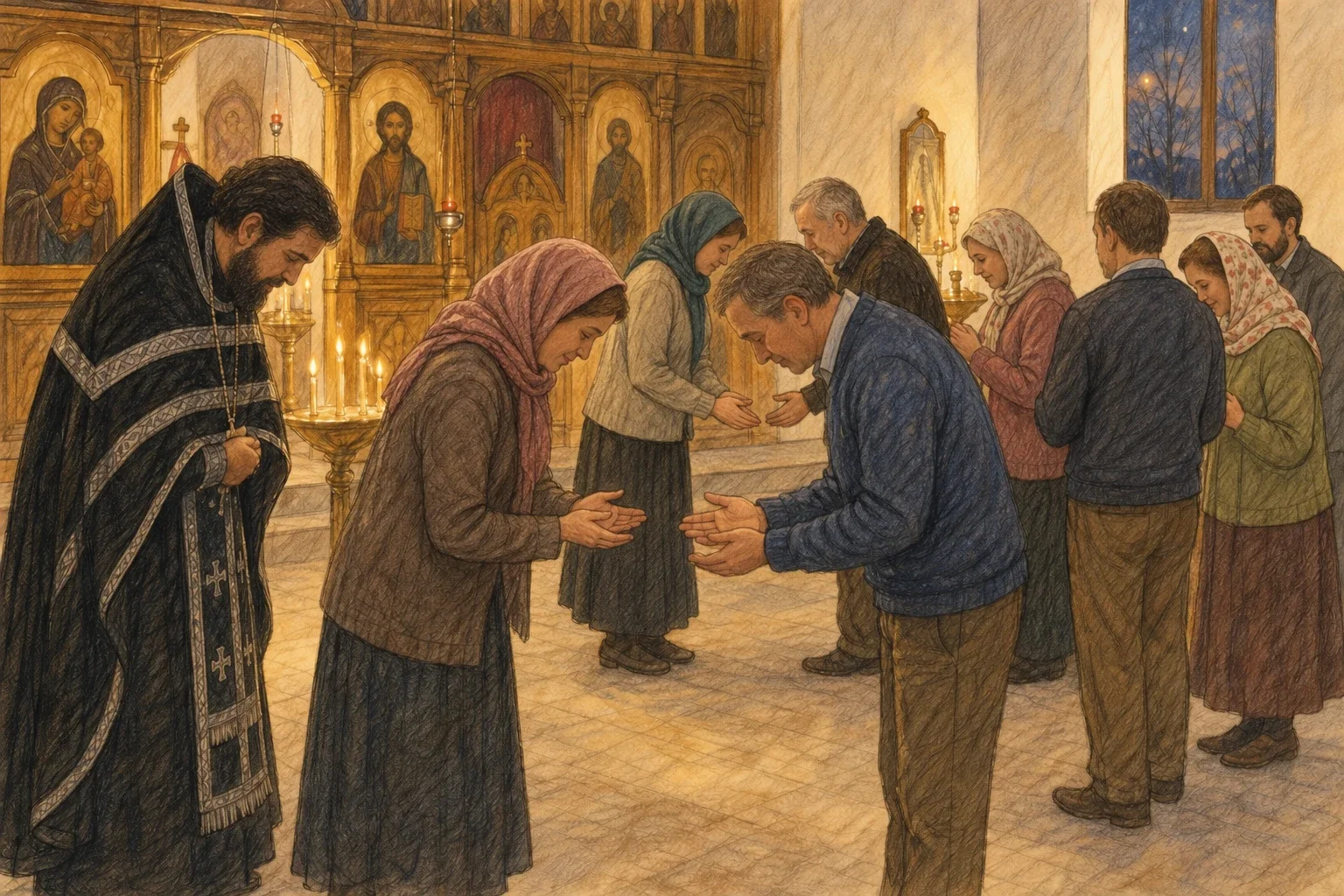
Forgiveness Sunday is the final day before Great Lent, when the Church remembers Adam’s expulsion from Paradise and calls Christians to ask and grant forgiveness. In many parishes a special rite of forgiveness follows Lenten Vespers in the evening.
Forgiveness does not declare evil acceptable, instantly restore trust, or require a return to danger. A Christian rejects revenge and asks God to heal the heart while preserving necessary boundaries and the offender’s responsibility.
When is Forgiveness Sunday?
The date changes each year with Pascha. It is the Sunday immediately before Clean Monday and the first week of Great Lent.
The liturgical name is Cheesefare Sunday. Meat has already been omitted since the previous Sunday, while dairy, eggs, and fish remain permitted until the fast begins.
Why Adam’s expulsion is remembered
The service speaks about humanity losing Paradise through disobedience and an inability to admit fault. Adam blames Eve, Eve blames the serpent, and responsibility is repeatedly transferred.
Great Lent begins before closed gates but moves toward Pascha and restored life. Admitting fault becomes the first step home.
What the Gospel says
At Liturgy Christ says that if we forgive others, the heavenly Father will forgive us. He then teaches fasting without a gloomy public face and speaks about the treasure of the heart.
The connection is direct: a food fast cannot be built upon deliberate hatred. Yet the Gospel call requires mature interpretation rather than pressure against someone harmed.
What is the rite of forgiveness?
After Sunday Vespers the priest asks forgiveness from the community and people ask it from one another. The church gradually enters the Lenten order: melodies and vestments change, and the great prokeimenon is sung.
The rite is celebrated once a year and begins a common journey without superiority. Everyone stands before God in need of mercy.
How to ask forgiveness
Speak simply and specifically: “Please forgive my harsh words,” or, “I failed you and want to repair the consequences.” Do not add, “But you also…” and do not demand an immediate answer.
A true apology acknowledges harm, does not excuse it, and offers repair. Return money or property when damage was material; correct a public falsehood before the same audience.
Must I ask everyone?
The rite includes a general mutual request because people often wound one another unknowingly. Personal harm, however, requires a personal conversation rather than a mass greeting card.
Do not send a template to hundreds of contacts merely to feel that the ritual is complete. Begin with the person actually harmed.
How to answer an apology
The traditional answer, “God forgives, and I forgive,” expresses hope in divine mercy and rejection of revenge. Say it honestly, not as a formula that instantly removes pain.
It is possible to answer, “I want to move toward forgiveness, but I need time.” This is better than false agreement beneath which resentment continues to govern the relationship.
What forgiveness means
To forgive is to stop wishing evil upon someone and entrust final judgment to God. The path may begin with a decision against revenge before a warm feeling appears.
Forgiveness does not change the facts or call injustice just. Memory may remain, but it no longer serves as a weapon of daily retaliation.
Forgiveness and reconciliation are different
Reconciliation requires both parties, truth, repentance, and rebuilding trust. Forgiveness may begin in the harmed person even when the offender denies everything.
The relationship does not have to return to former closeness. Peace without contact or communication only through safe channels may be the correct outcome.
Forgiveness does not abolish boundaries
A person may forgive and block abusive messages, end a business relationship, refuse to leave a child with a dangerous adult, or meet only with another person present.
A boundary is not necessarily revenge. It can protect life, health, and freedom from participating in another person’s repeated wrongdoing.
When abuse or crime occurred
A survivor is not required to meet the offender, reveal an address, withdraw a report, or refuse legal and medical support. The Christian call to forgive must never conceal a crime.
Establish safety first and contact emergency services and independent qualified help. Pastoral care may accompany protection but does not replace investigation.
When someone demands forgiveness
“You are Christian, so you must forgive immediately” is manipulation, especially without acknowledgment of harm. The offender does not set the survivor’s timetable for healing.
You may answer, “I do not wish you harm, but I am not ready for contact.” Do not remain alone under pressure; speak with someone trustworthy.
When forgiveness feels impossible
Begin with an honest prayer: “Lord, I cannot yet forgive; help me not to seek revenge.” Do not perform a feeling that is absent or add guilt to a natural reaction after injury.
Work with a qualified therapist when memories pursue and disrupt life. Forgiveness may be a long direction rather than one evening’s emotional achievement.
Apologizing to someone who has died
An answer is no longer possible, but fault may be confessed before God, the departed remembered in prayer, and remaining consequences repaired among the living.
Write a letter that need not be sent and discuss it with a priest or therapist. Do not search for a supernatural sign of acceptance.
Asking a child’s forgiveness
An adult can say, “I shouted and frightened you. That was wrong. I will learn to stop.” Such an apology does not destroy authority; it teaches responsibility.
Do not require the child to hug immediately or recite a formula. Give time, change the behavior, and protect safety.
Explaining the rite to children
Say that before Lent people want to remove the desire to hurt from the heart and ask God for help. Demonstrate a gentle bow and short words.
Do not organize a household trial listing every offense. Choose one real incident and let the adult apologize first.
Confession and Forgiveness Sunday
Mutual forgiveness does not replace the Mystery of Confession. Serious, repeated, or destructive sin requires honest conversation, repentance, and concrete change.
Do not attempt a first lengthy Confession during the rite itself. Arrange a time through the parish contact page.
The food meaning of Cheesefare Week
The week before Lent changes the diet gradually: meat is already omitted while dairy, eggs, and fish remain. The aim is a gentle transition rather than seven days of uncontrolled festive eating.
There is no need to consume a forty-day supply on Sunday. A moderate meal is wiser than beginning the first fast day with illness.
Preparing for the first day of Lent
Check the first-week service schedule, choose a realistic food measure, purchase simple food, and set a prayer time. Remove plans that are impossible from the start.
Our beginner’s guide to Great Lent joins food, worship, reading, and mercy.
Social media and public apologies
A public “forgive me, everyone” post may be sincere but does not automatically repair private harm. Do not disclose another person’s trauma to display repentance.
If the lie or humiliation was public, correction must reach that audience. Agree on wording with the harmed person when doing so is safe.
When conflict cannot be resolved today
Take the next honest step: stop insults, preserve documents, offer a neutral mediator, repay part of a debt, or schedule a conversation. Do not promise what cannot be done.
Forgiveness Sunday does not close a deadline at midnight. It gives direction to the whole fast.
Common questions
Must I attend the rite?
Participation is valuable and opens Great Lent, but illness, work, and care may prevent it. Ask forgiveness personally and pray at home.
Does forgiving betrayal require living together again?
No. Rebuilding a shared life requires truth, safety, repentance, and time; forgiveness alone does not create an automatic obligation.
What if I cannot forgive yet?
Say honestly that you reject revenge but need time. Seek support.
May an apology be sent by message?
Yes, when personal contact is impossible or unsafe. For serious harm, make it specific and do not demand a response.
What is eaten that day?
Meat is already omitted; dairy, eggs, and fish are normally permitted until Lent begins. Account for health.
The essential point
Forgiveness Sunday opens Great Lent with truth about personal fault and hope in God’s mercy. A bow does not magically erase consequences but directs repair.
Apologize specifically, forgive without revenge, preserve safe boundaries, and never hide crime. Peace grows through truth, responsibility, and patient love.