

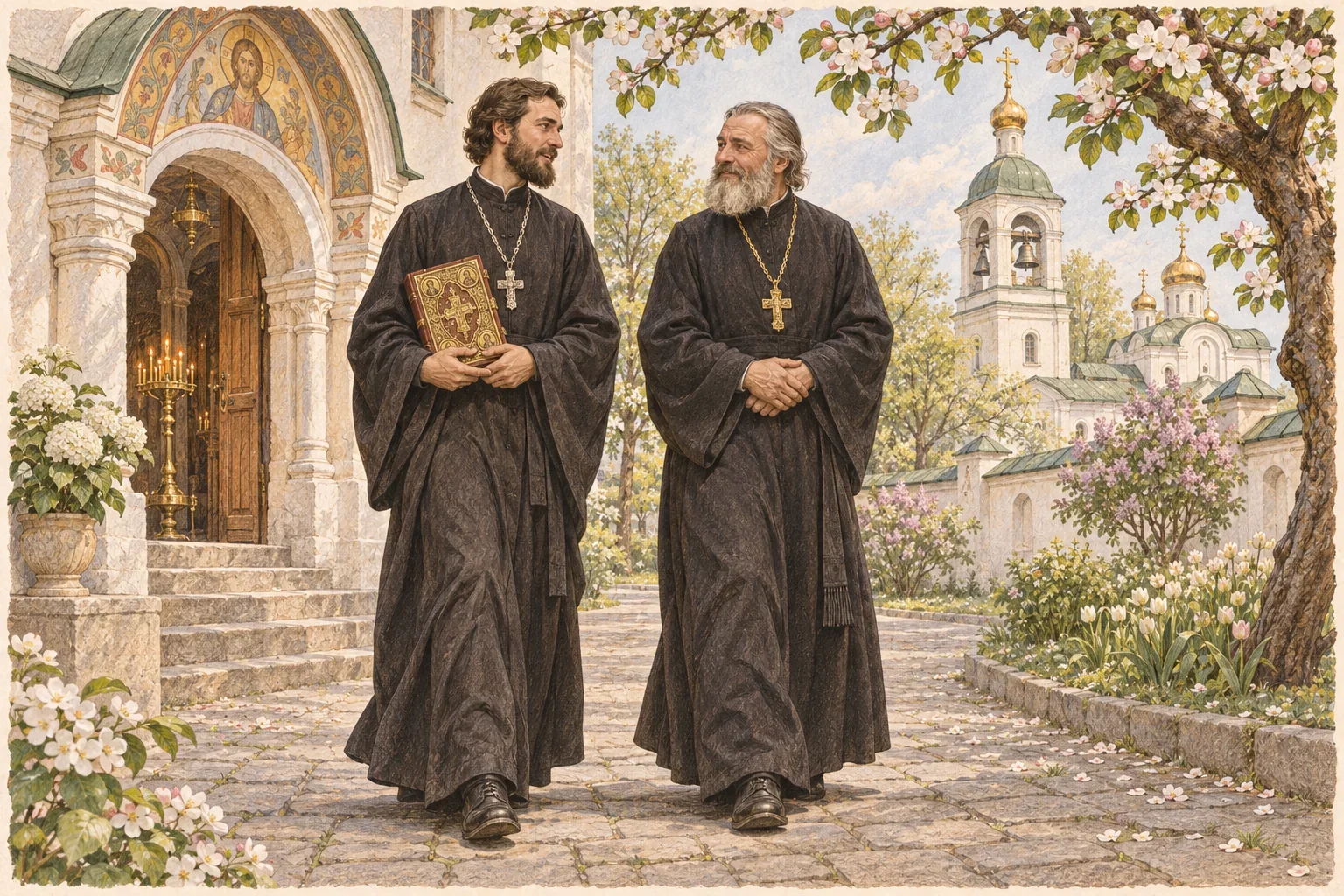
Archpriest is an honorific title for a priest in Russian church tradition. He remains a presbyter, just as a priest without that title does. The difference does not make confession with one more powerful, or restrict the other to supposedly simple pastoral questions.
The title may reflect service and ecclesiastical recognition. The office of rector is a separate matter: an archpriest does not necessarily lead the parish where he serves. Parish directories usually distinguish a clergyman’s title from his actual appointment.
A title alone cannot establish whether a particular priest is the right spiritual guide for you. Pastoral conversation requires trust, clarity and respect for boundaries. Searching for the highest title can merely postpone an honest conversation that could begin in your own parish.
Before visiting, check who hears confessions and when. Arrange a separate appointment for an extended conversation. Questions about an individual priest’s authority are answered by his appointment and church oversight, rather than by comparing the length of titles.
Priestly ordination and an ecclesiastical title
A priest and an archpriest both exercise presbyteral ministry. Their different designations do not create two kinds of priesthood: one does not perform an ordinary baptism while the other performs an enhanced version. In Russian church practice, archpriest is a title that must be distinguished from ordination itself. It may recognise service, but it does not let a layperson calculate someone’s spiritual qualities from a formal designation.
Three concepts help here. Ordination identifies a degree of ministry, a title identifies an ecclesiastical distinction, and an office identifies particular responsibilities. Archpriest and rector may occur in the same line, but they are not synonyms. An archpriest need not lead a parish, while a priest without that title can be appointed rector. Keeping these concepts separate resolves much of the confusion in church announcements.
May I confess to a priest who is not an archpriest?
Yes. Not holding the title of archpriest does not itself prevent a priest from hearing confession under the Church’s arrangements. If the parish timetable names the priest receiving confessions, a shorter title is not a reason to assume you must find someone else. A first-time visitor particularly needs a clear explanation and an opportunity to bring their own repentance without unnecessary anxiety.
Confession is not the same as choosing the most popular conversational partner. Regular contact with one pastor can sometimes help advice take account of your circumstances, but that is a separate question of spiritual guidance. Comparing titles does not settle it. If you are worried about preparation or need a long discussion, say so beforehand: a busy confession queue leaves limited time regardless of the priest’s rank.
What a biography can and cannot tell you
A biography may tell you where someone studied, when he was ordained, where he has served and what he is currently assigned to do. That information can illuminate experience. The year a title was awarded does not, by itself, tell you how well the priest will explain your particular issue. Length of service does not make anyone a specialist in every field, from adolescent development to medical care.
When a question requires professional expertise, a pastor can address its moral dimension and refer you to an appropriate specialist. Consulting a doctor, psychologist or lawyer within their competence does not devalue a church conversation. Good guidance helps distinguish responsibilities. A senior title and years of ministry are not reasons to expect a priest to provide a medical diagnosis.
Forms of address in conversation and correspondence
In ordinary conversation, both a priest and an archpriest can be addressed as Father followed by the name. There is no need to repeat the full title every time. Formal ecclesiastical correspondence has more ceremonial conventions, but a private appointment request chiefly needs to be polite and clear. If unsure, use the name and office as listed on the parish website.
Learning forms of address should not become an obstacle to asking a real question. A newcomer is not expected to master all ecclesiastical terminology in advance. A request such as asking Father Andrew how to arrange a pre-baptismal conversation is perfectly understandable. If writing to reception, include a reply contact and explain the task; an elaborate ceremonial introduction cannot replace that information.
How the title relates to an ecclesiastical decision
The distinction matters when you need to name someone correctly in a document, understand a church announcement or avoid confusing a title with an appointment. When choosing whom to approach, present responsibilities and availability matter more. In one parish an archpriest may lead adult catechesis while another priest regularly visits a hospital; elsewhere the duties may be distributed differently.
The title of archpriest is conferred by an ecclesiastical decision under the applicable system of awards. It does not appear automatically on an anniversary of ordination. Even where regulations specify qualifying periods and conditions for nomination, reaching a length of service does not replace the decision of the competent church authority. You therefore cannot infer the title simply from years served or assume that its absence indicates a disciplinary penalty. Use current official information to identify someone correctly, and consult the relevant Church’s current documents for the procedure by which the title is conferred.
A question for reflection
When choosing someone to speak with, are you looking for a title or a trustworthy pastoral conversation?