
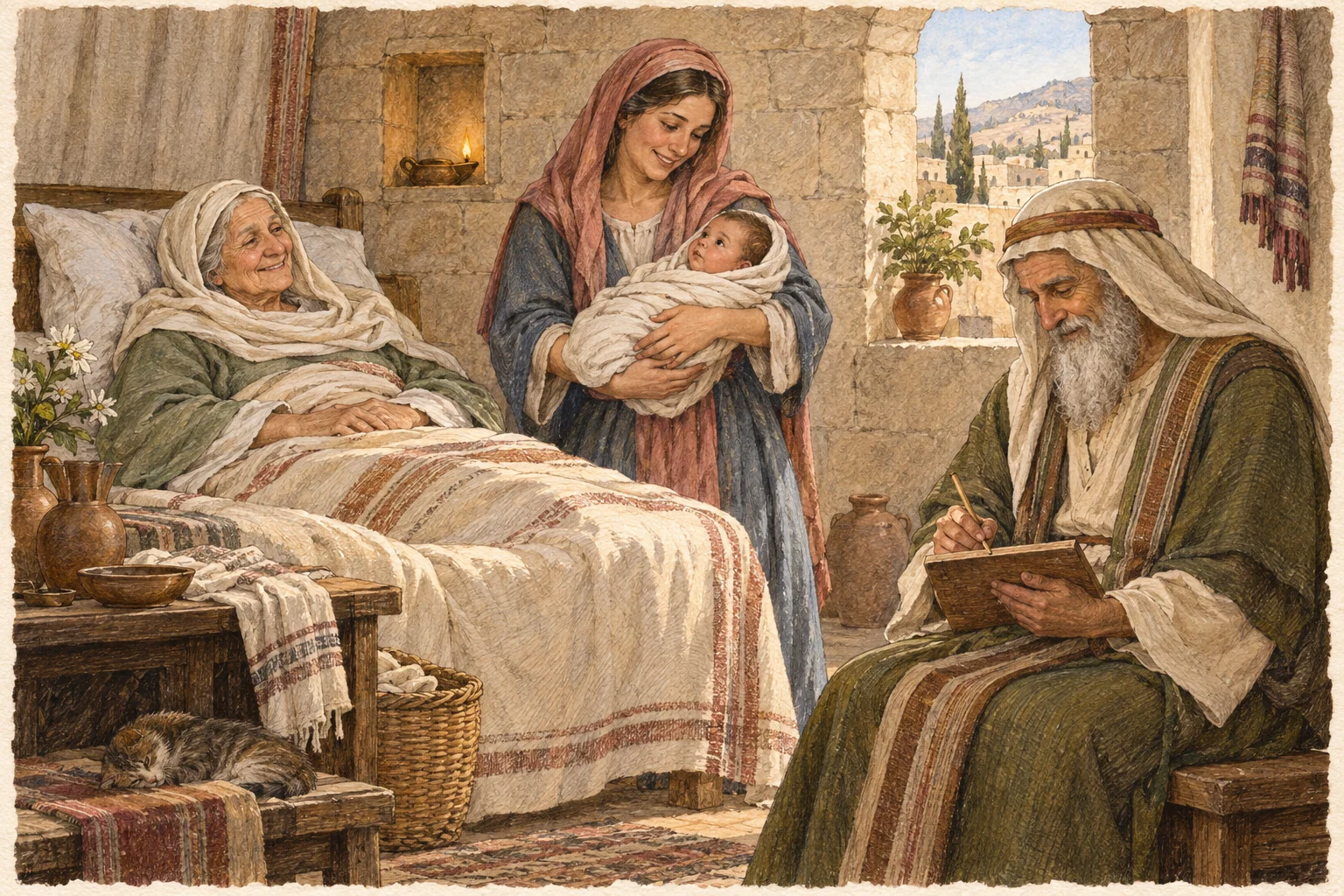
The Nativity of John the Baptist is observed on civil July 7 in Russian Julian-calendar practice, corresponding to Julian June 24. Nativity means birth. The Church remembers the beginning of the earthly life of the man called to prepare people for Christ. Folk customs surrounding midsummer or Ivan's Day do not supply the feast's Christian meaning.
Zechariah, Elizabeth, and the Promise
Luke's first chapter is the foundation of the account. The priest Zechariah and his wife Elizabeth are called righteous, although they have reached old age without children. During his service in the Temple, Zechariah receives an angelic promise of a son. His doubt is followed by temporary loss of speech, and the promised child is to be named John.
Notice that the parents are described as righteous before their hope is fulfilled. Childlessness is not presented as evidence of wrongdoing. The story must not become a guarantee that every family will have a child after saying a particular prayer, or a reproach to those whose circumstances remain painful. It describes a particular vocation in salvation history, not a universal reproductive timetable.
The Giving of the Name
When the child is named, relatives expect a familiar family choice. Elizabeth insists on John, and Zechariah confirms the name in writing. He then speaks again and blesses God. His prophetic song concerns divine salvation and the child's future service, extending beyond the parents' personal happiness.
This scene invites recognition of a child as someone with a distinct life and calling, not merely an extension of parental plans. Family traditions need not be rejected, but parents cannot claim ownership over an entire future. Gratitude for life belongs alongside willingness not to control it completely.
The Forerunner Points to Christ
Forerunner means one who goes ahead. John prepares people through repentance and directs them towards Christ rather than collecting devotion around his own exceptional status. His birth is understood in the light of his later ministry. The feast is more than affection for a newborn or a family's unexpected release from sadness.
Luke's account of Elizabeth's meeting with Mary already connects John's story with the coming of the Saviour. Read these passages together while retaining the difference between their persons and vocations. John is not a second Christ. His greatness lies in faithfully witnessing to the one who comes after him.
Celebrating Without Confusing Traditions
Attend services on the eve or the day according to the parish schedule. At home, Luke 1:5–25 and 57–80 provides a manageable reading. Explain to children that the Church gives thanks for the birth of the future prophet. Where the feast falls within a fasting period, consult the church calendar rather than deriving dietary rules from a popular festival's name.
Divination, searching for a magical flower, compulsory jumping over fires, or ritual bathing to cleanse sin are not ecclesiastical ways of honouring John. An ordinary walk or family gathering need not conflict with the feast. Confusion arises when a natural action is credited with controlling destiny or removing sin without repentance. Remembering the Forerunner brings attention back to truthful living, listening to God's word, and responding freely rather than trying to manipulate the future.
Parents can explain that John and Ivan belong to the same naming tradition. The feast is not automatically every Ivan's name day: that depends on the particular saint after whom the person was named in baptism.
Reading Luke's First Chapter in Sections
The chapter is long and brings two family narratives together. For a first reading, follow three questions: what was promised to Zechariah, what happens when Mary and Elizabeth meet, and what follows John's birth? You need not explain every unfamiliar term at once. Note it and return with a commentary later, keeping the sequence of the story in view. This can be easier than interrupting each sentence with several competing explanations.
Zechariah's song moves from the child towards his future ministry and God's mercy. That movement helps prevent the entire chapter from becoming only a story of fulfilled parental wishes. The family's joy belongs to a wider narrative. At home, discuss the difference between gratitude for a child's life and assigning that child a single acceptable future before they can speak for themselves.
Supporting a Family Without Explaining Its Pain
The festive account may be painful for someone waiting for a child or living with loss. Do not offer unsolicited instructions to copy Elizabeth, ask for details of treatment, or promise that everything will soon work out. Good intentions do not give us knowledge of another family's future. People may choose not to discuss this part of their lives at a shared meal, even when those asking are affectionate relatives.
Considerate support begins with ordinary respect: avoid persistent questions, do not pass on private information, and allow someone to decline a conversation. If a relative chooses to speak about pain, listen without comparing their situation with stories that ended happily. Prayer for them does not require progress reports. When congratulating new parents, notice their exhaustion too and offer specific assistance rather than only speaking about the importance of their calling.
A Child's Name and Future Freedom
The naming scene should not become a rule that every family custom must be rejected. It invites attention to how adults speak about a child. Statements that a son must fulfil our dream or a daughter must become just like us can quietly replace curiosity about the actual person. Parental care involves teaching and boundaries, but also patience with differences. A fitting continuation of the feast could be a conversation about what interests your child, without an immediate assessment or comparison with other relatives. You do not have to settle a career or a whole future in that conversation; attentive listening already makes room for someone whose life is not simply a repetition of your own.