
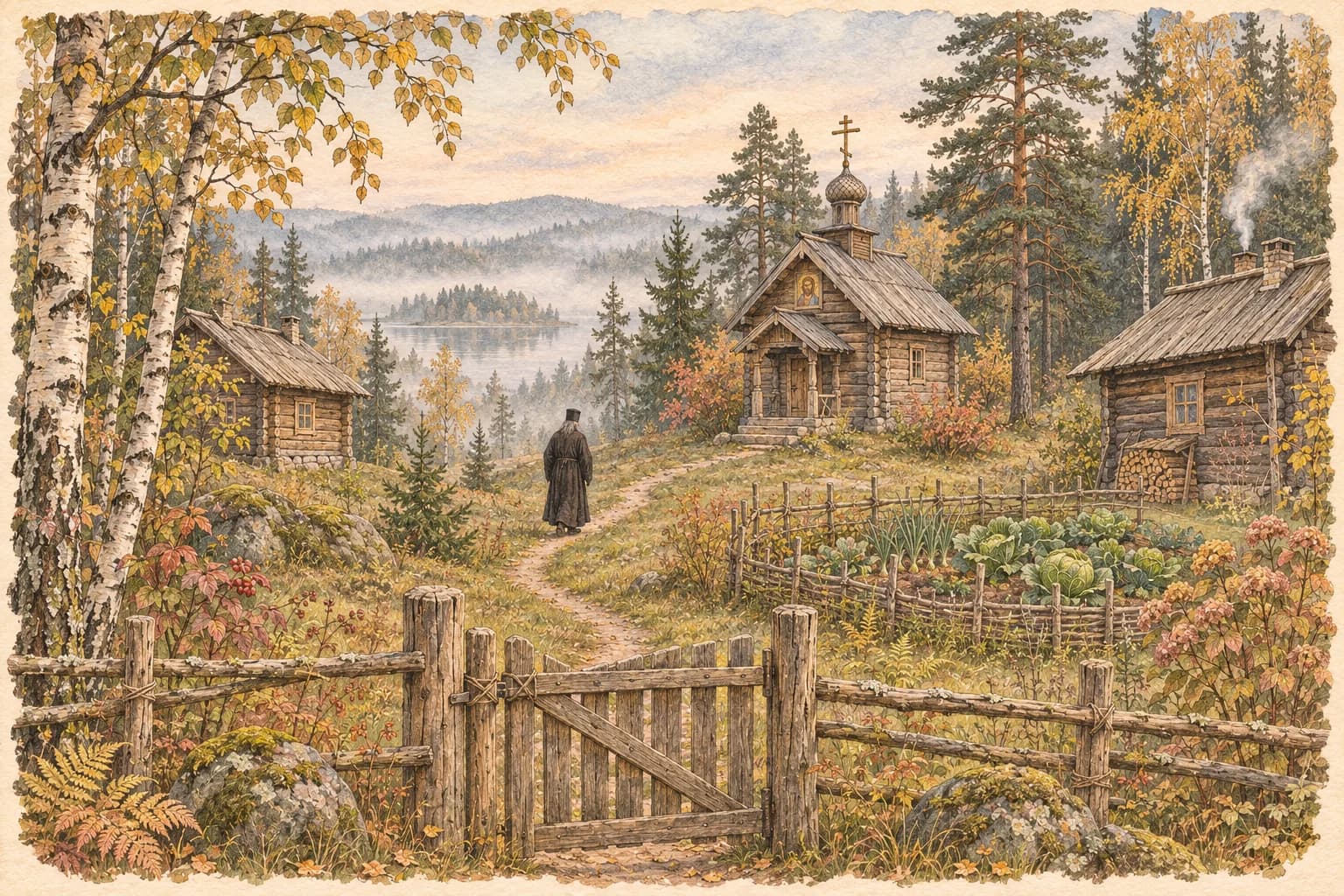
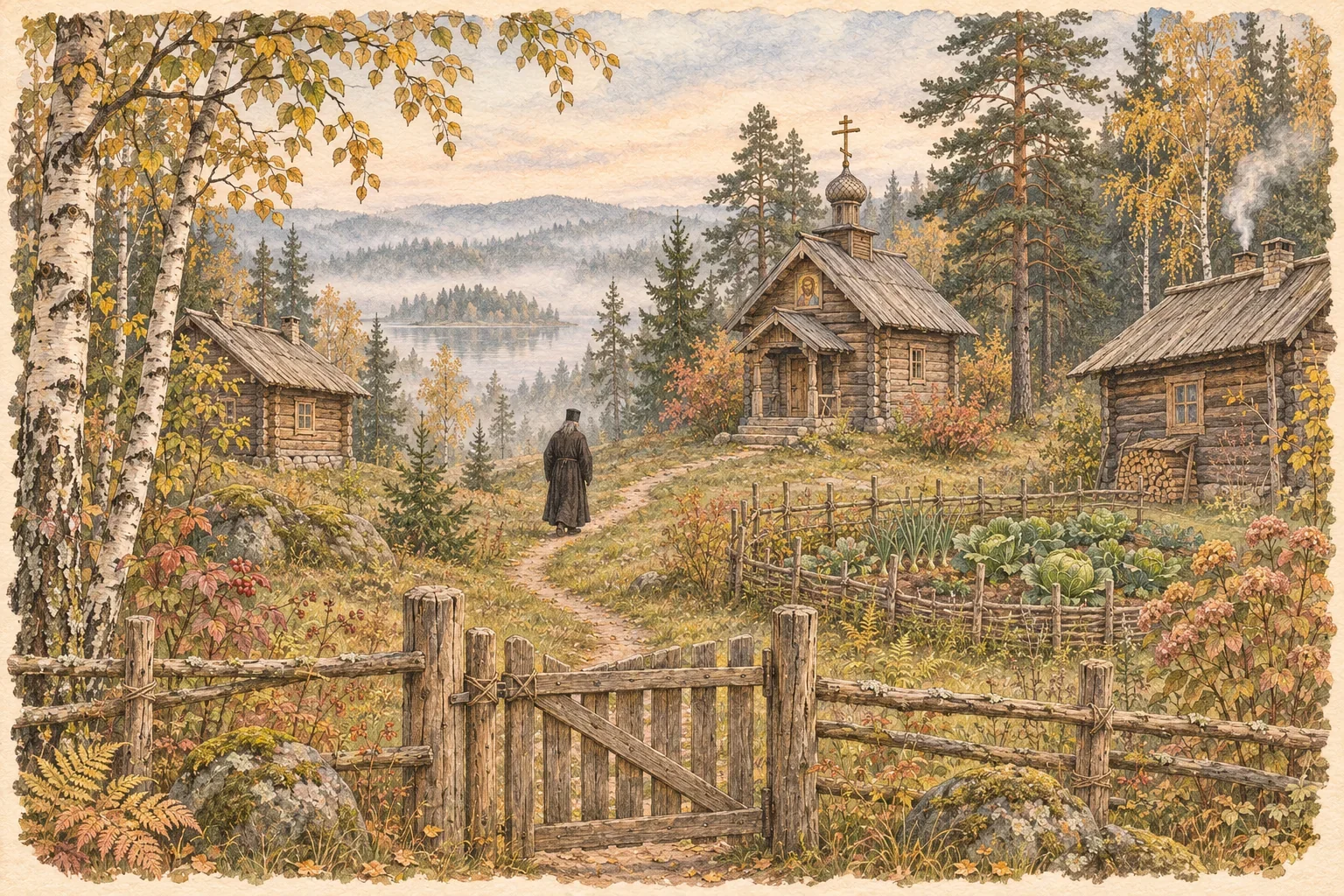
A skete is a form of monastic settlement often associated with a more secluded life and a parent monastery. Its organisation varies by tradition and place. The name alone does not establish its size, independence or visitor arrangements.
A skete may have its own visiting restrictions and routine. These support monastic life rather than an obligation to provide tourist access. Contact official monastery representatives before travelling.
Remoteness does not prove greater holiness or guarantee meeting a clairvoyant elder. Do not travel on rumours and demand entry for a personal spiritual experience. Restricted access is not hostility towards believers.
Check the route, permission, accommodation and communication limitations. If visitors are not received, choose an accessible church or monastery. Respect for prayerful life can mean deciding against an unplanned visit.
A skete and a communal monastery
A communal monastery generally organises life around shared worship, meals, assigned duties and a common timetable. Skete traditions may allow more solitude and individual prayer in the cell, but that does not mean an absence of shared rules. A particular skete may depend on a parent monastery for spiritual and practical oversight. The word does not describe one unchanging organisational form across every country and century.
Definitions claiming that a skete is always a fixed handful of monks living in a forest are therefore too narrow. A settlement may grow, change its arrangements or become a well-known pilgrimage destination while retaining its historical name. For visitors, current arrangements matter more: whether the church is active, guests are received, a contact person exists and a route is accessible. An old name on a map does not guarantee open doors.
Why some monks live with greater seclusion
Seclusion can support sustained prayer and reduce external distractions. It has meaning within a monastic vocation, rather than as proof of superiority over people living in a city. Even eremitic traditions do not make ecclesial communion, spiritual discernment or practical needs irrelevant. The actual degree of solitude depends on the community’s way of life and the circumstances of the individual monastic.
A guest should remember that the silence primarily serves the people who live there. Loud conversation, photographing cell windows and demanding access to private living quarters undermine the purpose of the place. Refusing an organised tour may reflect the timetable rather than hostility towards particular visitors. Respecting those boundaries allows interest in a skete to remain a genuine visit rather than an attempt to take possession of someone else’s private life.
Planning a visit realistically
Begin with an official contact at the parent monastery, if there is one. Ask not only about visiting hours but also participation in services, group restrictions, photography and accommodation. Explain if your party includes young children, an older person or someone with reduced mobility: a remote path, stairs or lack of transport may present significant obstacles.
Do not assume a monastery must provide food, transport or medical support for an unannounced group. Bring necessary personal medication and suitable clothing, and arrange the return journey. Where mobile reception is unreliable, tell someone your route and expected return time beforehand. These preparations do not make a pilgrimage less spiritual. They prevent your lack of planning from becoming an unexpected burden on a small community.
When the purpose is a pastoral conversation
Some people travel to a skete because they have heard about a spiritual adviser living there. Before leaving, establish whether he receives visitors, requires appointments and is actually present at that location. An old published account is not current information. Being welcome at a service also does not automatically imply an opportunity for a lengthy conversation afterwards.
If the meeting cannot take place, there is no need to regard the pilgrimage as pointless or pressure the residents for access. Attend whatever service is open, pray and return to the pastoral question in your home parish. A location does not supply a ready-made answer in place of a person. A realistic expectation is an attentive encounter with church life and an opportunity for prayer; individual reception remains a specific arrangement rather than a service owed to everyone who arrives.
Pilgrimage and the search for an unusual experience
A remote place easily attracts extravagant expectations: prayer there must be stronger, answers more certain and residents free from every failing. Such expectations make a visit fragile. Encountering ordinary tiredness or being refused accommodation may then feel like proof that everything was false. Yet the residents of a skete remain people who need rest, medical care and protection of their private space.
A pilgrimage’s purpose can be expressed more simply: encountering an ecclesiastical tradition, attending worship that is open, living attentively for a time and supporting the community in an agreed way. If offering practical help, establish what is actually needed; unsolicited supplies may create storage difficulties. If you cannot make a donation, there is no need to regard your presence as deficient. Afterwards, ask not only whether the experience was unusual but what it taught you for ordinary life: patience, attention to prayer and respect for other people’s work. Those lessons can remain when the beautiful scenery and the journey home are over.
A question for reflection
Has a visit been confirmed, or are you relying only on an acquaintance’s story?