
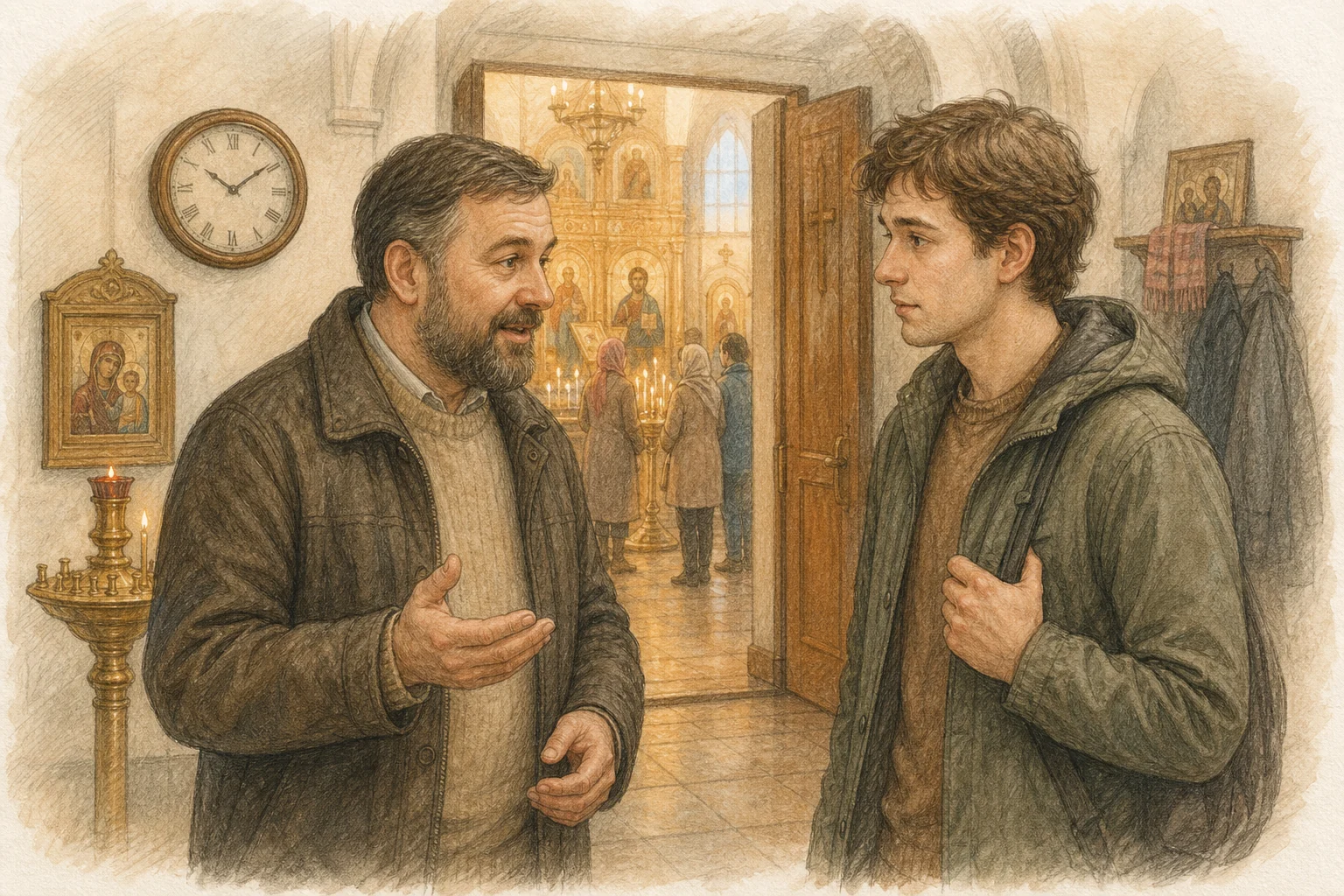
An ordinary parish Divine Liturgy often lasts about one and a half to two hours, while an evening All-Night Vigil may take roughly one and a half to three hours. A short moleben or panikhida may last twenty to forty minutes. These are planning estimates only: the feast, number of communicants, choir, sermon, and parish order can change the finishing time substantially.
The accurate answer comes from the current schedule of a particular church. If you depend on transport, medication, or a child’s stamina, contact the parish beforehand and ask when that service normally ends.
Why is there no fixed duration?
Orthodox worship is not an event with an identical script and a minute-by-minute timetable. Texts change with the Church calendar. Readings, festal hymns, a Litiya, Polyeleos, procession, or special prayers may be added.
The pace of reading, choir, number of clergy, sermon, commemorations, and number of communicants also matter. Two Sunday Liturgies in the same church may finish at different times.
“About two hours” is useful for a first plan, but it is not a promise.
How long does the Divine Liturgy usually last?
A parish Sunday Liturgy of Saint John Chrysostom often lasts one and a half to two hours, including sermon and Communion. The Third and Sixth Hours may be read before the opening exclamation, adding roughly ten to thirty minutes.
The Liturgy of Saint Basil the Great is celebrated on appointed days and may be longer because of its prayers and festal order. The Liturgy of the Presanctified Gifts during Great Lent has a different structure and is often celebrated in the evening.
Allow more time at Pascha, Nativity, Theophany, a patronal feast, or a hierarchical service.
How long is an evening service?
Before Sunday or a major feast, a parish normally serves the All-Night Vigil. It often takes around two hours, but a Litiya, Polyeleos, anointing, and festal choir may lengthen it.
Weekday Vespers and Matins may be shorter. During Great Lent and Holy Week, services with many readings and prostrations can be considerably longer. “Evening service” is not a sufficiently precise title; consult the full entry in the schedule.
Approximate planning ranges
- Divine Liturgy: often 1.5–2 hours, apart from early arrival and the Hours.
- All-Night Vigil: approximately 1.5–3 hours.
- Vespers or Matins separately: forty minutes to ninety minutes depending on the order.
- Moleben or panikhida: often 20–40 minutes, though an expanded order is possible.
- Akathist service: commonly 40–60 minutes with opening and conclusion.
- Baptism, wedding, or funeral: confirm with the parish; there is no universal figure.
These ranges are for practical planning, not a basis for complaint if the actual service is longer.
When should I arrive?
For a first visit, arrive ten to fifteen minutes before the published beginning. There will be time to remove outdoor clothing, silence a phone, learn where to submit a prayer note, and choose a place.
If preparing for Holy Communion, discuss arrival and preparation with a priest. Do not plan only around the presentation of the Chalice: the Liturgy is one service, not a queue for an isolated action.
Come earlier on major feasts because of crowds, transport, and possible entrance arrangements.
May I arrive late?
It is better to participate from the beginning, but lateness does not make entering pointless. Come in quietly, remain toward the rear, and avoid moving forward during the Gospel, censing, or Great Entrance.
If lateness is regular, identify the real reason: leaving home too late, misunderstanding the time of the Hours, caring for someone, shift work, or health. Some causes can be changed; others call for pastoral and human understanding.
Whether a late person should commune cannot be settled by one minute boundary for everyone. Ask the priest of your parish.
May I leave early?
When possible, remain through the dismissal and thanksgiving. The end is not a formality: the community receives a blessing and carries the heard word into daily life.
Illness, transport, work, a small child, or an emergency may require an earlier departure. Leave quietly without treating it as a bad omen. If you know your limit, stand near an exit and inform those accompanying you.
What if standing is difficult?
Use a bench or chair when your back hurts, you feel dizzy, are pregnant, recovering, or simply lose strength. Faith is not measured by endurance. Alternate standing and rest, stay near support, and carry necessary medication.
If symptoms become serious, tell someone and seek medical help.
How can a family plan with a child?
A young child may not remain still for two hours. A family can attend part of the service, stand near an exit, bring a quiet book, and agree which adult will step outside when the child becomes tired.
Increase the time gradually. A shorter peaceful experience is healthier than a long struggle that makes the child afraid to return.
Why not watch the clock throughout?
An estimate reduces uncertainty, but repeated time-checking prevents attention. Settle practical matters beforehand and choose one anchor in the service: the Gospel, a hymn, a litany, or thanksgiving.
Worship teaches a different relation to time. We are not losing minutes but offering them to God, remembering others, and returning to what is greater than urgent tasks.
How should a service schedule be read?
A schedule may give one time for a sequence such as “Hours and Divine Liturgy” or “Vespers and Matins.” Confession, a moleben, panikhida, or procession may be listed beside them and are not always simultaneous independent events.
Notice the civil-calendar date, feast, and any early or late Liturgy. If an entry is unclear, call the parish instead of calculating a finishing time from unrelated figures on different websites.
Night and early feast-day services
The Paschal service may begin late in the evening and continue into early morning. Nativity and other feasts may be celebrated at night or in the morning according to the parish. Plan transport, road safety, and a child’s routine.
A night service is not a test everyone must pass. An older or ill person and a family with an infant may choose an accessible service. Ask whether an additional morning Liturgy will be celebrated.
Frequently asked questions
How long is a Sunday morning service?
The Liturgy with Hours, sermon, and Communion often takes around two hours, but a feast and the number of people may lengthen it.
When does a Saturday evening service finish?
If it begins at 5 p.m., finishing around 7 p.m. is common, but this is only an example. Ask your parish.
May I step outside and return?
Yes when necessary. Move quietly and avoid the Gospel, entrances, and Communion.
Must I attend the entire service?
Full participation is a good goal. Real limitations require reason; questions about sacramental preparation belong in a personal conversation with a priest.
Why are feast-day services longer?
They may include additional hymns, readings, a Litiya, anointing, procession, or a more solemn order.
What should I confirm with the parish?
Check the exact beginning and service title in the schedule. Use the contacts to ask the usual finishing time when transport, health, or childcare matters.
Planning is useful, but worship is not about enduring a quota of minutes. It gives a person space for common prayer, thanksgiving, and meeting Christ—as much as one can honestly offer now.