
The fig-tree account cannot be understood merely as a hungry person’s domestic reaction to a tree. In Mark it is connected with events in the Temple and subsequent teaching. Literary and prophetic context matters for understanding the image of fruitlessness.
Mark places the Temple episode between the encounter with the tree and the discovery that it has withered. This structure invites the events to be read together. Matthew arranges the account differently; comparison requires attention rather than demanding identical sentence-by-sentence order.
The episode does not authorise hatred towards a people or religious group. Prophetic judgement cannot become a justification for human cruelty. Nor does it teach prayer as a way to destroy whatever displeases someone.
Read the whole chapter and consult a church commentary. Notice the connection between prayer and forgiveness near the end of the passage. If difficulty remains, state the question precisely rather than conceal it behind a slogan.
Why “it was not the season for figs” matters
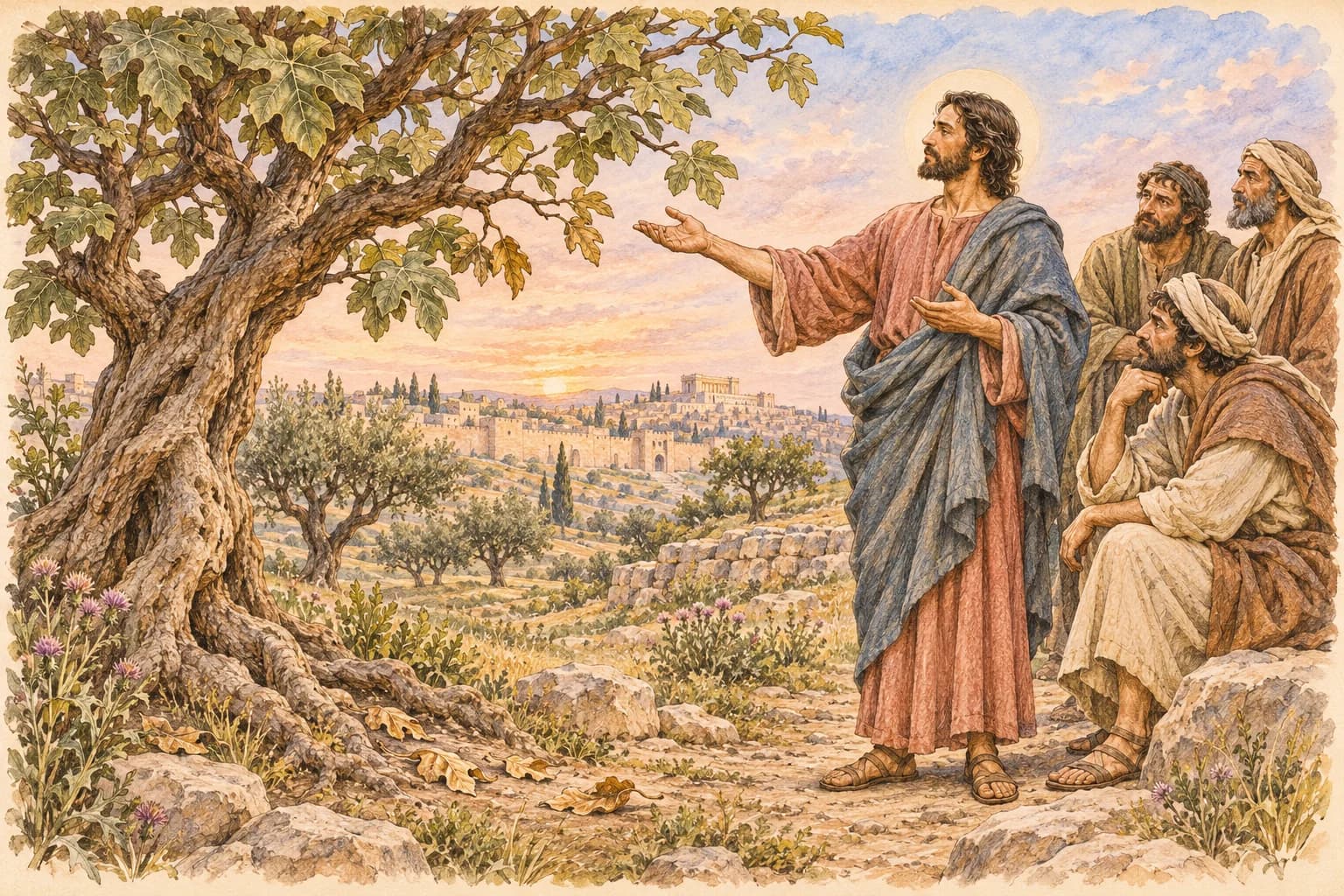
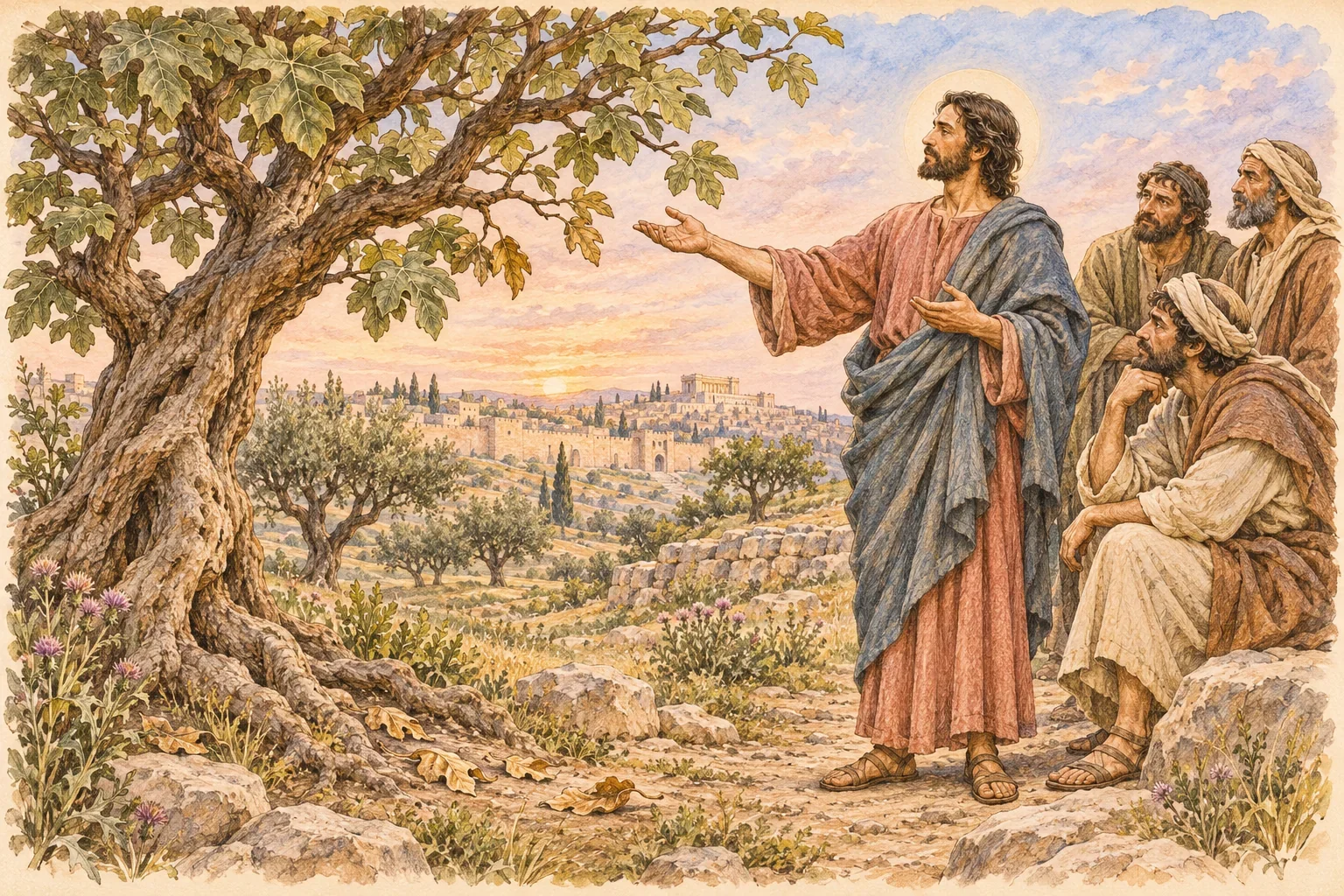
In Mark’s account, Christ sees a fig tree in leaf, approaches it and finds no fruit. The evangelist explicitly notes that it was not the season for figs. This makes a superficial reading difficult: understood only as a story about a hungry traveller and an unsuitable tree, the action seems inexplicable. Read the whole narrative and consider its place among the events in Jerusalem.
Some interpretations discuss early fruit and the tree’s pattern of growth. Such explanations may be helpful, but one botanical reconstruction should not be presented as an unquestionable answer to the entire theological problem. Mark’s arrangement of the events itself indicates that more is involved than an agricultural assessment. Leaves without the expected fruit become an image connected with what Christ encounters in people’s religious life.
The connection with the visit to the Temple
In Mark, Jesus’ actions in the Temple stand between the encounter with the tree and the discovery that it has withered. This framing encourages the two episodes to be read together. A place intended as a house of prayer becomes the setting for prophetic confrontation. Outward religious activity alone does not demonstrate the fruit of faithfulness to God.
The fig tree is consequently often understood as a prophetic sign of judgement on fruitlessness. Applying the image to an entire modern nation or all Jewish people would be a serious and dangerous simplification. Christ, his disciples and the participants in the Gospel dispute belong to Israel’s particular history. Christian readers are not exempt from the challenge: the gap between religious appearance and lived faith also concerns the Church and every person who identifies as a believer.
What fruit means in this reading
Fruit cannot be reduced to financial success, attendance figures or an impressive report of activities. In the Gospel perspective, faithfulness, mercy, truthfulness and turning towards God matter. Outward correctness can coexist with cruelty towards a neighbour; that inconsistency makes the image of fruitless foliage understandable today. The first object of examination should not be somebody else’s institution but the direction of one’s own life.
Nevertheless, a temporary absence of visible results does not imply condemnation. Someone experiencing illness or a difficult period may live with profound faith while being able to accomplish very little outwardly. A prophetic sign does not authorise declaring another person’s misfortune divine punishment. Distinguishing spiritual fruitlessness from real limitations requires attention to circumstances, humility in judgement and refusal to pronounce quick verdicts from appearances.
Why the account moves towards prayer
After the disciples notice the withered tree, Christ speaks about faith and prayer, alongside an appeal to forgive. This continuation should not be separated from the episode, leaving only a frightening tale of destructive power. The disciples are called to trust God, not to practise curses. The mountain image in the teaching on faith is not an instruction to test prayer through spectacular demonstrations.
A practical reading can follow three steps: trace the sequence of events, consider the connection with the Temple, then read the instruction to the disciples. Ask where religious words in your life remain only outward foliage and what manageable action could correspond to them. The response might be keeping a promise honestly or refusing revenge rather than attempting an extraordinary feat. The text’s difficulty need not be hidden: it invites deeper reading instead of replacing the Gospel with a convenient moral slogan.
Reading Mark alongside Matthew
The fig-tree episode also appears in Matthew, where the sequence is presented more compactly. Understanding Mark requires preserving his framing of the Temple narrative rather than replacing it with a mechanically combined chronology. The evangelists recount events with their own narrative emphases.
When comparing the passages, first identify what each explicitly says and what you are supplying as an assumption. This method does not demand an immediate solution to every difficulty. It allows questions to be recognised honestly and commentaries consulted about those particular questions. An unclear episode does not make careful study pointless or oblige the reader to accept an answer merely because it sounds confident.
A question for reflection
How does the question change after reading the surrounding narrative?