
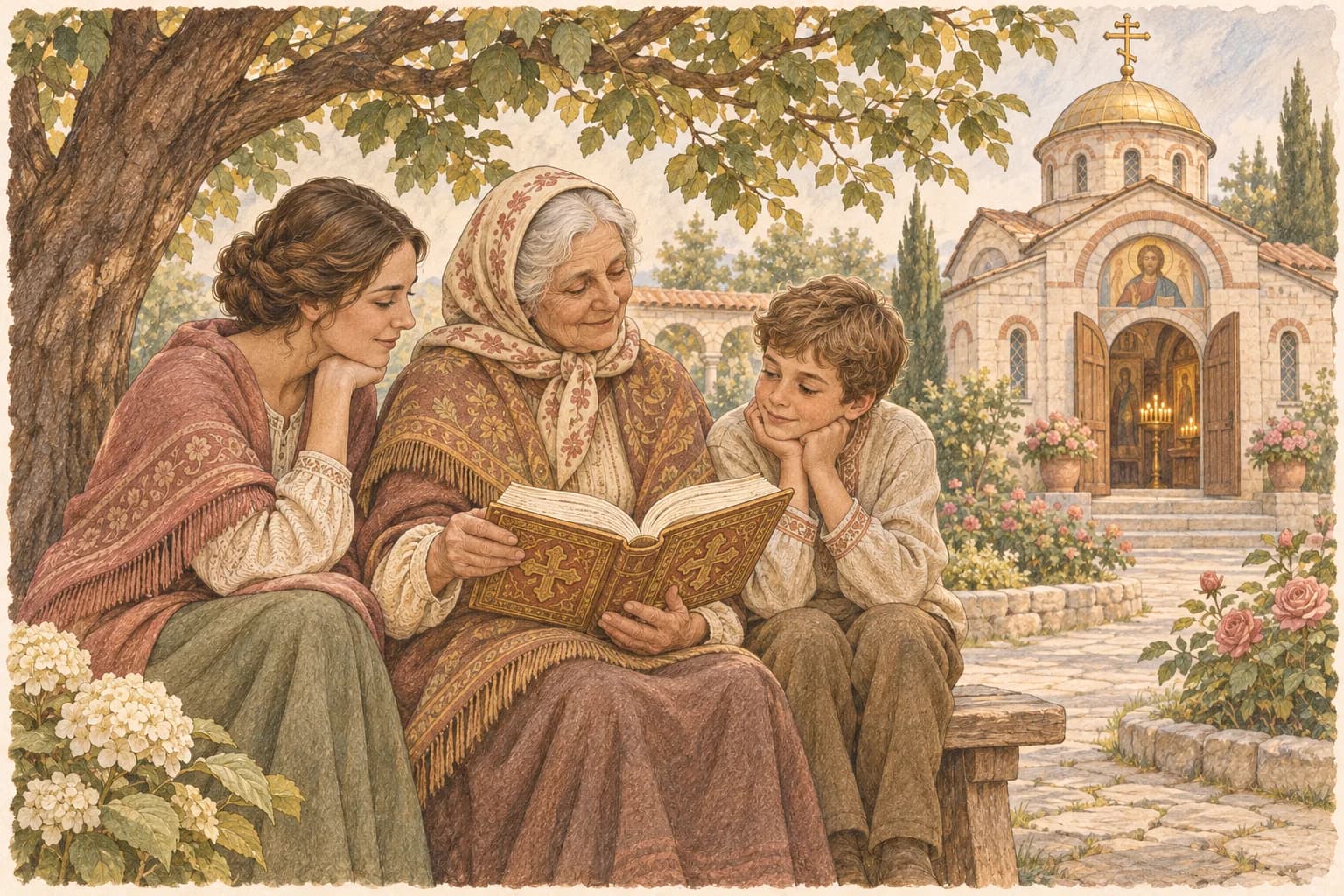
In Orthodox understanding, Holy Tradition is the transmission of apostolic faith and the life of the Church. It is not the sum of all old habits. Scripture belongs within that ecclesial life, so treating Bible and Tradition as two rival sources oversimplifies the relationship.
Tradition is expressed in doctrine, worship and the Church’s witness. A local domestic custom has a different weight. A festive food long favoured by one family does not thereby become obligatory for every Orthodox Christian.
The statement that something has always been done does not itself prove its ecclesiastical origin. Be particularly careful with prohibitions accompanied by threats of misfortune. A superstition’s age does not make it part of the faith.
If a custom troubles you, ask about its source and its place in church practice. Compare the explanation with a catechism or official church text. Begin from a wish to understand rather than an accusation that relatives are wrong.
What is handed down in Holy Tradition
In its ecclesial meaning, Tradition concerns handing down apostolic faith and life in Christ. It is not merely information once communicated orally that someone forgot to write down. The Church preserves and transmits confession of faith, prayer, sacramental life and the understanding of Scripture. Tradition is therefore not a secret appendix to the Bible available only to a small circle of initiates.
Transmission takes place within a community’s life: people receive baptism, hear the Gospel, participate in the Liturgy, learn to pray and discover how faith is expressed in conduct. These activities are not independent of what is believed. They help explain why Orthodox Christianity cannot be reduced to an individual reading a book without connection to the historical Church and its shared confession.
Why Scripture is not opposed to Tradition
Holy Scripture has a distinctive place within the Church’s transmission of faith. Its books were read, preserved and received in the Church’s life rather than appearing before modern readers outside all history. From an Orthodox perspective, choosing either the Bible or Tradition therefore poses the question incorrectly: these are not competing sources, one of which must cancel the other.
Appealing to Tradition does not justify arbitrary treatment of biblical texts. A convenient custom cannot simply be declared more important than the Gospel’s demand for truth and love. Responsible interpretation seeks to understand Scripture as a whole. If advice plainly contradicts the foundations of Christian faith, adding that older people handed it down does not resolve the contradiction.
Tradition, a traditional account and local custom
The same everyday word can identify different things. Holy Tradition concerns the Church’s transmission of faith. A traditional account may also describe the origin of a sacred image or an event in a saint’s life. Finally, tradition can mean a family or parish custom. These levels should not be confused: using the same word does not give every narrative the status of dogma.
For example, the customary time for a festive meal, arrangements for cleaning a church or a local style of singing may be longstanding and valuable without becoming unchangeable doctrine for all Christians. A historical account concerning a particular icon requires attention to its sources. Holy Tradition itself cannot be reduced to the total collection of local stories ever told by believers.
Assessing an appeal to church tradition
When someone categorically says that things have always been done only one way, ask which question is being discussed and what supports the claim. Doctrinal matters call for the Church’s common confession and relevant conciliar definitions. Liturgical arrangements call for received service books and directions. Local organisation concerns decisions by the responsible people in that community. The appropriate source depends on the subject.
An individual priest’s, theologian’s or respected writer’s opinion does not automatically represent the voice of the whole Church. Respect for the person does not remove the need to consider the genre, date and audience of their words. Brief quotations without references deserve particular care: they may be paraphrases, inaccurate translations or sentences detached from a larger argument with a different meaning.
Encountering Tradition in practice
Begin with an explanation of the Creed, sustained reading of the Gospel and participation in worship. A catechism, saints’ lives and patristic writings with helpful commentary can follow. You do not need to read the entire historical corpus in a week before being entitled to ask questions. A gradual approach makes connections between confession, prayer and everyday conduct easier to recognise.
Distinguish genuine inquiry from searching the past solely to justify personal preferences. Encountering Tradition may change expectations, for instance by showing that a familiar local practice is not the only possible one. Such a discovery does not necessarily undermine faith. It can help preserve what is essential while approaching differences of custom without hastily accusing other Orthodox Christians.
A question for reflection
Which part of a familiar practice belongs to faith, and which to family custom?