
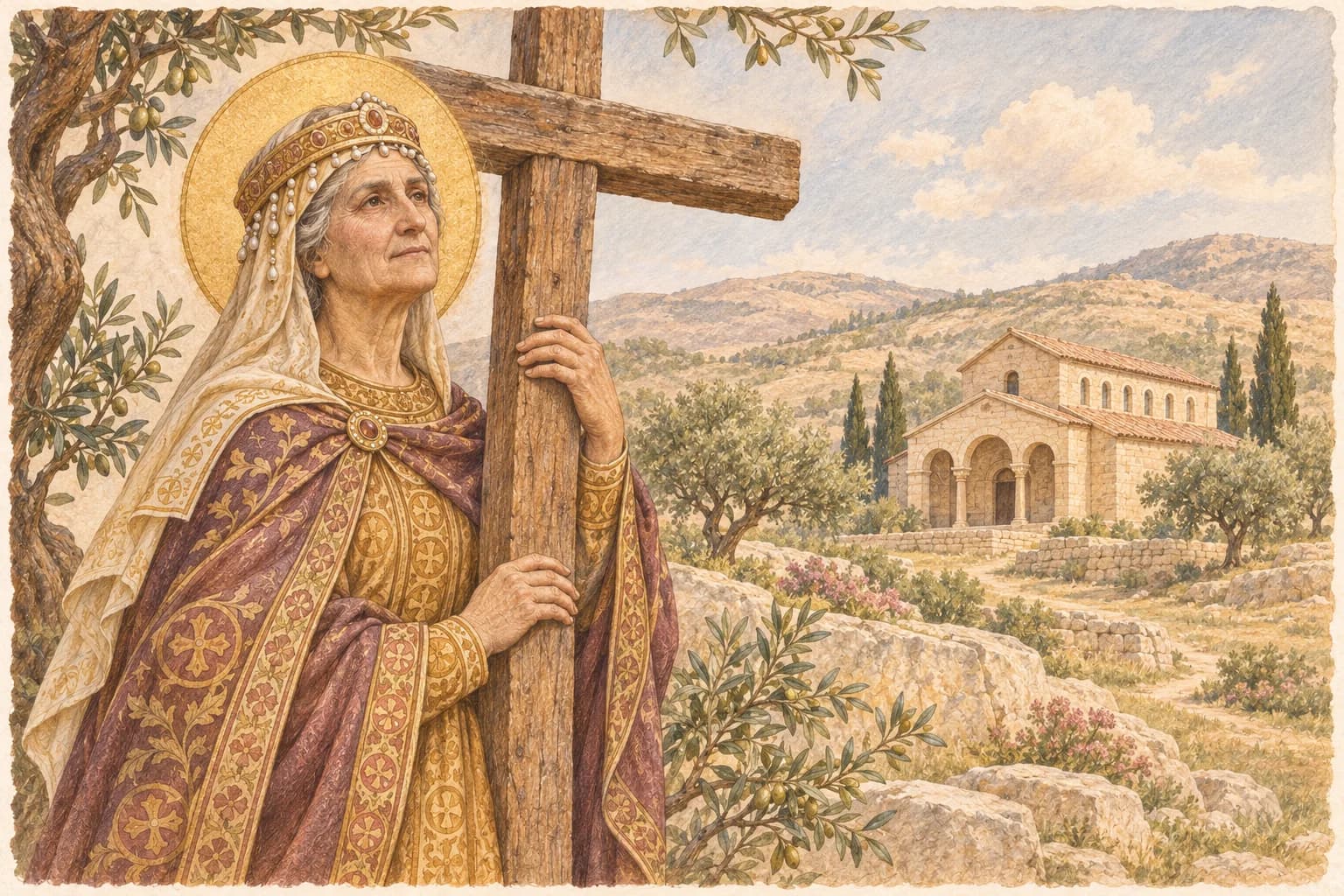
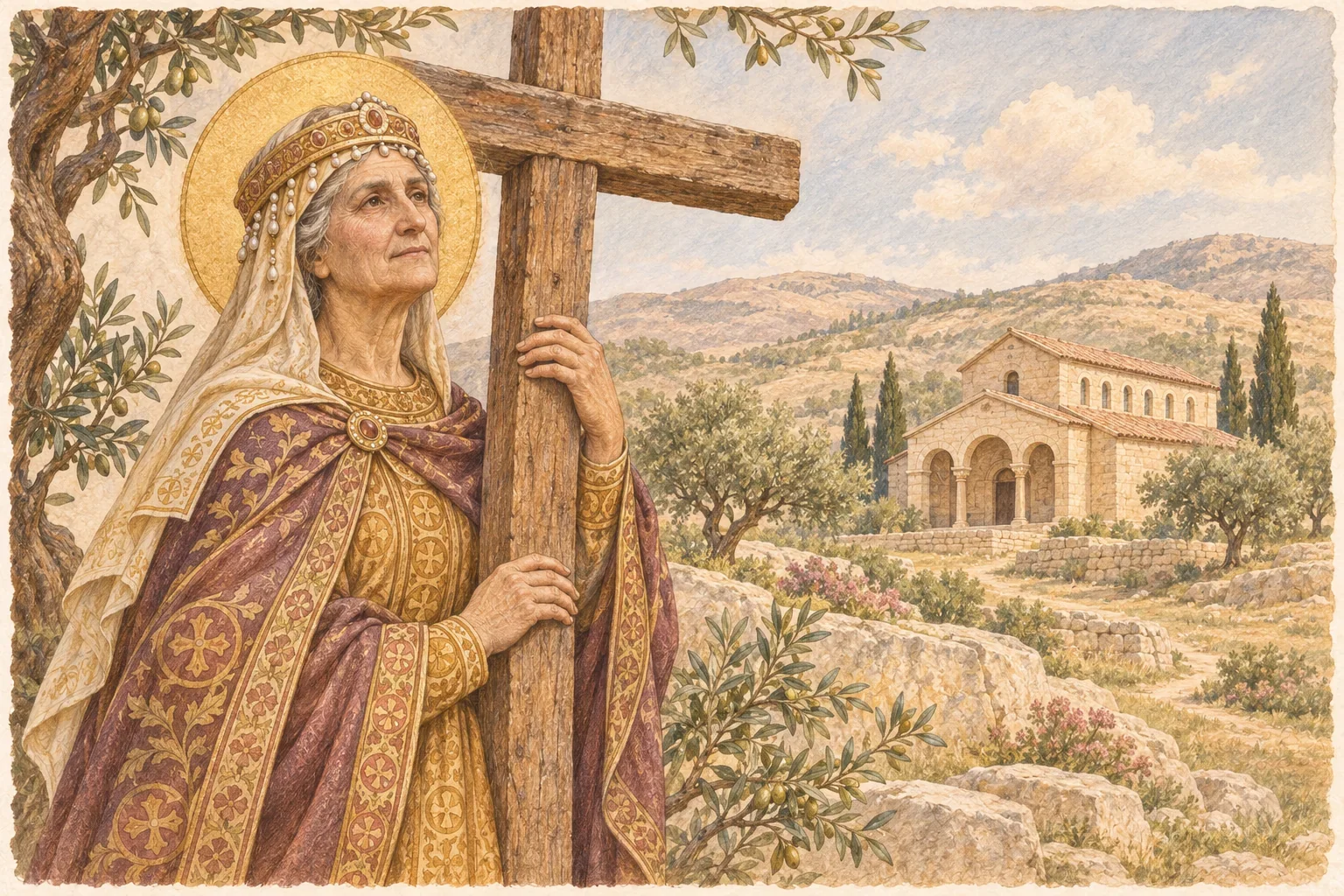
Saint Helen, Equal-to-the-Apostles, was Emperor Constantine’s mother and is associated in church tradition with the finding of the Lord’s Cross. The cross therefore has a prominent place in her icons. It points to Christ and church remembrance, not a private magical power.
Helen supported church life and the building of churches in the Holy Land. Accounts of her pilgrimage survive in different sources. Historical evidence and details of pious tradition should be distinguished without treating study as opposed to veneration.
Helen is often shown with Constantine. Their shared depiction does not mean that they are husband and wife. Inscriptions and their lives prevent a misunderstanding that royal clothing alone can encourage.
Read the inscription and composition, then learn about the Exaltation of the Cross. Ask the saint’s intercession without looking for an exclusive area of services she supposedly provides. Understanding the image supports attentive prayer rather than superstition.
Helena and Constantine: the historical setting
Helena was the mother of Emperor Constantine. Her life belongs to the major transition of the early fourth century, when the position of Christians within the Roman Empire changed substantially. The ending of earlier persecutions, support for church life and later stages of imperial religious policy should be distinguished. They did not all occur simultaneously through one person’s single decision.
The Church’s designation of Helena as Equal-to-the-Apostles concerns her service to the Christian faith, not merely her relationship to an emperor. Imperial resources and status opened opportunities for travel, construction and assistance. The point of the life is how those opportunities were used. If an account retains only the crown, wealth and courtly position, it loses the specifically ecclesial substance of her remembrance. Political circumstances explain the setting without exhausting the meaning of the saint’s activity.
The pilgrimage to the Holy Land
Helena is associated with a visit to Palestine and care for places connected with Christ’s earthly life. Christian remembrance takes visible form here: the location of a Gospel event becomes a place of prayer and pilgrimage. Church construction was intended to help believers encounter the Gospel in a concrete setting, not merely to increase the number of imperial buildings.
Accounts of ancient holy places nevertheless require care. A present-day church may include layers from different periods, rebuilding and restoration; its entire surviving appearance cannot automatically be assigned to the fourth century. Saying that a place is associated with Helena requires distinguishing early church construction, later architecture and the tradition concerning an event. For a pilgrim, this need not hinder reverence. It can reveal how remembrance has been preserved through a long, sometimes difficult history rather than treating a site as an object untouched by time.
The tradition of finding the Cross
Church tradition associates Helena with the search for and discovery of the Lord’s Cross in Jerusalem. In the hagiographic account, recognising the holy object involves a miraculous testimony. Those details should be presented as church tradition rather than as a modern archaeological report with uninterrupted documentary recording of every action.
The substance of veneration is nevertheless clear: the Cross recalls Christ crucified and risen. The wood is not understood as a separate deity or an object that magically subjects events to its owner’s control. Its relationship to the Saviour explains the reverence given to it. Helena’s story therefore leads naturally back to the Gospel events of the Passion and resurrection. If a reader’s interest remains confined to the mystery of locating a rare object, the reason for the holy object’s place in church life has been missed.
Reading an icon of Constantine and Helena
The saints are often shown together on either side of the Cross. Constantine and Helena are son and mother, not husband and wife. Their shared depiction brings together related aspects of church remembrance: the changed position of Christians in the empire, support for the Church and the tradition of finding the Cross. Imperial clothing indicates historical status, while the Cross remains the composition’s central sign.
The image should not be used to conclude that any political authority automatically receives ecclesiastical approval. It portrays particular saints within a specific church understanding. When choosing an icon for someone named Helena, confirm the patron saint because others bear the same name. An inscription identifying the Equal-to-the-Apostles Empress Helena distinguishes her, for example, from Venerable Helena of Diveyevo. The image’s ceremonial appearance cannot replace accurate identification of the person represented.
What her remembrance offers beyond a historical summary
Helena’s life places mercy towards those in need alongside the building of churches. The combination matters: care for holy places should not become an excuse for indifference to living people. A similar question can arise on a contemporary scale when a parish restores a church while encountering families in hardship. One task need not automatically cancel the other; responsible allocation of effort and honest use of resources are necessary.
Personal remembrance of the saint can take the form of reading the Gospel account of the cross attentively, helping a particular person or assisting in the preservation of church heritage. It does not require imperial wealth. Gratitude for a historical contribution should also be distinguished from idealising every feature of late Roman society. The Christian point is not restoration of an ancient political system but directing the opportunities available to a person towards faith and mercy.
A question for reflection
Can the inscriptions help you identify the relationship between the saints depicted?